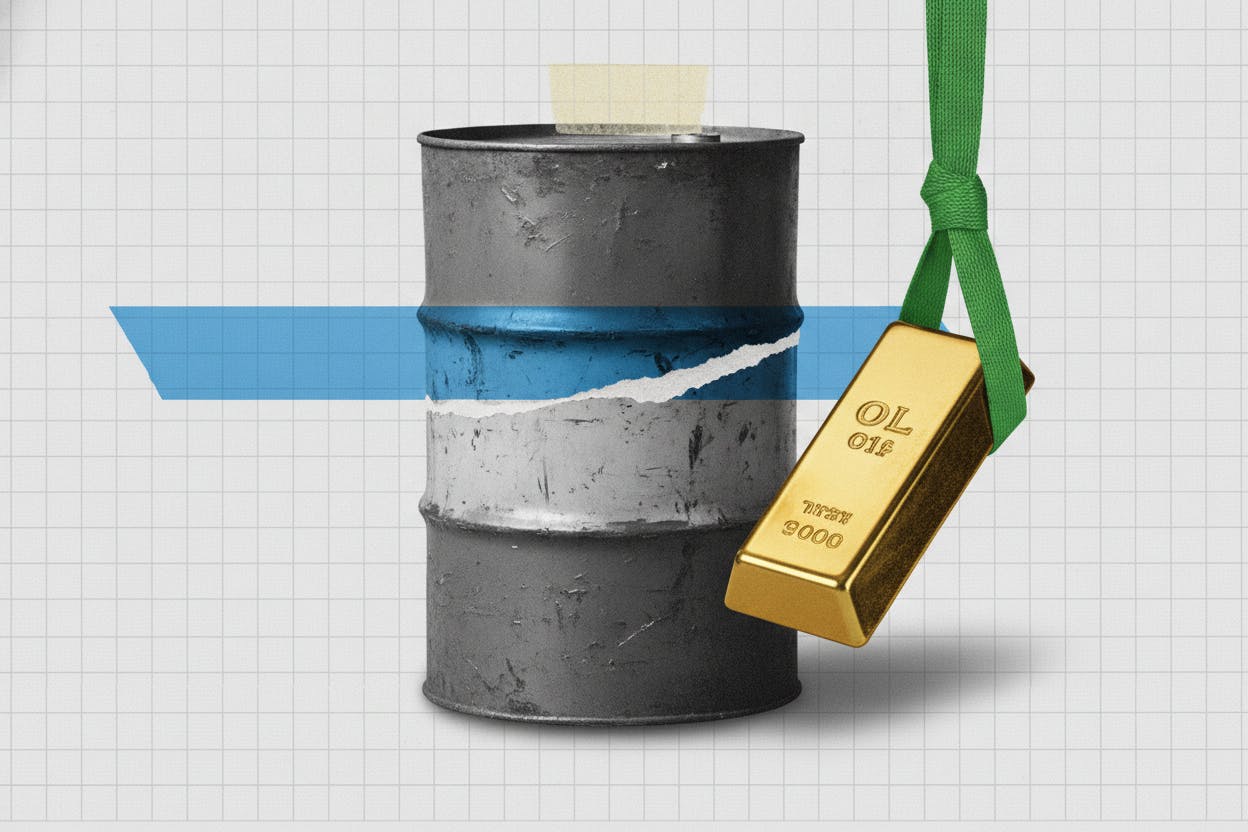
Westpac, one of Australia's largest banks, has released its long-range commodity outlook, and the picture it paints is one of divergence. The bank expects Brent crude oil to average $83 a barrel in the September quarter, a level that would ease some of the pressure on fuel and shipping costs. At the same time, it sees gold remaining elevated, forecasting an average of $4,350 an ounce for the same period.
This split forecast is more than just a number-crunching exercise. It reflects a broader uncertainty about the direction of inflation and what it means for global markets. For everyday investors, the message is that not all inflation signals are pointing the same way.
Oil: A Cooling Trend
Westpac's view on oil is that prices are likely to drift lower over time. After averaging $83 in the September quarter, the bank expects Brent to ease toward $80 by the March quarter of 2027. That gradual decline would be welcome news for consumers and businesses that have been grappling with higher energy costs.
Oil prices are a key driver of inflation because they feed directly into the cost of fuel, transport, and goods. When crude falls, it typically takes some pressure off price growth. That could give central banks more room to pause or even cut interest rates, which would be a positive for borrowers and stock markets.
However, Westpac's forecast is not a dramatic crash. It's a slow cooling, not a collapse. The bank's numbers suggest that oil will remain at historically elevated levels, just not as high as the peaks seen in recent years.
Gold: A Safe Haven That Stays Hot
In contrast to oil, gold is expected to remain a hot commodity. Westpac forecasts gold to average $4,350 an ounce in the September quarter and then climb to $4,700 by the June 2030 quarter. That's a significant level, reflecting sustained demand for the metal as a store of value.
Gold is often seen as a hedge against inflation and economic uncertainty. When investors worry that inflation might not settle down, or that markets could turn volatile, they tend to buy gold. Westpac's forecast suggests that those worries are not going away anytime soon.
The bank's outlook implies that while oil-driven inflation may ease, other forces could keep price pressures alive. That could be a reason why gold remains attractive to investors who want protection in their portfolios.
What It Means for Investors
For the average investor, Westpac's commodity outlook offers a few takeaways. First, if oil prices do cool as forecast, it could be a positive for sectors that are sensitive to energy costs, such as airlines, shipping, and manufacturing. Lower fuel costs can boost profit margins and consumer spending power.
Second, the continued strength in gold suggests that a diversified portfolio should still include some exposure to assets that can hold their value in uncertain times. Gold has long been a popular choice for this purpose, and Westpac's numbers indicate that demand is likely to remain robust.
It's also worth noting that these forecasts are just one bank's view. Commodity prices are notoriously volatile and can be influenced by geopolitical events, supply disruptions, and changes in global demand. Investors should treat them as one input among many when making decisions.
The broader context is also important. Westpac's outlook comes at a time when central banks around the world are grappling with inflation. Recent data has shown some cooling inflation and weak retail sales, which has raised the odds of a pause by the US Federal Reserve. Similarly, Treasury yields have slid as producer prices stayed flat, cooling expectations of further rate hikes.
In Asia, the Bank of Japan may hike rates in September as inflation risks grow, while China's money supply is growing despite cooling credit. These mixed signals underscore the uncertainty that Westpac is highlighting.
For investors, the key is to stay informed and not overreact to any single forecast. Commodity prices will continue to move, and the best strategy is often to maintain a well-diversified portfolio that can weather different economic scenarios.
Westpac's outlook is a reminder that the investment landscape is never one-dimensional. Oil and gold are telling different stories, and wise investors will listen to both.