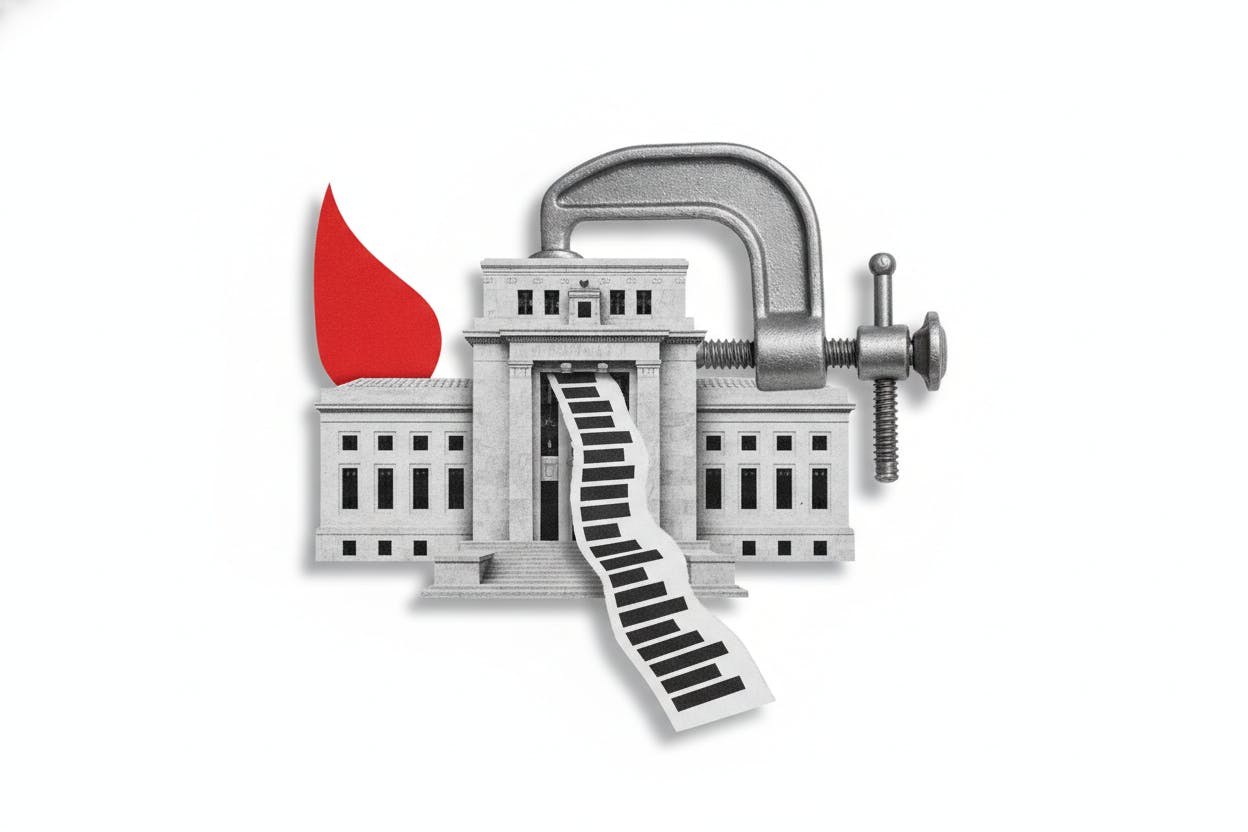
This week's economic data painted a picture of a US economy that is slowing down but not collapsing—a scenario investors have been hoping for. July inflation came in cooler than expected, and retail sales fell unexpectedly after a rise the previous month. That combination has traders increasingly convinced the Federal Reserve will leave interest rates unchanged at its September meeting.
According to the CME FedWatch tool, which tracks futures market expectations, the probability of a pause in September jumped to 67% on Friday, up from 55% a week earlier. That shift reflects a growing belief that the Fed's aggressive rate-hiking campaign may be nearing its end, as price pressures ease and consumer spending shows signs of softening.
What the data shows
The July inflation report, released earlier this week, showed that price increases moderated, giving policymakers more room to hold off on further rate hikes. At the same time, retail sales dropped unexpectedly, a sign that households are becoming more cautious with their spending. Together, these figures suggest that the economy is cooling in a controlled manner—what economists often call a 'soft landing.'
For everyday investors, this is a delicate balance. On one hand, slower inflation is welcome because it means the Fed may not need to raise rates much further, which could support stock valuations. On the other hand, weak retail sales could signal that consumer demand, a key driver of economic growth, is fading. If that trend continues, it could weigh on corporate earnings and the broader market.
The retail sales decline was broad-based, with weakness in several categories. This follows a 0.6% drop in July, a sharper fall than analysts had anticipated. The unexpected weakness has also had knock-on effects in currency markets, with the euro and pound rising to multi-month highs against the dollar, as traders bet that the Fed may be less aggressive than previously thought.
Geopolitical risk: Iran
While the economic data dominated the week, geopolitical tensions also simmered in the background. The US signaled that it would announce tougher economic measures on Iran next week, adding a separate source of uncertainty for markets. Such measures could include new sanctions or other restrictions that might affect global oil supplies and energy prices.
Oil prices have been a wildcard for inflation this year, and any disruption to supply could reignite price pressures. That would complicate the Fed's decision-making, as it would face a trade-off between supporting growth and containing inflation. Investors will be watching closely for details on the Iran measures and their potential impact on energy markets.
What it means for investors
For the average investor, the key takeaway is that the Fed's next move is far from certain. While the market is now pricing in a high chance of a pause, that could change quickly if new data or geopolitical events shift the outlook. The CME FedWatch odds are not a guarantee—they are a snapshot of market sentiment at a given moment.
If the Fed does pause in September, it could provide some relief to borrowers, as mortgage rates and other consumer loans might stabilize. However, a pause does not mean the Fed will start cutting rates soon. Policymakers have repeatedly emphasized that they want to see sustained evidence that inflation is under control before easing policy.
For stock investors, a pause could be supportive in the short term, as it reduces the risk of further tightening. But the underlying weakness in consumer spending is a concern. If retail sales continue to decline, it could hit the earnings of companies that rely heavily on discretionary spending. Investors should keep an eye on upcoming economic reports, including consumer sentiment and jobs data, for further clues about the economy's trajectory.
In the broader context, the US is not the only economy facing these dynamics. Asian stocks climbed on cooler US inflation, but gains were capped by weak lending data from China, highlighting the global nature of the slowdown. Meanwhile, other sectors are showing mixed signals—copper prices paused after a rally as supply concerns eased, and S&P 500 futures paused after a record close as oil prices weighed on sentiment.
Ultimately, the next few weeks will be crucial. The Fed's September meeting is now the focal point for markets, and any surprises in inflation or employment data could quickly shift the odds. For now, the 'soft landing' narrative remains intact, but it is a fragile one, and investors should be prepared for volatility.