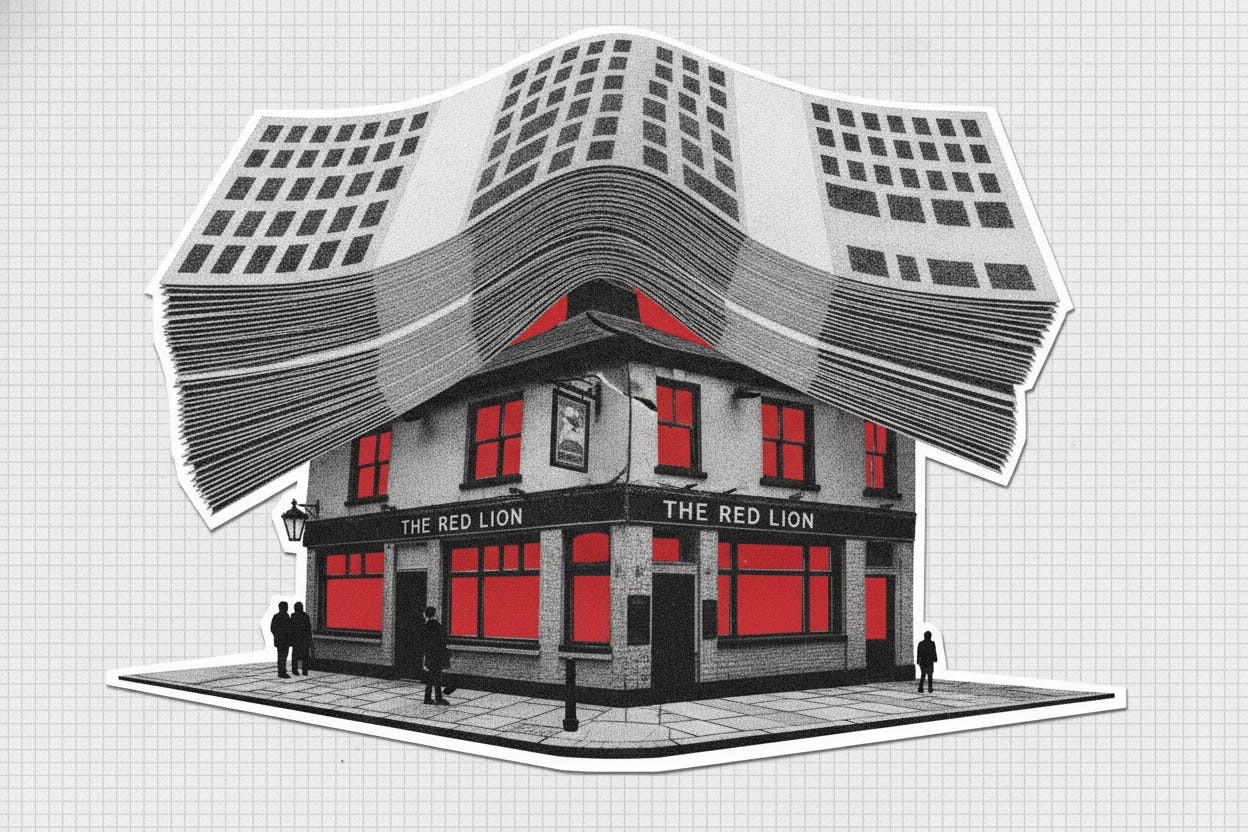
UK pub chain J D Wetherspoon has issued its fourth profit warning of the fiscal year, signaling that rising costs continue to outpace sales growth. The company said like-for-like revenue rose 4.0% in the 12 weeks to July 19, but that was not enough to cover higher expenses for labor, food, energy, repairs, and business rates.
What's Going On?
Wetherspoon reported that fourth-quarter trading came in slightly below expectations, and full-year profit will likely miss market forecasts. The company is absorbing higher bills across multiple fronts: staffing costs, food and drink prices, energy expenses, and property-related charges like business rates. These costs are largely fixed or rising, meaning they don't fall much even when demand softens.
For context, a profit warning is when a company tells investors that its earnings will be lower than previously expected. Four warnings in one year is unusual and suggests persistent pressure on the business model.
Why Costs Are Squeezing Pubs
Pubs operate with high fixed costs. Staffing, utilities, and rent-like charges such as business rates show up every week regardless of how many customers walk through the door. When sales grow but costs grow faster, profit margins shrink.
Wetherspoon has built its brand around value-for-money pricing, which limits its ability to pass higher costs on to customers. Unlike some competitors that can raise prices more aggressively, Wetherspoon's strategy depends on keeping drinks and meals affordable. That makes it especially vulnerable to cost inflation.
The broader UK hospitality sector faces similar headwinds. Many pub and restaurant chains have reported margin pressure from rising minimum wages, higher food commodity prices, and elevated energy costs. Business rates, a tax on commercial property, have also increased in recent years.
What It Means for Investors
For everyday investors, Wetherspoon's repeated profit warnings highlight the risks in sectors with thin margins and high fixed costs. Even when sales rise, as they did here by 4.0%, profits can still fall if expenses climb faster.
Investors should watch whether Wetherspoon can improve its cost structure or find new ways to boost revenue without alienating its core customer base. The company's next full-year results will be closely scrutinized for signs of stabilization or further deterioration.
It's also worth noting that Wetherspoon is a well-known UK stock, often held by retail investors for its dividend history. Repeated profit warnings can lead to dividend cuts or suspensions, which would directly affect income-focused shareholders.
For comparison, other companies facing cost pressures have taken different approaches. Some have raised prices, while others have invested in automation or efficiency measures. Wetherspoon's value positioning limits its options.
The broader market context matters too. Inflation in the UK has eased from peak levels but remains above the Bank of England's target. Interest rates are still elevated, which increases borrowing costs for companies with debt. If the economy slows further, consumer spending on discretionary items like pub visits could weaken.
Investors should also consider the sector-wide implications. If a major player like Wetherspoon is struggling, smaller pub chains and independent operators may face even greater challenges. This could lead to consolidation or closures in the industry.
Looking Ahead
Wetherspoon's management will need to address these cost pressures in upcoming earnings calls. Key questions include whether the company can negotiate better supplier contracts, reduce energy usage, or find efficiencies in staffing. Any update on dividend policy will also be important for income investors.
The company's share price has already reflected some of these concerns, but further downside is possible if conditions worsen. Investors should monitor trading updates and full-year results for clarity on the path forward.
For now, the message from Wetherspoon is clear: sales are growing, but not fast enough to keep up with rising costs. That is a warning that applies not just to this pub chain, but to many businesses in the hospitality sector and beyond.