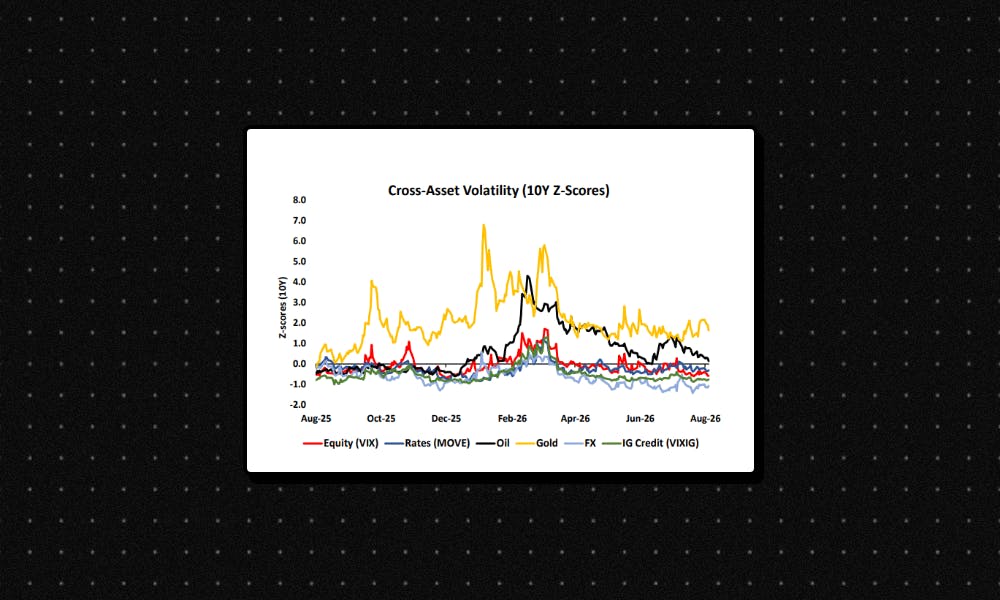
After weeks of whipsaw moves, investors appear to be catching their breath. Options data shows that expected volatility — the amount of price movement traders are bracing for — fell across major asset classes in the week beginning August 24th. The drop came after a batch of strong earnings from big technology companies helped calm nerves that had been frayed by concerns over everything from interest rates to geopolitical tensions.
Implied volatility is a measure derived from options prices. It tells you how much movement investors are pricing in for an asset over a given period. When implied volatility is high, it means traders expect a bumpy ride. When it falls, it signals that the market is anticipating smoother sailing. Last week, that gauge moved lower pretty much across the board — a sign that the fear that had gripped markets is starting to ease.
What drove the calm
The catalyst appears to be earnings from some of the world's largest technology companies. These results, which came in stronger than many had feared, helped reassure investors that corporate profits — the engine of stock market returns — remain on solid footing. Tech stocks carry heavy weight in major indexes, so when they perform well, it can lift sentiment across the entire market.
This is a familiar pattern. After a period of heightened anxiety, a positive catalyst can trigger a rapid unwinding of defensive positions. Traders who had bought options as insurance against a sharp selloff may have decided that protection was no longer as necessary, leading to a decline in implied volatility.
The cooling wasn't limited to stocks. The brief notes that expected volatility fell across major asset classes, which suggests that the relief was broad-based. Bond markets, currencies, and commodities all tend to have their own volatility measures, and when they all decline together, it often points to a general reduction in macro uncertainty.
What it means for investors
For everyday investors, a drop in implied volatility is generally a positive sign, but it's worth understanding what it does and doesn't tell you. Lower volatility means that options are cheaper, which can be good if you're looking to buy protection or generate income. But it also means that the market is pricing in less risk, which can sometimes lead to complacency.
It's important to remember that implied volatility is a forward-looking measure. It reflects what traders expect, not what will actually happen. Markets can turn quickly, and a calm options market today doesn't guarantee a calm market tomorrow. In fact, periods of low volatility have historically been followed by sharp moves in either direction.
That said, the recent decline is a welcome change for investors who have had to stomach significant swings in their portfolios. It suggests that the immediate panic has subsided and that the market is finding a more stable footing. For those with a long-term investment horizon, this is a reminder that volatility is a normal part of investing, and that staying the course is often the best strategy.
Looking ahead
While the immediate storm may have passed, investors will be watching several factors that could reignite volatility. The upcoming jobs report and more tech earnings are on the calendar, and any surprises there could quickly change the mood. Geopolitical tensions, such as those in the Middle East, remain a wildcard that could send oil prices and market volatility higher.
For now, the options market is signaling that investors are more comfortable with the outlook. But as any seasoned investor knows, calm markets can be deceptive. It's always wise to keep a diversified portfolio and to avoid making impulsive decisions based on short-term market movements.
The broader backdrop also matters. With central banks still navigating inflation and growth, and with AI-related spending showing clearer payoffs, the market's direction will likely be driven by how these larger forces play out. For now, the cooling in volatility offers a moment of respite — and a chance to review your own risk tolerance and investment plan.



