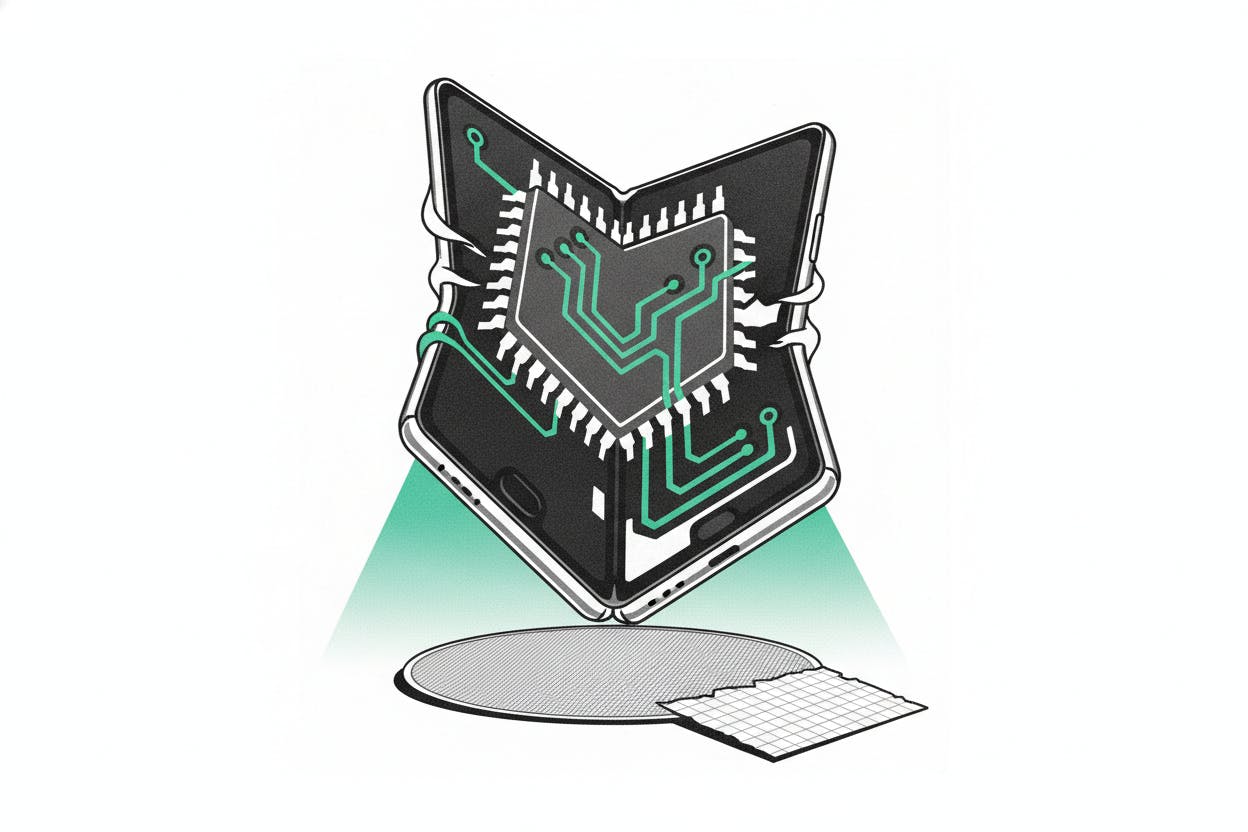
Xiaomi has taken another step toward designing its own smartphone brains. The Chinese electronics giant unveiled its second in-house processor, the Xring O3, and Reuters reports that Taiwan Semiconductor Manufacturing Co (TSMC) — the world's largest contract chipmaker — will produce it using leading-edge 3-nanometer technology. The chip could end up inside an upcoming folding flagship phone.
For everyday investors, this is more than a product launch. It's a signal about how one of the world's biggest phone makers is trying to control its own destiny in a market where chip supply can make or break a product cycle.
What is the Xring O3?
The Xring O3 is Xiaomi's second attempt at building a processor in-house. The first, the Xring O1, debuted last year. By designing its own chips, Xiaomi joins a club that includes Apple, Samsung, and Google — companies that have moved away from relying solely on off-the-shelf processors from Qualcomm or MediaTek.
Using TSMC's 3-nanometer process is significant. Smaller nanometer numbers generally mean more transistors can fit on a chip, which typically translates to better performance and lower power consumption. TSMC's 3nm technology is currently among the most advanced in the industry, also used by Apple for its latest iPhone chips. That puts Xiaomi's chip on par with the best available manufacturing technology.
The fact that the Xring O3 could power a folding phone is notable. Foldables are a premium, high-margin category where performance and battery life matter a lot. If Xiaomi can pair its own silicon with its own software and hardware, it could differentiate its devices in a crowded Android market.
Why Xiaomi is going in-house
There are two big reasons a phone maker invests in custom chips: cost and control. Buying chips from Qualcomm or MediaTek means paying a premium and accepting a design that's built for everyone. Designing your own chip lets you optimize for your specific devices — and potentially cut costs over time, especially at scale.
There's also a strategic angle. The global chip supply chain has been volatile, with shortages and geopolitical tensions disrupting production. Having its own chip designs gives Xiaomi more leverage in negotiations and a fallback if a supplier relationship sours. It also reduces dependence on US-based Qualcomm, which is a meaningful consideration for a Chinese company navigating export controls and trade restrictions.
That said, in-house chips aren't a silver bullet. They require massive R&D spending, and even Apple — the gold standard — still buys modems and other components from outside suppliers. Xiaomi's chip effort is still young, and the Xring O3 will need to prove itself in real-world performance and battery life before it can be called a success.
What it means for investors
For Xiaomi shareholders, this is a long-term bet. The company is signaling that it wants to be more than an assembler of other people's parts. If the Xring O3 delivers, it could boost margins and make Xiaomi's phones more competitive. If it stumbles, the R&D costs could weigh on profits without a payoff.
For TSMC, the news is another win. The Taiwanese giant already counts Apple, Nvidia, and AMD among its customers, and adding Xiaomi to the list reinforces its dominance in advanced chip manufacturing. TSMC's ability to attract a steady stream of clients for its most cutting-edge nodes is a key reason its stock has been a favorite among investors. The broader trend of companies designing their own chips — from Nvidia's AI processors to Xiaomi's phone silicon — keeps TSMC at the center of the tech ecosystem.
For Qualcomm and MediaTek, the implications are more cautionary. Every phone maker that moves chip design in-house is a potential future loss of revenue. Apple already does this, and now Xiaomi is following. That doesn't mean Qualcomm or MediaTek will disappear — they still supply many mid-range and budget phones — but it's a slow erosion of their premium market.
For the average investor, the key takeaway is that chip design is becoming a competitive battleground. Companies that control their own silicon can differentiate their products and protect margins, while those that rely on third-party chips face pricing pressure. This dynamic is playing out across the tech sector, from smartphones to data centers, and it's worth watching which companies are investing in their own chip capabilities.
Xiaomi's move also highlights the importance of TSMC in the global supply chain. Any disruption at TSMC — whether from geopolitical tensions or natural disasters — can ripple through the entire tech industry. That's why market moves often hinge on chip news, and why investors keep a close eye on the semiconductor sector.
As for the Xring O3 itself, we'll have to wait for real-world tests to see how it performs. But the fact that Xiaomi is doubling down on in-house chips — and using the best manufacturing tech available — is a clear statement of intent. The company is betting that owning its silicon will pay off in the long run, and investors will be watching to see if that bet pays off.