China's yuan ticked higher on Thursday after the People's Bank of China (PBOC) set a slightly stronger daily midpoint, but the currency's gains were kept in check by a US dollar hovering near a 19-month high.
The PBOC set the midpoint at 6.7174 per dollar, compared with 6.7191 the previous session. That small adjustment signaled that officials were leaning against a weaker yuan, but the move was modest against a backdrop of broad dollar strength.
How China manages its currency
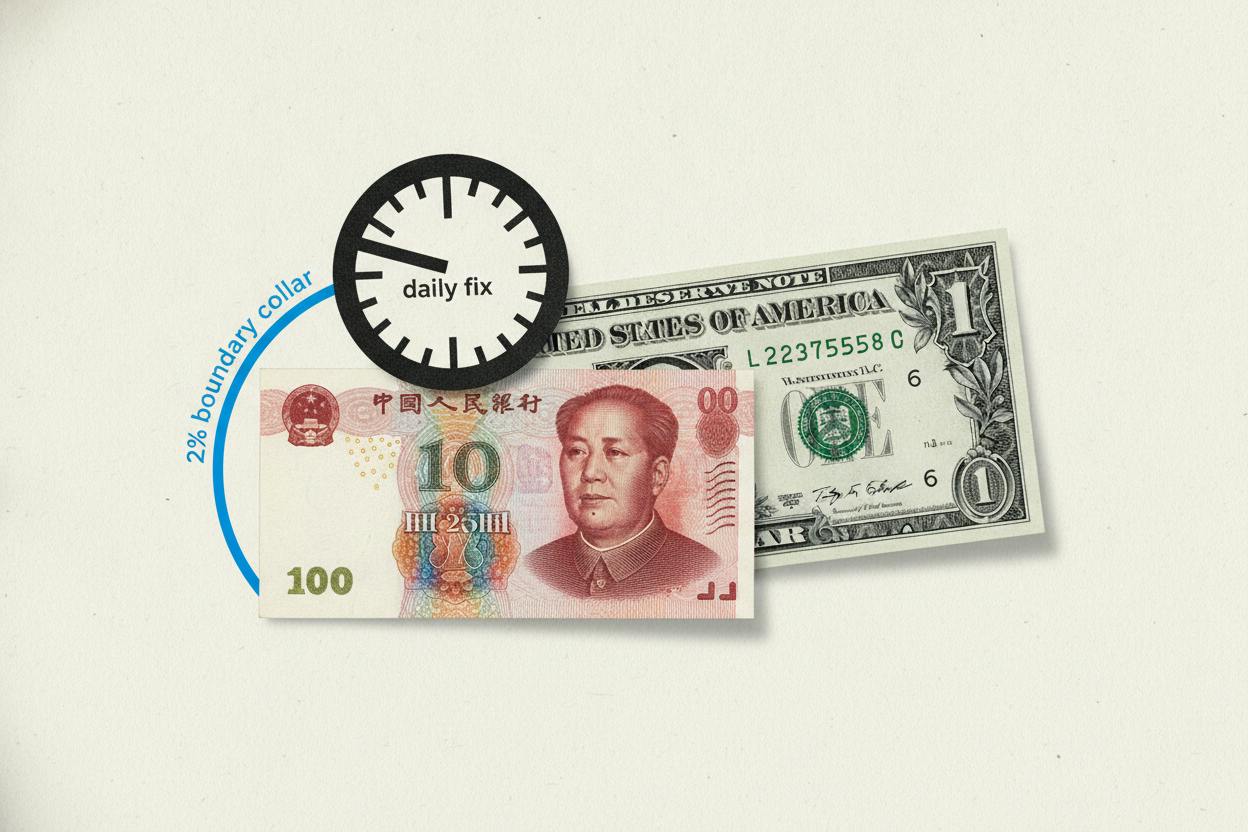
China does not let its currency float freely. Instead, the PBOC sets a daily “fix” – a reference rate – and the onshore yuan is allowed to trade up to 2% above or below that level each day. This system gives the central bank a powerful tool to guide the currency's direction without intervening directly in markets.
When the PBOC sets a firmer fix, it is often read as a signal that policymakers want to support the yuan or at least slow its decline. Conversely, a weaker fix can be a sign that officials are comfortable with a softer currency, perhaps to help exporters.
On Thursday, the firmer fix suggested Beijing was pushing back against depreciation pressure. But that signal collided with a global trend: the dollar index stood around 103.05, close to a 19-month high, after investors increased bets on more Federal Reserve rate hikes following stronger-than-expected October inflation data, according to Reuters.
Why the dollar matters
The dollar's strength is a key driver for currencies worldwide. When the Fed is expected to raise rates, US assets become more attractive, pulling capital toward the dollar and away from other currencies. That dynamic has been particularly pronounced recently, as inflation data has kept rate-cut expectations in check.
For the yuan, a strong dollar typically puts downward pressure. But the PBOC's fix acts as a counterweight. The push and pull between these two forces tends to cool “one-way” currency bets – trades that assume the yuan will move in a single direction. Instead, traders have to weigh China's policy limits against global rate-driven dollar strength, which often leads to more two-way pricing in hedging instruments like forwards and options.
Reuters also noted that Beijing has been taking steps to moderate yuan gains, in part because a sustained rally can squeeze exporters' profit margins. A stronger yuan makes Chinese goods more expensive abroad and reduces the value of overseas earnings when converted back into yuan.
What it means for investors
For everyday investors, the yuan's daily moves may seem like a niche concern, but they can ripple through portfolios. A weaker yuan can affect the returns of US investors holding Chinese stocks or funds, as currency translation can eat into gains. Conversely, a stronger yuan can boost those returns.
For multinational companies and Chinese exporters, the fix-plus-band system is more than just messaging – it sets the day's tradable range and hints at how much appreciation officials will tolerate. When that policy cue points one way but the dollar is strong, it often shows up as less conviction in directional trades and more demand for hedges. That can raise the bar for leaving exposures unhedged, since the next move in the onshore and offshore yuan can depend as much on the PBOC's tolerance as on the latest spot quote.
For currency traders, the system acts like a built-in guardrail. The 2% band limits how far the yuan can move in a single day, which can reduce volatility but also create opportunities when the fix and market forces diverge.
Looking ahead
Investors will be watching for further signals from the PBOC, as well as any new US economic data that could influence the Fed's path. The dollar's strength is likely to persist as long as rate expectations remain elevated, which could keep pressure on the yuan and other emerging-market currencies.
At the same time, Beijing's willingness to support the yuan through firmer fixes could limit downside. The balance between these forces will likely determine the yuan's near-term direction.
For those with exposure to Chinese assets, keeping an eye on the daily fix and the dollar index can provide clues about currency risk. As always, diversification and hedging strategies can help manage that risk, but no single move should dictate a long-term plan.