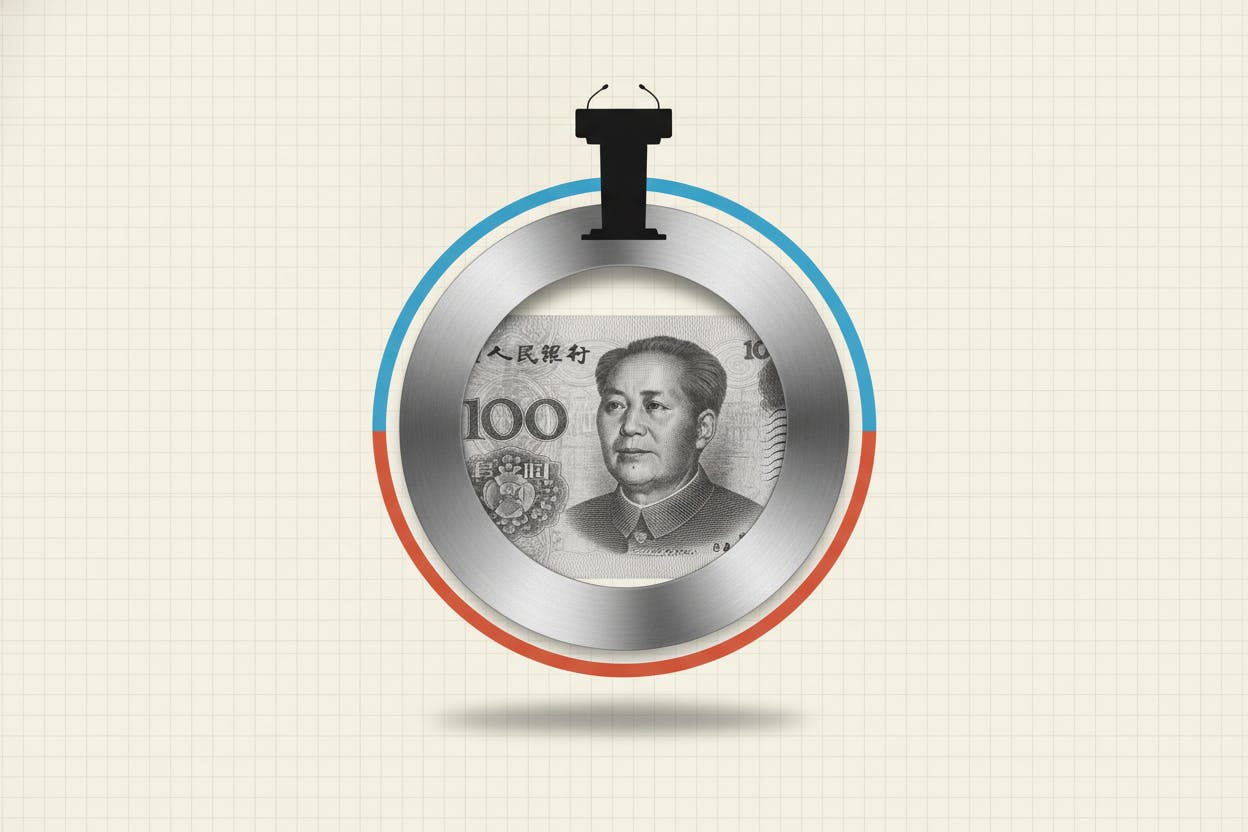
China's yuan traded tightly around 6.72 per dollar on Thursday, as currency markets paused ahead of a highly anticipated speech by Federal Reserve Chair Kevin Warsh at the Jackson Hole symposium. Investors are looking for clues on the pace of US interest rate moves, which have a direct impact on the dollar's strength and, by extension, on emerging market currencies like the yuan.
The People's Bank of China (PBOC) set its daily midpoint reference rate at 6.7840 per dollar, a level that was 579 pips weaker than a Reuters estimate. This move effectively nudges the permitted trading range for the onshore yuan lower, signaling that Beijing is not comfortable with a rapid, one-way appreciation of its currency.
How China's managed currency system works
Unlike the US dollar or the euro, which float freely on global markets, China operates a managed float system. Each morning, the PBOC announces a 'midpoint' reference rate for the yuan. The onshore yuan is then allowed to trade within a 2% band on either side of that midpoint during the day. This gives the central bank significant control over the currency's value, allowing it to smooth out sharp moves and guide the exchange rate in a direction it deems appropriate.
By setting the midpoint weaker than market expectations, the PBOC is effectively signaling that it wants to temper the yuan's recent strength. A stronger yuan makes Chinese exports more expensive for foreign buyers, which could hurt the country's export-driven economy. At the same time, a weaker midpoint can help stabilize the currency if global markets turn volatile.
Jackson Hole: what to watch
All eyes are now on Fed Chair Kevin Warsh's speech at the annual Jackson Hole economic symposium, a gathering of central bankers and policymakers. Historically, this event has been used to signal major policy shifts. Investors will be parsing Warsh's words for any hints about the future path of US interest rates.
If Warsh sounds hawkish—suggesting that rates may stay higher for longer or even rise further—the dollar could strengthen, putting pressure on the yuan and other emerging market currencies. Conversely, a more dovish tone, hinting at possible rate cuts, could weaken the dollar and give the yuan room to appreciate.
The Fed's stance is crucial for global markets. Higher US rates tend to attract capital into dollar-denominated assets, which can drain liquidity from emerging markets and weaken their currencies. This dynamic is especially relevant for China, which is trying to support its economic recovery while managing capital flows.
What it means for investors
For everyday investors, the yuan's movement matters in several ways. A stable yuan is generally positive for global markets, as it reduces uncertainty for multinational companies and international trade. If the yuan were to depreciate sharply, it could trigger volatility in Asian markets and affect companies with significant exposure to China.
For US investors, a weaker yuan can translate into lower returns on Chinese investments when converted back to dollars. It can also affect the competitiveness of US exporters versus Chinese rivals. On the other hand, a stable yuan helps maintain orderly trade relations and supports global supply chains.
The PBOC's cautious approach suggests that Chinese policymakers are keen to avoid a rapid appreciation that could undermine export competitiveness. This is consistent with recent data showing China's factory profit growth cooling, even as AI-driven exporters lead the way. The central bank's actions are part of a broader effort to maintain economic stability.
Investors should also keep an eye on the broader macro picture. The US economy is sending mixed signals, with inflation staying hot while growth cools. This backdrop makes the Fed's next moves particularly uncertain, and any surprises from Jackson Hole could ripple through currency markets.
For those with exposure to Chinese assets or currencies, the key takeaway is that the PBOC is actively managing the yuan's value. Expect continued intervention to smooth out volatility, and be prepared for the possibility of further midpoint adjustments in response to global developments.
As always, it's wise to focus on long-term fundamentals rather than short-term currency swings. A diversified portfolio that includes a mix of asset classes and geographies can help mitigate the risks associated with currency fluctuations.



