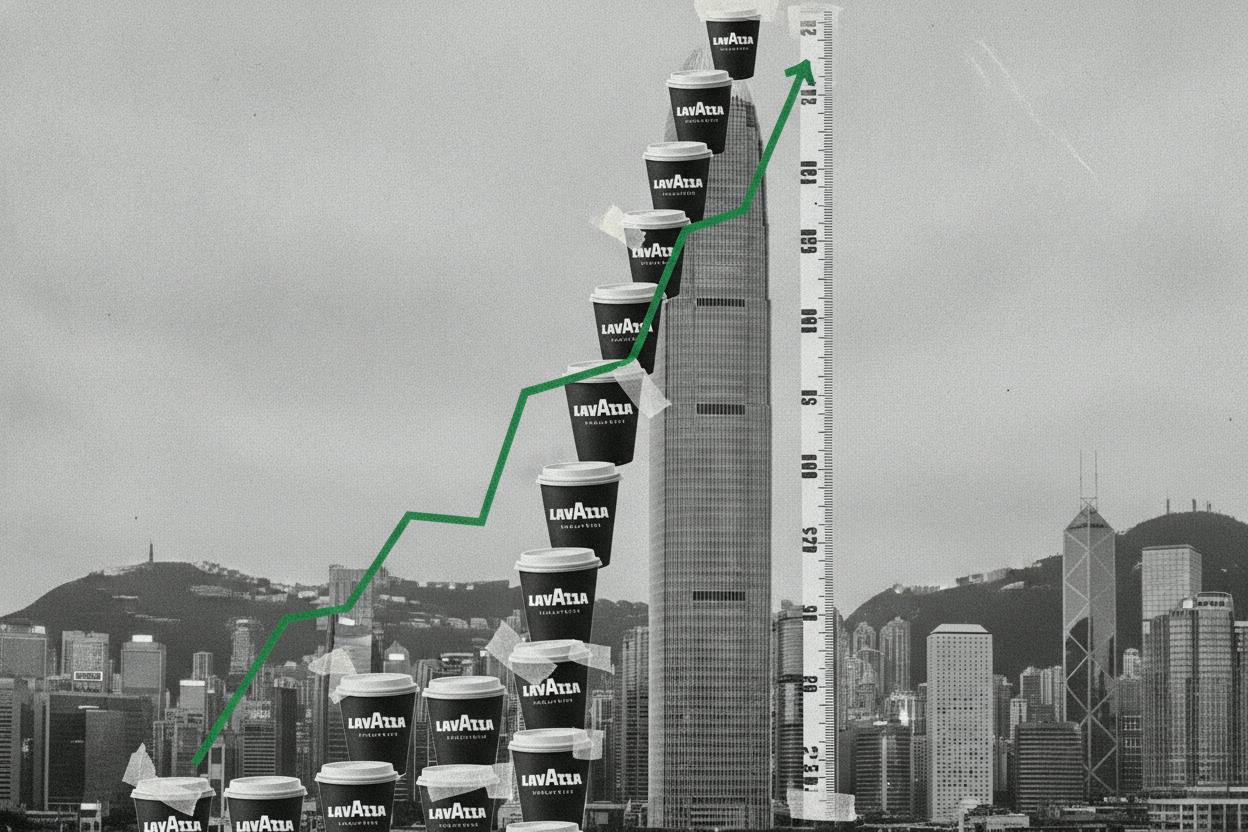
Yum China, the restaurant giant behind KFC and Pizza Hut in China, is stepping up its premium coffee push in Hong Kong. The company says it will roughly double the number of Lavazza coffee shops in the city to about 10 over the next few months, starting with a new outlet at Cheung Kong Center II in the Central business district.
The expansion is part of a much larger ambition. Yum China's 2025 annual report shows the Lavazza joint venture had 146 stores across mainland China and Hong Kong as of December 31, 2025, and the company has set a goal of reaching 1,000 locations by 2029. That would mean opening roughly 850 new cafes in about four years.
A premium play in a crowded market
Lavazza is an Italian coffee brand known for its espresso-based drinks and café culture. Yum China formed a joint venture with Lavazza in 2020 to operate the brand in China, and it owns 65% of that partnership. The Hong Kong expansion is a targeted move into the premium coffee segment, where customers are willing to pay more for a branded experience.
The company is focusing on high-traffic office towers and shopping districts like Central and Causeway Bay, where footfall is steady and disposable income is higher. It is also standardizing signature drinks, such as the Buffalo Milk Latte, to ensure consistency across locations. New products, including a returning Bicerin series and a Liquid Tiramisu drink, are designed to keep repeat customers coming back as the chain grows.
Hong Kong is a small but strategically important market for Yum China. The city has a dense population of coffee drinkers and a strong culture of dining out, making it a natural testing ground for premium concepts. But the real scale of the plan lies in mainland China, where the brand has far more room to grow.
What it means for investors
For investors, the 1,000-store target puts the spotlight on how quickly each new Lavazza store can become profitable. Opening a new café involves significant upfront costs—rent, staffing, equipment, and build-out—before sales have time to ramp up. That means new stores typically weigh on profits in their early months, even if older locations are performing well.
Because Yum China owns 65% of the venture, most of those early losses or later gains will show up in its consolidated financial results. That makes the company's earnings more sensitive to how fast each new store pays for itself. If the rollout goes smoothly, the venture could become a meaningful growth driver. If stores take longer to break even, it could dilute margins during the expansion phase.
This is a familiar pattern for restaurant chains. Companies often accept short-term margin pressure when they are scaling up, betting that the long-term revenue and brand value will more than compensate. The key question for Yum China is whether the premium coffee market in China and Hong Kong can support such rapid growth.
Yum China is not alone in chasing this opportunity. Global coffee chains and local players are all vying for a slice of China's growing coffee consumption. The market is competitive, but it is also expanding, as more Chinese consumers adopt daily coffee habits.
For everyday investors, the takeaway is that Yum China's Lavazza expansion is a long-term bet. It will take years to see whether the 1,000-store goal translates into solid returns. In the meantime, the company's overall performance—driven by its core KFC and Pizza Hut businesses—will continue to be the main driver of its stock price.
Yum China's broader strategy in China has been a focus for investors, especially as the country's economy faces headwinds. The company has shown resilience by adapting menus and formats to local tastes, and the Lavazza push is part of that effort to diversify beyond its traditional fast-food brands.
As the rollout progresses, investors will be watching store-level economics closely. The pace of openings, the performance of new locations, and any signs of margin pressure will all be on the radar. For now, the Hong Kong expansion is a modest but telling step in a much bigger plan.