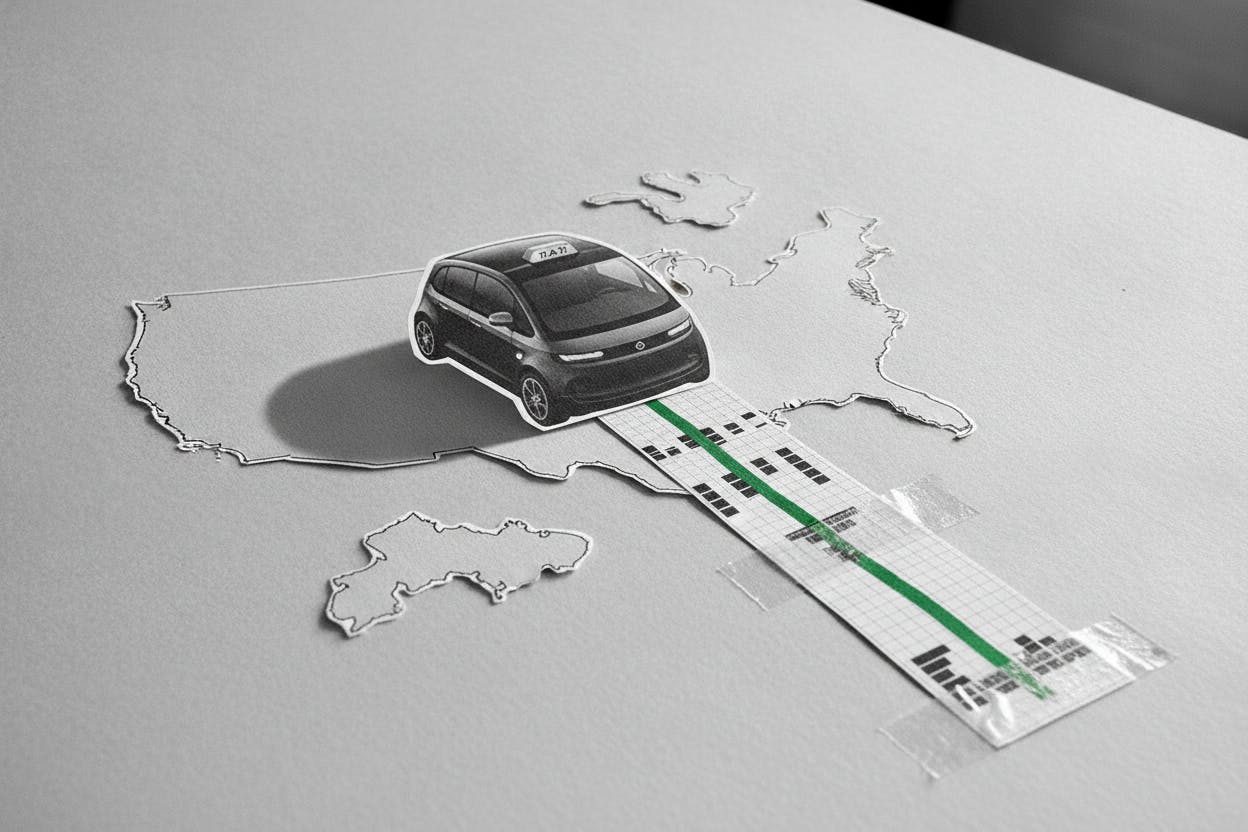
The race to bring driverless ride-hailing to American streets is accelerating. Amazon-owned Zoox is now testing its autonomous vehicles in Houston and San Diego, while Alphabet's Waymo is opening its service to public riders in Denver, San Diego, and Tampa. These moves turn what were once small pilot programs into a broader rollout across the country.
For everyday investors, this is a signal that two of the biggest tech companies are betting heavily on autonomous transportation. The expansion is not just about adding cities; it's about proving that driverless cars can operate safely and profitably at scale.
What's happening on the ground
Zoox, which Amazon acquired in 2020, has been developing a purpose-built robotaxi—a vehicle without a steering wheel or pedals, designed specifically for autonomous ride-hailing. Its testing in Houston and San Diego marks a step beyond its earlier operations in Las Vegas and the San Francisco Bay Area. The company is likely using these new locations to gather data on how its vehicles handle different traffic patterns, weather, and road conditions.
Waymo, a subsidiary of Alphabet, has been operating driverless ride-hailing in Phoenix and San Francisco for years. Now it's expanding to Denver, San Diego, and Tampa, opening its service to the general public in those cities. Waymo's approach uses its own suite of sensors and software, and it has already logged millions of miles of autonomous driving.
Both companies are moving beyond the testing phase. They are now competing to establish a presence in multiple markets, which is a key step toward making driverless ride-hailing a mainstream option.
Why this matters for investors
For investors, the expansion is a reminder that autonomous vehicles are no longer a distant concept. They are becoming a real business, with real revenue potential. However, the economics are still being worked out. Driverless ride-hailing requires massive upfront investment in vehicles, sensors, and software, and it's not yet clear when these operations will become profitable.
Amazon's involvement is notable because the company has been investing heavily in logistics and delivery. Zoox could eventually integrate with Amazon's broader delivery network, though the current focus is on passenger ride-hailing. Alphabet, meanwhile, sees Waymo as a way to diversify beyond its core advertising business.
Investors should also consider the competitive landscape. Other players, including Tesla and various startups, are also pursuing autonomous driving. The race is not just about technology; it's about regulatory approvals, public acceptance, and operational efficiency. Companies that can scale safely and cost-effectively will likely be the winners.
What to watch next
Key metrics to monitor include the number of rides each company completes, safety records, and any announcements about new cities or partnerships. Regulatory hurdles remain a significant factor. Each state has its own rules for autonomous vehicles, and federal guidelines are still evolving.
For Amazon, this expansion comes as the company recently crossed the $3 trillion market cap milestone, partly driven by its cloud computing business. Zoox is a smaller piece of Amazon's puzzle, but it shows the company's willingness to invest in long-term bets.
Alphabet, too, has been in the spotlight for its AI investments. Waymo's expansion could be seen as another example of Alphabet leveraging its technological expertise to enter new markets. Investors who follow AI-driven growth may see autonomous driving as a related frontier.
The bigger picture
The move to more cities is a sign that driverless ride-hailing is transitioning from pilot projects to commercial operations. But it's still early days. The technology must prove itself in diverse environments, and public trust needs to grow. For investors, this is a story to watch rather than a reason to rush in.
As with any emerging technology, there will be bumps along the road. But the direction is clear: autonomous vehicles are coming to more American cities, and the companies leading the charge are some of the most powerful in tech.