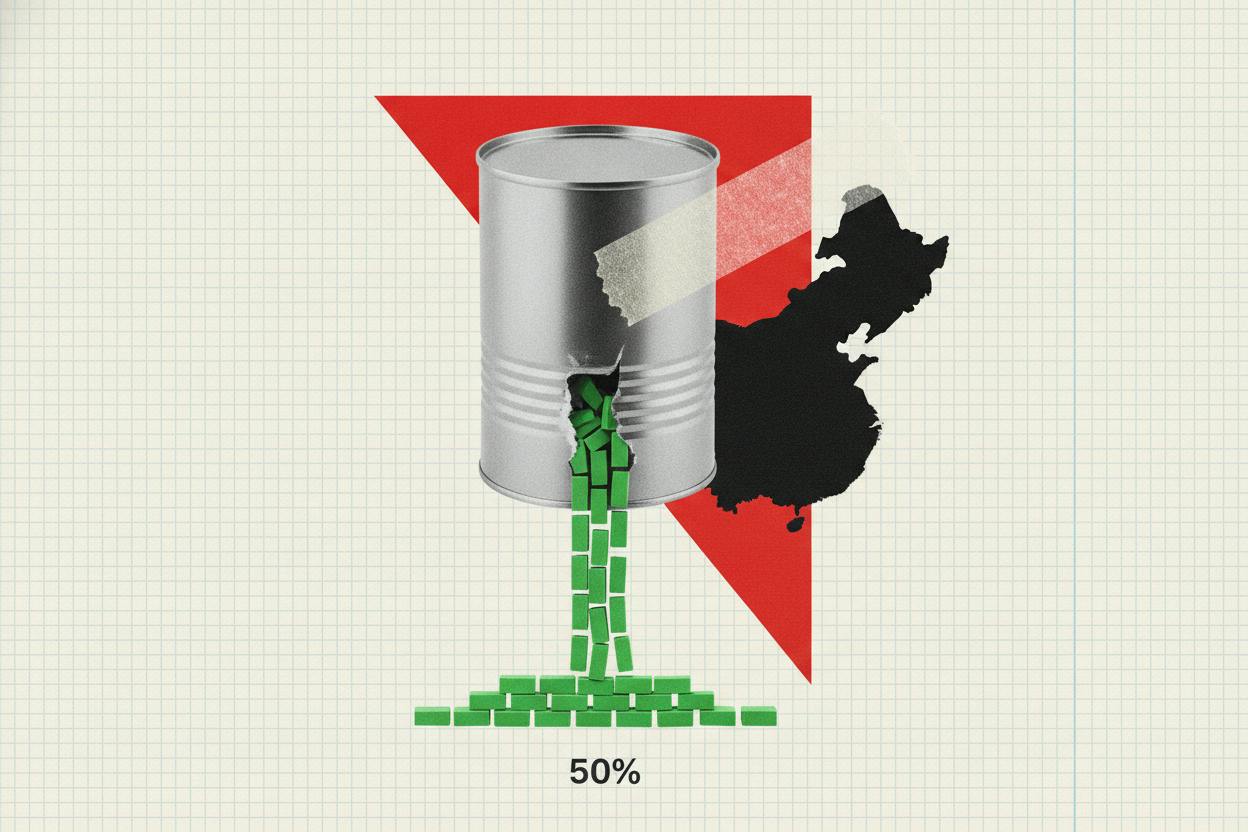
New Zealand dairy company a2 Milk has trimmed its revenue expectations for the first half of fiscal 2027, citing a slower-than-hoped recovery in its China-label infant formula business. The company said “offtake” — a measure of how quickly products are selling through to shoppers — has climbed back to about 50% of pre-disruption levels, up from roughly 40% in August. But that improvement wasn’t enough to prevent a downgrade, and investors reacted sharply, sending the stock down 9.7% to NZ$8.01.
What’s behind the slowdown?
a2 Milk’s China-label infant formula is a key growth driver, and the company has been dealing with a supply disruption that has limited how much product reaches store shelves. While offtake is recovering, it’s still only halfway back to where it was before the disruption. That means many parents who switched to other brands during the shortage haven’t yet returned, and winning them back takes time and money.
The company now expects revenue for the first six months of fiscal 2027 to come in below the same period a year earlier, rather than being broadly flat as previously guided. That’s a meaningful shift, and it puts more pressure on the second half of the fiscal year to deliver the growth a2 Milk still expects for the full year.
a2 Milk maintained its full-year 2027 outlook for mid-single-digit revenue growth. That implies the recovery needs to accelerate significantly in the second half. Citi, a global investment bank, noted that the improving offtake is encouraging but warned that re-winning parents who switched brands during shortages can be a slow and costly process.
What it means for investors
For shareholders, the key takeaway is that a2 Milk’s earnings and cash flow for fiscal 2027 now hinge more heavily on a timely rebound in China. Cutting first-half expectations while keeping the full-year target effectively pushes the heavy lifting into the back half of the year.
Companies in this position often try to close the gap by spending more on marketing and distribution to re-acquire customers, and by increasing “sell-in” — shipping more inventory to retailers and distributors. But those moves can squeeze profit margins and tie up cash in working capital, even if shopper demand is improving.
That’s why a first-half downgrade can trigger a bigger valuation rethink. Investors may start to question not just the timing of the recovery, but the cost of achieving it. If a2 Milk has to spend heavily to win back customers, the quality of its earnings could suffer even if revenue eventually rebounds.
The company’s stock drop reflects that concern. At NZ$8.01, the market is pricing in a slower and more expensive recovery than management’s full-year guidance might suggest.
Broader context
a2 Milk’s troubles are part of a wider story about China’s consumer market. The country’s birth rate has been declining for years, which has reduced overall demand for infant formula. At the same time, domestic Chinese brands have gained share, making it harder for foreign companies like a2 Milk to grow.
The supply disruption that hit a2 Milk is separate from those long-term trends, but it compounds them. When a brand loses shelf space and customer loyalty during a shortage, it can be difficult to regain momentum, especially in a market where parents are particularly cautious about switching formulas.
Investors will be watching a2 Milk’s second-half performance closely. The company needs to show that offtake continues to climb and that it can win back former customers without blowing up its profit margins. Any sign that the recovery is stalling or that marketing costs are spiraling could put further pressure on the stock.
For now, the market is taking a cautious view. The 9.7% drop suggests that investors see the first-half downgrade as a warning sign, not just a temporary blip. The company’s ability to deliver on its full-year target will be the key test in the months ahead.
Related coverage: a2 Milk's China formula sales recover to half of pre-disruption levels and Hong Kong tech stocks hit 26-month low.



