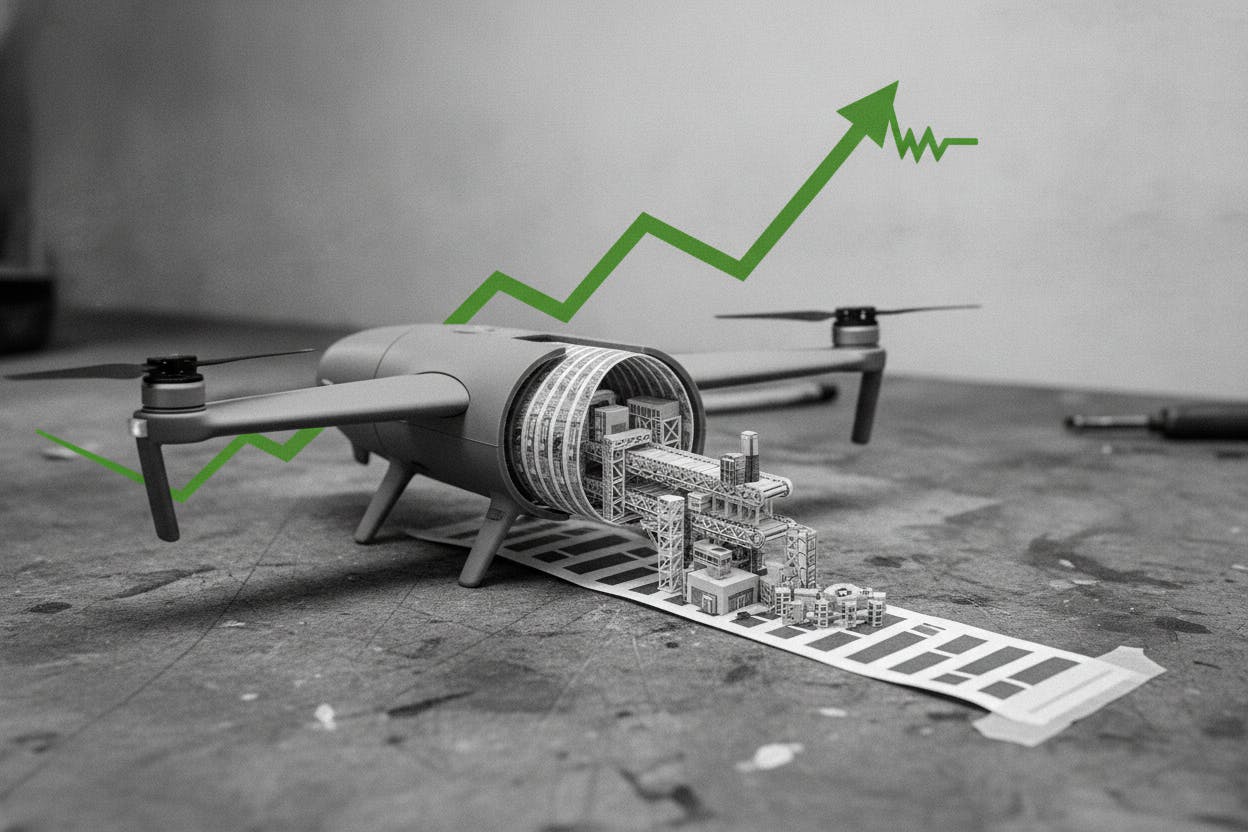
AeroVironment, a US defense technology company specializing in small military drones, saw its shares jump approximately 30% after reporting quarterly results that topped Wall Street estimates and outlining a significantly larger revenue target for fiscal 2027. The move underscores investor enthusiasm for the company's long-term growth prospects, even as management flagged potential delays in US defense funding.
Quarterly Results Beat Expectations
For its fiscal fourth quarter, AeroVironment reported adjusted earnings per share of $1.84 on revenue of $641.6 million. Both figures exceeded analysts' expectations tracked by FactSet. The revenue growth was driven primarily by increased shipments of autonomous systems hardware, though the company's space, cyber, and directed-energy segment faced headwinds from a contract termination and delayed government funding.
The strong quarter capped a fiscal year in which AeroVironment's revenue nearly doubled to about $2 billion, reflecting robust demand for its drone systems amid rising global defense spending.
Ambitious 2027 Target, Near-Term Profit Trade-Off
The headline news, however, was the company's guidance. Management projected fiscal 2027 revenue in the range of $2.13 billion to $2.23 billion, slightly above the average analyst estimate. This target signals confidence in continued growth, particularly as the company expands its commercial and international sales efforts.
But the near-term profit outlook was less rosy. AeroVironment guided fiscal 2025 adjusted earnings per share to between $3.02 and $3.34, below the consensus estimate of $3.52. The company plans to invest heavily in commercialization, international sales capacity, and production infrastructure, prioritizing growth and delivery capability over immediate margins.
This trade-off is a deliberate strategy: the company is betting that today's spending will lead to higher production volumes and smoother deliveries in the future, creating operating leverage as revenue grows faster than costs.
Defense Funding Uncertainty Looms
AeroVironment also warned that it is not assuming early-arriving federal funding in government fiscal 2027, hinting that the timing of contract awards could make quarterly results choppier than the underlying long-term demand picture suggests. This caution reflects broader uncertainty around US defense budgets and procurement timelines, which can shift due to political negotiations or policy changes.
For investors, this means that while the long-term trajectory appears strong, quarterly results may be volatile. Each budget update or contract-timing headline could move the stock, as analysts adjust their estimates based on the latest signals from Washington.
What It Means for Investors
AeroVironment's story is one of growth investment. The company is spending now to capture a larger share of the drone market, which is expanding as militaries worldwide adopt unmanned systems for surveillance, reconnaissance, and combat roles. The revenue target for 2027 suggests management sees a clear path to doubling revenue again over the next few years.
However, the near-term profit miss means investors need to be patient. The payoff from today's spending may take time to materialize, and any delays in defense funding could push revenue further out. This dynamic tends to widen the range of analyst estimates, making the stock more sensitive to news about budgets and contract awards.
For context, the broader defense sector has seen mixed performance recently. While some companies benefit from increased global tensions and defense budgets, others face delays in contract awards and funding. AeroVironment's focus on drones, a fast-growing niche, positions it well, but the company's reliance on government customers introduces uncertainty.
In the near term, investors will watch for updates on US defense spending and contract awards, as well as the company's progress in ramping up production and international sales. If the investments pay off, AeroVironment could deliver strong returns over the next few years. But the path may be bumpy.