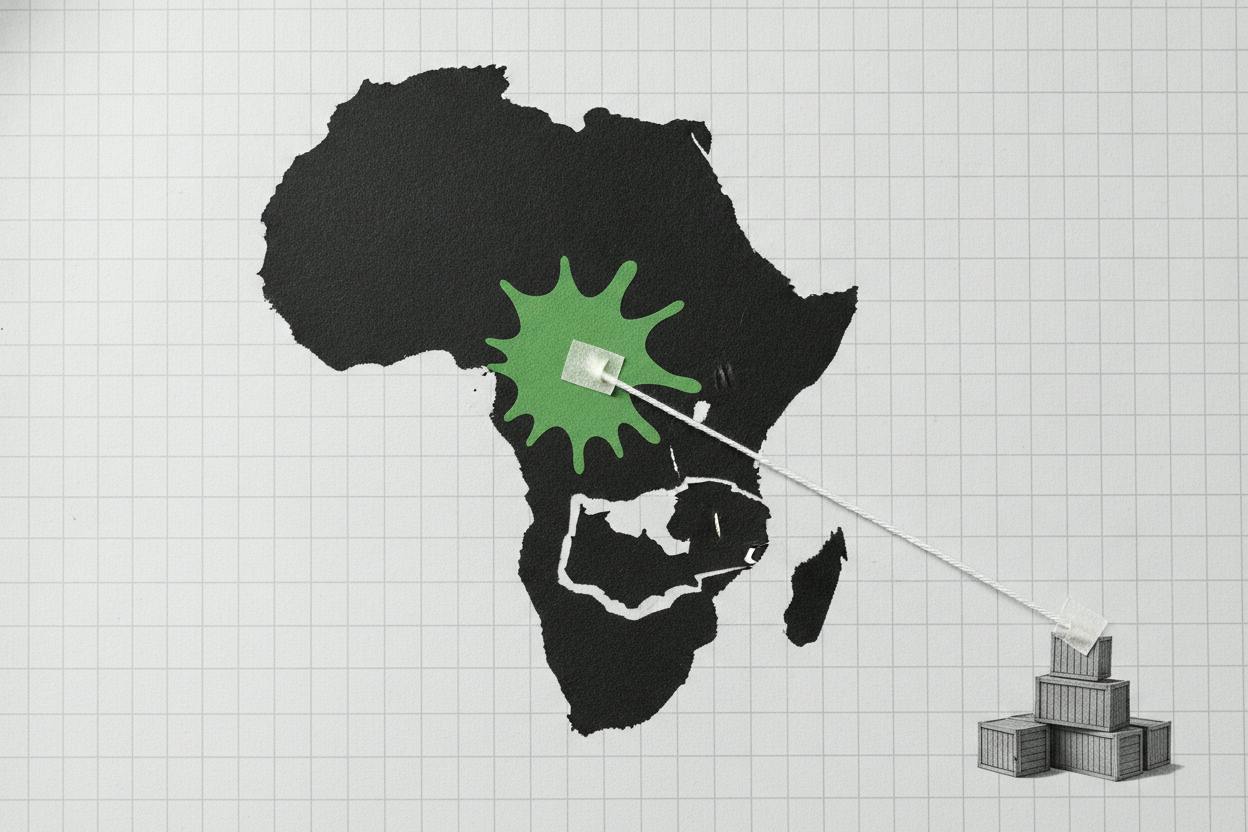
Most of Africa's major currencies are expected to trade in narrow ranges against the US dollar this week, as traders match dollar supply with importer demand rather than taking big directional bets. The exception is Zambia's kwacha, which continues to drift weaker under the weight of persistent importer demand.
What's moving the currencies
In Nigeria, the naira is seen holding steady after being quoted around 1,346 per dollar on the official market on Thursday. Reuters reported that foreign portfolio inflows are helping to cover seasonal demand, which has kept the currency within a tight band. For everyday investors, a stable naira means less uncertainty for those with exposure to Nigerian assets or remittances.
Ghana's cedi also looks stable, with LSEG data putting it near 11.62 per dollar. Traders point to better foreign-exchange liquidity coming from the extractive sector, as well as the central bank's GoldBod programme, which sells dollars directly to the market. This improved supply has helped cushion the cedi against typical seasonal pressures.
Kenya and Uganda are similarly expected to remain quiet, with no major catalysts on the horizon. This is a week where most desks are simply balancing books rather than positioning for a move.
Why Zambia stands out
Zambia's kwacha is the outlier, continuing to weaken as importers demand dollars. The country relies heavily on copper exports, and when global commodity prices or local conditions shift, the kwacha can feel the pinch. Persistent importer demand—often for fuel, machinery, and consumer goods—can outpace the supply of dollars coming into the economy, putting downward pressure on the currency.
For investors with exposure to Zambian assets, a weaker kwacha can erode returns when converted back to dollars or other hard currencies. It also raises the cost of imported goods, which can feed into inflation. The central bank may step in to support the currency, but such interventions are often limited by reserves.
What it means for investors
For most investors, a quiet week in African FX markets is a welcome respite. Stable currencies reduce the risk of sudden losses on investments in local-currency bonds or equities. However, the calm can be deceptive—currencies can move quickly when global sentiment shifts, as seen in recent weeks with the dollar's strength tied to US economic data.
Investors should keep an eye on the broader backdrop. The dollar has been firming as traders await US jobless claims and GDP data, which could influence the Federal Reserve's next moves. A stronger dollar typically puts pressure on emerging market currencies, including those in Africa. For context, the rand has already slipped on weaker gold and platinum prices, showing how commodity-linked currencies can diverge.
Meanwhile, African markets are juggling a mix of oil price moves, AI earnings, and Namibia's recent rate hike, all of which can influence capital flows into the region. And with Absa opening a Dubai hub to channel Gulf money into African markets, there is potential for increased investment flows, which could support currencies over the medium term.
Looking ahead
Traders will be watching for any signs of central bank intervention, especially in Zambia. If the kwacha's slide accelerates, the Bank of Zambia may step in to smooth volatility. For Nigeria and Ghana, the focus will be on whether foreign inflows continue to support their currencies as the year progresses.
For everyday investors, the key takeaway is that currency stability is not guaranteed. Diversification across currencies and asset classes can help manage risk. And while a quiet week is good news, it's worth remembering that African FX markets can turn quickly on global headlines.
As always, staying informed about the factors driving these currencies—from commodity prices to central bank policies—can help you make more confident decisions about your investments.