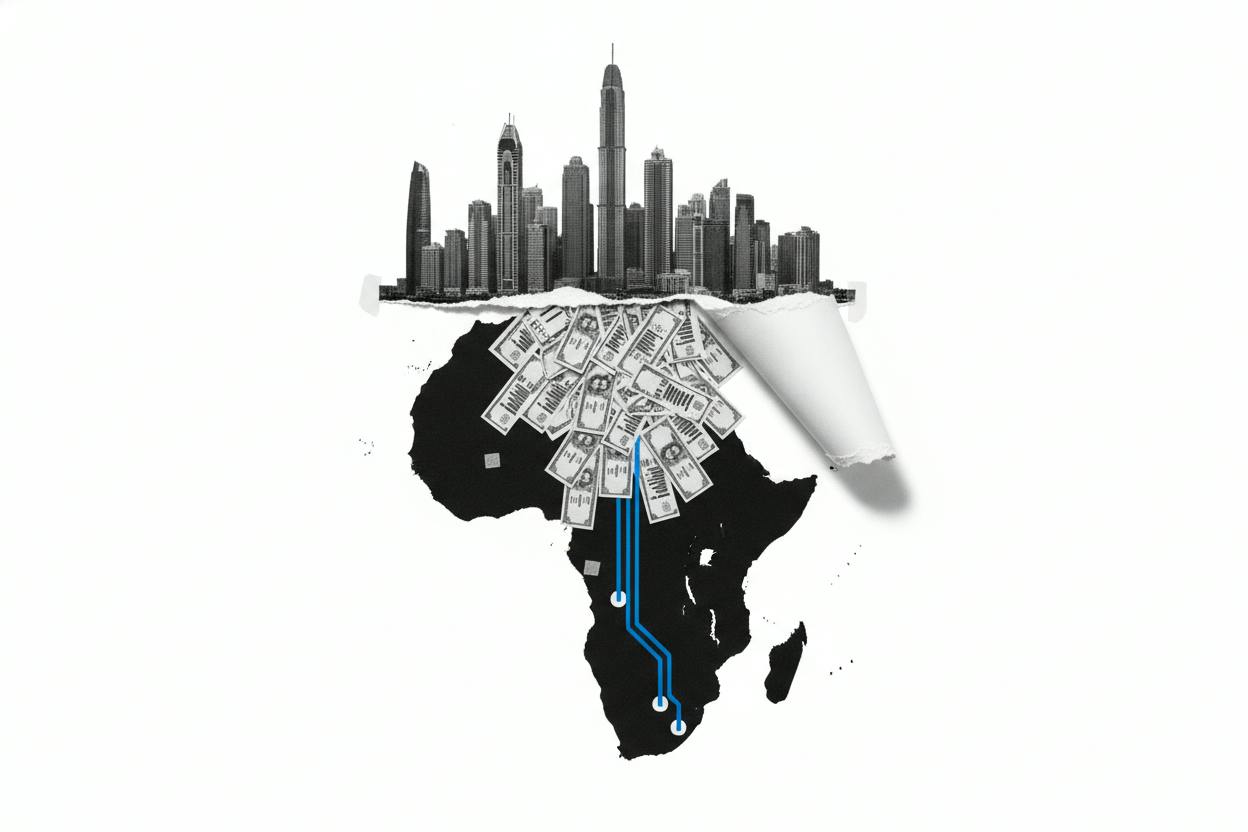
South Africa's Absa Group has opened its first office in the Gulf, setting up shop in Dubai's financial free zone to act as a bridge between Middle Eastern money and its banking network across 16 African markets. The move, reported by Reuters, is part of a broader push by African lenders to tap into the growing financial flows between the Gulf and the continent.
A connector, not a mini-bank
Absa's new outpost in the Dubai International Financial Centre (DIFC) is designed to be a connector rather than a full-service bank. It operates under a license from the Dubai Financial Services Authority (DFSA), granted in July, but it won't be making loans from its own balance sheet. Instead, its role is to introduce Gulf corporates, investors, and institutions to projects and services that will be delivered through Absa's existing businesses across Africa.
This structure means the Dubai office will focus on originating deals and building relationships, while the actual funding and day-to-day banking—like handling payments and cash management—will be done by Absa's local entities in Africa. For Absa, this is a capital-light way to expand its reach without taking on the risk of a new loan book in a region where it has no direct banking presence.
Deepening Gulf-Africa ties
The timing reflects a broader trend of deepening economic ties between the Gulf and Africa. According to UAE government figures cited by Reuters, non-oil trade between the UAE and Africa reached $158 billion in 2025, up from about $112 billion a year earlier. That's a significant jump, and it's being driven by demand for infrastructure, energy, logistics, and agriculture—sectors where Absa says it's seeing the strongest interest from Gulf clients.
Absa is not alone in this strategy. It's following peers like Investec, Standard Bank Group, and Nedbank Group, which already have offices in Dubai. The bet is that Dubai remains a practical hub for cross-border dealmaking, even with regional geopolitical risks in the background.
What it means for investors
For investors watching Absa, the key question isn't how much lending the Dubai office will do—it's whether these cross-border connections can generate a steady stream of fee income. A hub that doesn't lend is usually chasing a different revenue stream than traditional credit growth. In Absa's setup, the Dubai office is likely to earn fees from arranging deals, providing advisory services, and handling transaction banking, rather than interest income from a new loan book.
This fee-based model can be attractive because it doesn't tie up capital or add significant balance-sheet risk. But it also means the success of the Dubai office will depend on the volume and value of deals it can facilitate. If Gulf investors are serious about putting money into African infrastructure and energy projects, Absa could see a meaningful boost in fee income. If not, the office may remain a modest contributor.
For everyday investors, this is a reminder that banks are increasingly looking beyond traditional lending to grow. Absa's move is part of a wider trend where African banks are seeking to capture cross-border investment flows, which can be a lucrative but competitive business. The Afreximbank-backed buyout of Oryx Energies is another example of how Gulf and African financial interests are intertwining.
Absa's expansion also comes at a time when South Africa's economy is showing some positive signs, with a recent GDP rebasing lifting the economy 5% on paper. That could make the country's banks more attractive to foreign investors, though currency fluctuations remain a factor—the rand has been sensitive to gold and platinum prices.
Risks and watch points
There are risks, of course. Geopolitical tensions in the Middle East could disrupt the flow of deals, and the regulatory environment in different African markets can be complex. Absa will also face competition from other banks that are already established in Dubai, as well as from local Gulf banks that are increasingly looking to Africa for growth.
Investors will be watching to see how quickly Absa can convert its Dubai presence into actual fee income. The bank hasn't given specific targets, but the strategic logic is clear: by positioning itself in Dubai, Absa hopes to capture a slice of the growing Gulf-Africa investment corridor. Whether that translates into meaningful profits will depend on execution and the broader economic climate.
For now, the move is a signal of confidence in the long-term potential of African markets, even as global investors remain cautious about some of the continent's risks. It's a bet that Dubai's role as a financial gateway will continue to grow, and that Absa can be a key player in connecting Gulf capital with African opportunity.