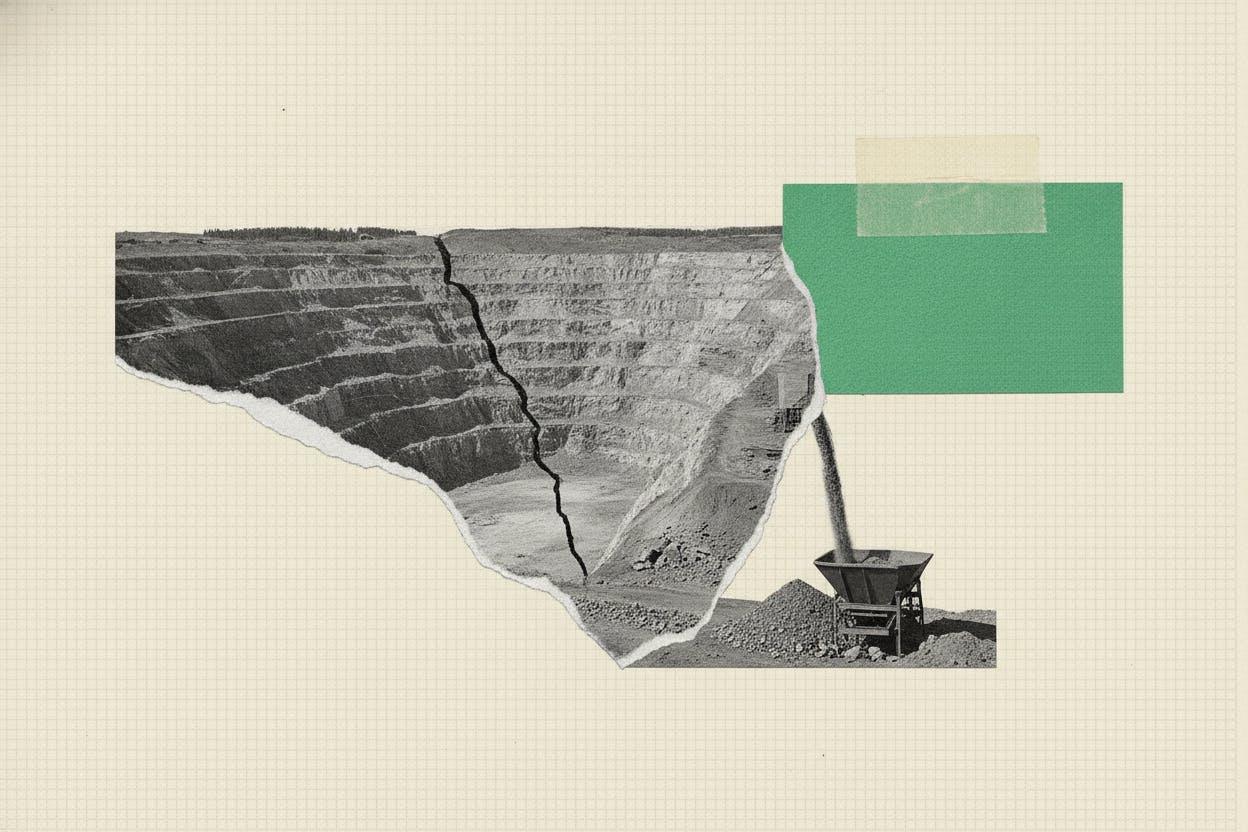
Agnico Eagle Mines (AEM) has temporarily halted mining at the Barnat open pit at its Canadian Malartic complex in Quebec after a section of the north wall shifted. The Canada-based gold miner said the pause is precautionary and caused no injuries, equipment damage, or environmental impact. However, the disruption is expected to reduce production later in 2026.
What Happened at Barnat Pit?
The Barnat pit is part of the larger Canadian Malartic operation, one of Canada's largest gold mines. Agnico said the wall shift was detected during routine monitoring, prompting an immediate halt to mining activity in that area. The company is now assessing the stability of the wall and planning remediation work before resuming operations.
While the pit is paused, the Canadian Malartic mill can continue processing low-grade ore that has already been mined and stored in stockpiles. This allows the company to keep second-quarter output slightly above plan at about 845,000 ounces. But stockpiles are a temporary solution, not a permanent fix.
Impact on Production and Guidance
Agnico now expects Canadian Malartic to produce 60,000 to 80,000 fewer ounces in the second half of 2026. That shortfall pushes the company's 2026 guidance toward the low end of its 3.3 to 3.5 million ounce range. The near-term headline looks steady, but the medium-term risk is that the mine feeds the plant with less and lower-quality material than planned once the stockpile cushion thins.
For context, Canadian Malartic is a cornerstone asset for Agnico, accounting for a significant portion of its total production. Any disruption at this site can ripple through the company's overall output and costs.
What It Means for Investors
The 60,000-80,000 ounce shortfall could matter more for costs than for headlines. Running a plant on lower-grade stockpiles can keep gold flowing, but it often means fewer ounces for roughly the same day-to-day effort: staffing, power, and maintenance don't fall much just because the ore is weaker. If Canadian Malartic is short 60,000-80,000 ounces in the second half of 2026, those stickier costs get spread over fewer ounces, which can compress profit margins and free cash flow even without a full shutdown.
That's why the bigger market question is how smoothly Agnico restores the pit plan and ore quality, not whether the company can still post a solid Q2 production number. Investors will be watching for updates on the wall remediation timeline and any changes to cost guidance.
Gold miners often face such geotechnical challenges, and Agnico has a strong track record of managing them. But the longer the Barnat pit remains paused, the more pressure on 2026 output and costs.
In the broader mining sector, similar operational hiccups have affected other producers. For instance, Chile's copper mining output plunged 11.6% recently due to various disruptions, highlighting how geological and operational risks can impact commodity supply chains.
Looking Ahead
Agnico's next quarterly earnings report will likely provide more details on the Barnat pit situation and any adjustments to 2026 guidance. The company's ability to maintain its dividend and capital spending plans will depend on how quickly it can restore full production at Canadian Malartic.
For everyday investors, this story underscores the importance of understanding that mining companies face inherent operational risks. A single pit wall shift can alter production forecasts and cost structures, even if the headline Q2 number looks fine. Diversification across multiple mines and commodities can help mitigate such risks in a portfolio.