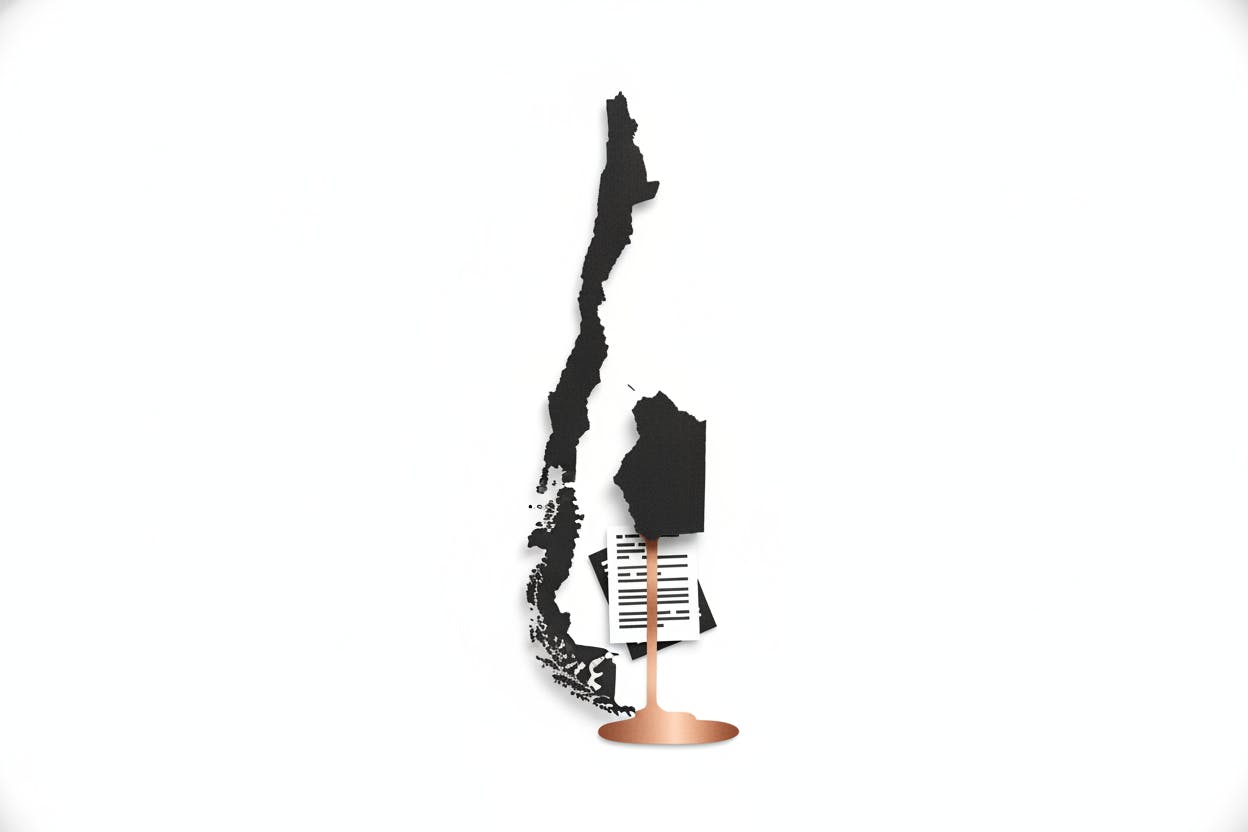
Chile's economy hit another rough patch in May, as a sharp drop in copper mining dragged the country's main activity gauge lower. The central bank's Monthly Economic Activity Index (IMACEC) fell 0.9% from a year earlier, coming in weaker than analysts had forecast.
The slump was concentrated in goods production, which dropped 4.7% after mining output plunged 11.6%. Manufacturing also declined 1.7%. The bank noted that May had one fewer working day than the same month last year, but even after adjusting for seasonal effects, the index still slipped 0.2% from April.
Copper's outsized role
Chile is the world's largest copper producer, and mining is a huge part of its economy. But the sector is capital-intensive, meaning it relies more on heavy machinery and equipment than on large workforces. So a mining-led downturn doesn't automatically translate into an equally sharp rise in layoffs.
Other parts of the economy held up better. Commerce rose 0.8% and services grew 1.0% in May, but those gains weren't enough to offset the mining drag. The mix matters because consumer-facing sectors employ far more people than mining does, so the hit to jobs can lag behind the headline numbers.
Copper prices have been under pressure recently. A strong U.S. dollar and uncertainty over tariffs have weighed on base metals, as we covered in Aluminum and Copper Slide as Strong Dollar, Tariff Uncertainty Hit Base Metals. That backdrop makes it harder for Chile's mining sector to rebound quickly.
What it means for investors
For everyday investors, the key takeaway is that Chile's top-line economic data can swing sharply with copper output. But the real story for jobs and wages lies in services and commerce. If those sectors can accelerate from here, the economy could find a firmer footing even if copper production stays weak.
The government's growth-and-jobs push becomes more challenging if consumer-facing sectors soften. And while mining's 11.6% drop was big enough to drag the IMACEC down 0.9%, the clearer read on hiring momentum will come from whether services and retail can pick up the slack.
Investors should also watch for signs of stabilization in copper. Several mining companies are betting on the metal's long-term prospects. For example, South32's Sierra Gorda joint venture recently approved a $725 million mill expansion to boost copper output, as we noted in South32's Sierra Gorda JV Approves $725M Mill Expansion to Boost Copper Output. That kind of investment suggests some players see current weakness as temporary.
On the other hand, the IPO market for copper stocks has hit a snag. Vedanta-backed CopperTech recently halted its $423.5 million NYSE listing amid a broader slump in copper shares, as we reported in Vedanta-Backed CopperTech Halts $423.5 Million NYSE IPO Amid Copper Stock Slump. That signals caution among investors about near-term copper demand.
Broader context
Chile's slowdown comes as other economies show mixed signals. Canada's economy posted its strongest monthly growth in nine months in April, but tariff risks still loom, as we covered in Canada's Economy Posts Strongest Monthly Growth in Nine Months, But Tariff Risks Loom. Meanwhile, the UK economy grew 0.6% in the first quarter of 2026, but households felt the squeeze as incomes fell, as we noted in UK Economy Grew 0.6% in Q1 2026, but Households Felt the Squeeze as Incomes Fell.
For Chile, the path forward depends on whether services and commerce can sustain their growth. If they do, the economy may avoid a deeper downturn even if copper remains volatile. But if consumer-facing sectors soften, the government's growth targets will become harder to meet.