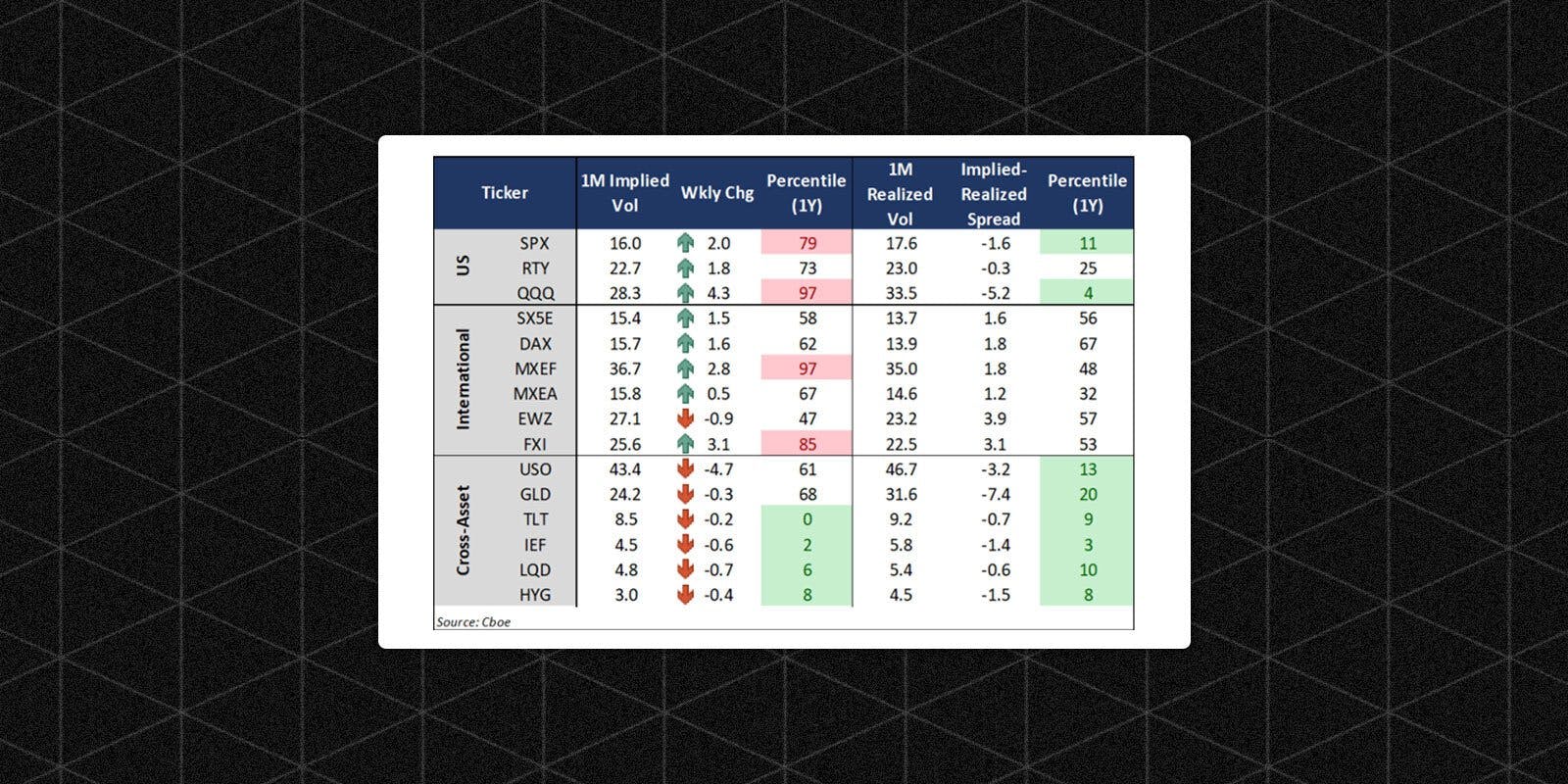
After weeks of turbulence, most asset classes finally saw a bit of calm last week. Implied volatility — a measure of how much traders expect prices to swing in the future — settled down across bonds, commodities, and broad stock indexes. But if you were watching the tech sector, you probably didn't feel the peace.
Tech-heavy indexes, particularly those packed with artificial intelligence and big tech names, remained notably jittery. The divergence is a reminder that while the broader market may be catching its breath, the AI trade is still generating plenty of uncertainty.
What Is Implied Volatility and Why Does It Matter?
Implied volatility is essentially the market's best guess at how much a stock or index will move over a given period. It's derived from options prices and tends to rise when investors are nervous and fall when they're confident. For everyday investors, it's a useful gauge of market sentiment — and a signal about how much risk is being priced in.
When implied volatility drops across most assets, it usually suggests that investors are becoming more comfortable with the economic outlook. That's what happened last week: bond markets, currency pairs, and even some commodity markets saw their volatility measures decline. But the tech-heavy Nasdaq and other AI-focused indexes didn't get the memo.
Why Tech Is Still on Edge
The persistent volatility in tech stocks isn't surprising given the sector's recent history. AI-related stocks have been on a wild ride, with massive rallies followed by sharp pullbacks as investors try to figure out which companies will actually profit from the technology. The uncertainty around AI regulation, competition, and the pace of adoption keeps traders on edge.
Big tech names like Apple, Microsoft, and Nvidia — which dominate many indexes — also face specific pressures. Antitrust scrutiny, shifting consumer demand, and the high cost of AI infrastructure all contribute to the choppiness. When a handful of mega-cap stocks account for a large chunk of market value, their swings can ripple through the entire index.
This pattern isn't entirely new. Earlier this year, South Korean chip stocks slid as US AI volatility spilled over, showing how the jitters can spread globally. And the recent Anker IPO in Hong Kong drew heavy demand, with a tight float that may fuel further volatility — a sign that investors are still hungry for tech exposure but wary of the risks.
What It Means for Everyday Investors
For the average investor, the takeaway is straightforward: don't assume that calm in one part of the market means calm everywhere. If you hold a diversified portfolio, the broader easing of volatility is a positive sign. But if you're heavily weighted in tech or AI stocks, you should expect continued ups and downs.
That doesn't mean you should panic or make sudden moves. Volatility is a normal part of investing, and periods of elevated uncertainty can create opportunities for long-term investors. But it does mean you should be aware of the risks. Tech stocks can fall just as fast as they rise, especially when sentiment shifts.
One way to manage this is to ensure your portfolio isn't too concentrated in any single sector. Even if you're bullish on AI, spreading your investments across different industries and asset classes can help smooth out the ride. The recent calm in other markets is a reminder that not everything moves in lockstep.
Looking Ahead
Investors will be watching several factors in the coming weeks. Earnings reports from major tech companies will be a key test — if results disappoint, the volatility could spike further. On the other hand, if companies show strong AI-related revenue growth, it could reassure markets and bring volatility down.
Central bank decisions also matter. The Federal Reserve's stance on interest rates influences how investors value growth stocks, and any surprises could reignite volatility across the board. Meanwhile, the PBOC's new overnight reverse repo tool shows how global central banks are trying to manage short-term volatility in their own markets.
For now, the message is clear: volatility hasn't disappeared — it's just become more selective. AI and big tech remain the epicenter of uncertainty, and until the picture becomes clearer, investors should expect the ride to stay bumpy in that corner of the market.