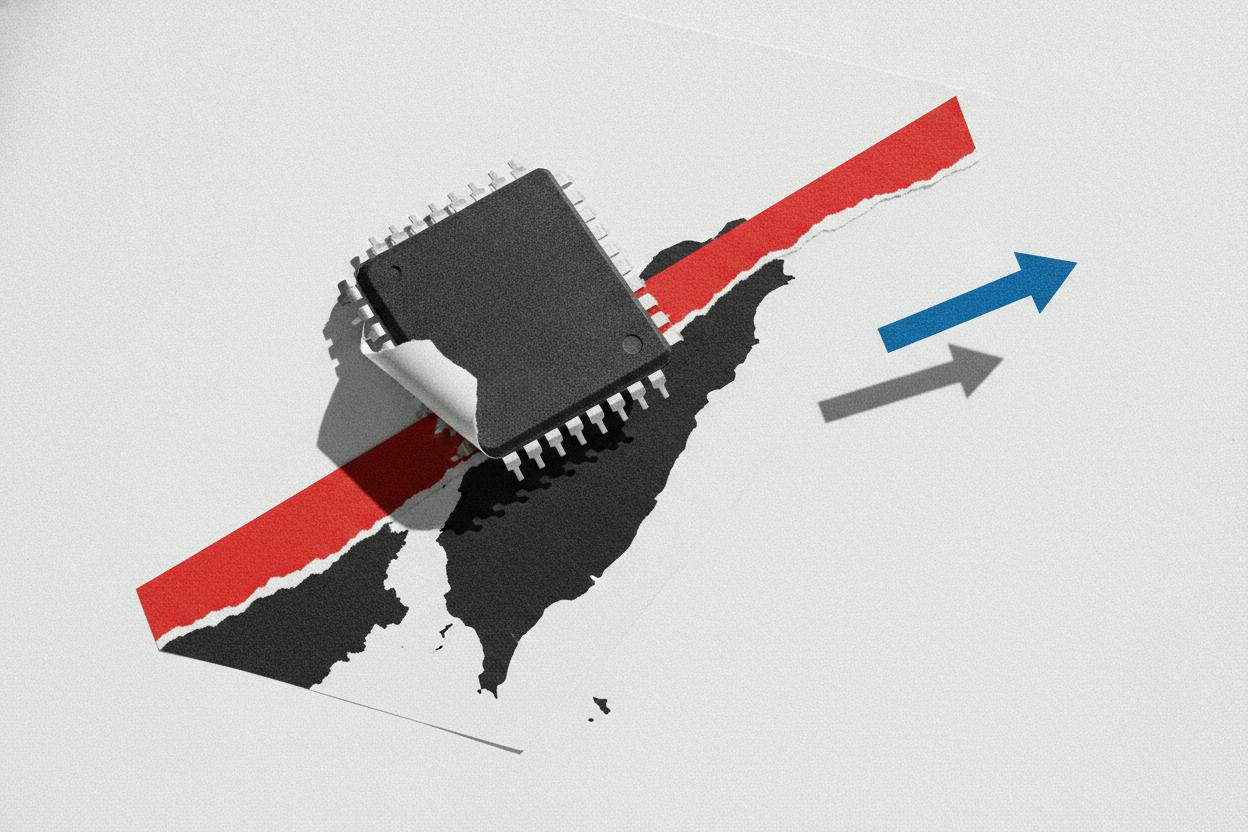
Asian markets with heavy exposure to the artificial intelligence supply chain took a hit on Monday, as investors braced for two major events later this week: Nvidia's earnings report and the highly anticipated Anthropic IPO. Taiwan's benchmark index fell 4.6%, while South Korea's KOSPI dropped about 3%, according to Reuters.
The selling was concentrated in the region's chip-making standouts. Taiwan Semiconductor Manufacturing Company (TSMC), the world's largest contract chipmaker, slid 3.8%. In South Korea, Samsung Electronics and SK Hynix—two of the biggest memory-chip producers—fell 3.1% and 5.7%, respectively.
Why chip stocks are so sensitive
Investors often treat these companies as proxies for Nvidia because their fortunes are tightly linked to data-center demand and how much big tech spends on AI hardware. TSMC manufactures many of the advanced chips that power AI servers, while Samsung and SK Hynix supply the high-bandwidth memory that those systems require. When Nvidia's outlook shifts, it ripples through the entire supply chain.
This week's events are particularly significant. Nvidia's earnings, due Tuesday, will give investors a fresh read on whether the AI boom is still accelerating or starting to cool. Meanwhile, Anthropic's IPO—a closely watched offering from the AI startup—will test whether public-market investors are still willing to pay up for AI-related growth stories.
When a single event can reset expectations, global funds often reduce risk first and ask questions later. That can create a feedback loop: weaker chip shares pull down chip-heavy indexes, and foreign investors selling local stocks may also swap the proceeds back into US dollars, which can weigh on local currencies.
Beyond the benchmarks: currencies and regional caution
The stress wasn't confined to Taiwan and South Korea. Reuters noted broader caution across the region, from steep declines in Philippine stocks to renewed attention on Indonesia's rupiah ahead of its central bank meeting. That suggests the pullback is part of a wider de-risking move, not just a one-off wobble in chip names.
The currency market offers a real-time read on how worried foreign investors are. The South Korean won traded at 1,335.84 per dollar, and the Taiwan dollar hovered near 32.963. If overseas investors are cutting exposure, they're not just selling shares—they're often converting those local proceeds back into dollars. A softer won or Taiwan dollar can indicate that de-risking is spreading beyond a few stocks and turning into a broader pullback from the two most chip-heavy markets in Asia.
For everyday investors, the key takeaway is that AI-related stocks are likely to remain volatile around major events like earnings releases and IPOs. The companies at the center of the AI hardware supply chain—TSMC, Samsung, SK Hynix—are fundamentally strong, but their share prices can swing sharply when sentiment shifts. That's a reminder that even the most promising sectors can experience sudden pullbacks.
Investors should also watch the currency moves. A weakening won or Taiwan dollar can signal that foreign money is leaving, which can put additional pressure on local markets. It's a useful indicator for anyone tracking the health of these economies.
Looking ahead, all eyes will be on Nvidia's earnings and the Anthropic IPO. If Nvidia delivers strong results and guidance, it could reassure investors and help stabilize chip stocks. If the numbers disappoint, the sell-off could deepen. Similarly, the IPO's reception will show whether demand for AI-related investments remains robust.
For now, the message from Asia is clear: the AI trade is still powerful, but it's not immune to jitters. Investors should be prepared for more volatility as the market digests these key events.