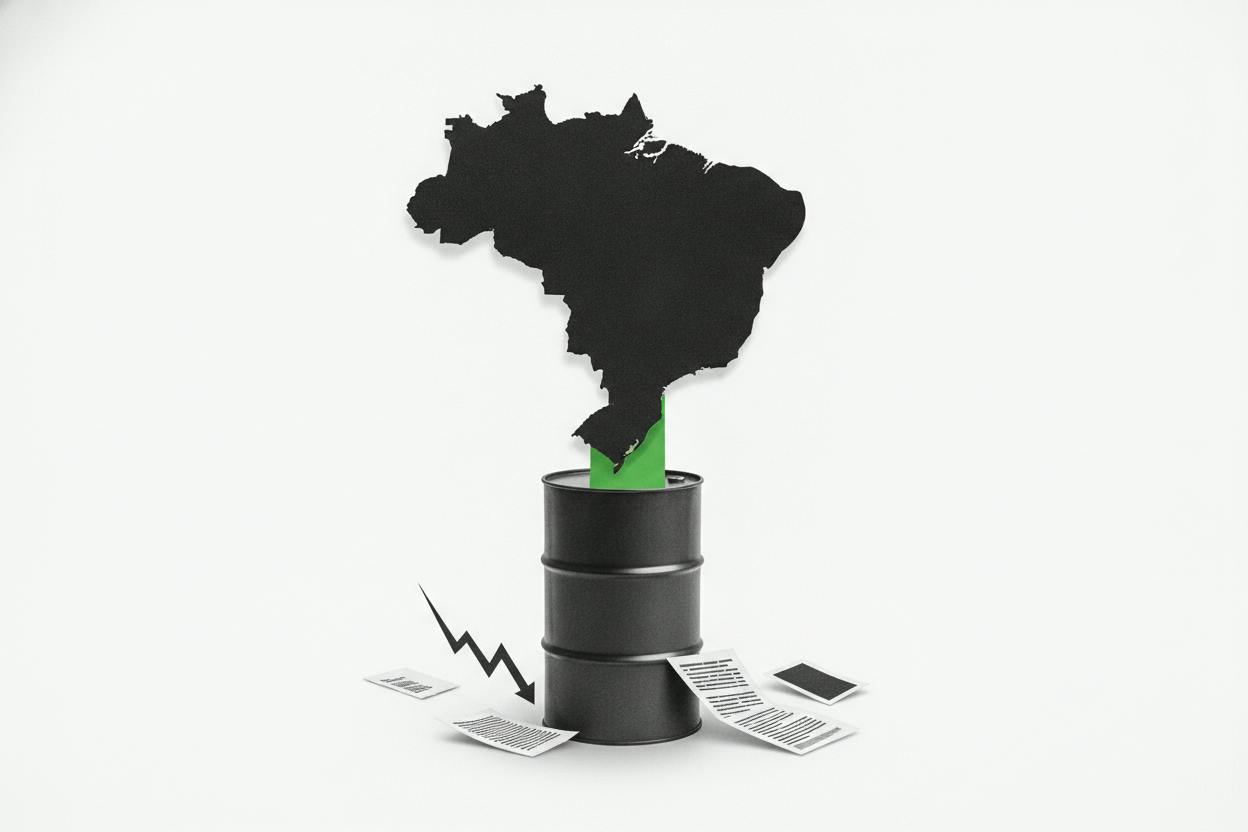
Latin American markets mostly fell on Tuesday as investors pulled back from riskier assets, but Brazil stood out as a rare bright spot. The Bovespa, Brazil's main stock index, inched up 0.19%, while the Brazilian real strengthened 0.12% from 19-month lows, helped by a rise in oil prices.
The broader regional picture was less encouraging. The MSCI Latin America equities index slipped 0.22%, reflecting a classic “risk-off” session, where investors favor safer assets like government bonds or the US dollar over stocks and emerging-market currencies. The US dollar eased a bit from recent highs, which gave some breathing room to regional currencies, but that was not enough to lift most markets.
Why Brazil bucked the trend
Brazil's resilience can be traced largely to oil. As a major oil producer and exporter, Brazil's economy and corporate earnings are closely tied to crude prices. When oil rises, energy companies—which carry significant weight in the Bovespa—tend to gain, lifting the whole index. The real also benefits because higher oil revenues improve Brazil's trade balance and attract foreign capital.
This dynamic is a reminder that commodity prices often drive Latin American markets more than global risk sentiment alone. While other countries in the region, such as Mexico or Chile, may be more exposed to industrial metals or copper, Brazil's energy sector gives it a unique buffer when crude climbs.
The move also comes after a period of pressure on the real, which had fallen to 19-month lows. A weaker currency can stoke inflation by making imports more expensive, so Tuesday's modest rebound offers some relief, though it is too early to call a trend.
What it means for investors
For everyday investors, the key takeaway is that not all emerging markets move in lockstep. Even on a day when risk appetite is low, country-specific factors like commodity prices can create divergences. Brazil's performance highlights the importance of looking beyond broad regional indexes and understanding what drives individual markets.
Investors with exposure to Latin American funds or ETFs should note that Brazil often behaves differently from its neighbors. If oil prices stay elevated, Brazilian equities and the real could continue to find support, even if global sentiment remains cautious. Conversely, a sharp drop in crude could quickly erase that advantage.
It's also worth remembering that currency moves matter for foreign investors. A strengthening real can boost returns for those holding Brazilian assets in local currency, while a weakening real can erode them. Tuesday's small gain is a positive sign, but the currency remains near multi-month lows, suggesting underlying vulnerabilities persist.
Broader market context
The risk-off tone in Latin America mirrors a wider global mood. Investors have been grappling with concerns about economic growth, inflation, and central bank policy. In the US, Treasury yields dipped as stocks slid, but odds of a Federal Reserve rate hike remain, which could keep pressure on emerging markets.
Higher US interest rates tend to draw capital away from riskier assets, including Latin American stocks and currencies. That backdrop makes Brazil's resilience on Tuesday all the more notable, though it may not last if the dollar resumes its climb.
Elsewhere, other commodity-driven markets have shown similar patterns. For instance, oil's climb lifted energy stocks in some regions, even as natural gas told a different story. And in the Middle East, UAE stocks rose as oil shipping fears eased, showing how geopolitical and supply factors can move markets in unexpected ways.
Looking ahead
Investors will be watching oil prices closely in the coming days, as well as any signals from the Federal Reserve about its rate path. A sustained rally in crude could keep supporting Brazil, while a reversal could expose the region to further losses.
For now, Tuesday's session serves as a useful case study in how commodity exposure can provide a hedge against broader risk-off moves. But it also underscores the volatility that comes with investing in emerging markets, where currency swings and external factors can quickly change the picture.
As always, diversification and a long-term perspective remain important. While Brazil's bounce is encouraging, it's just one day in a market that can turn on a dime.