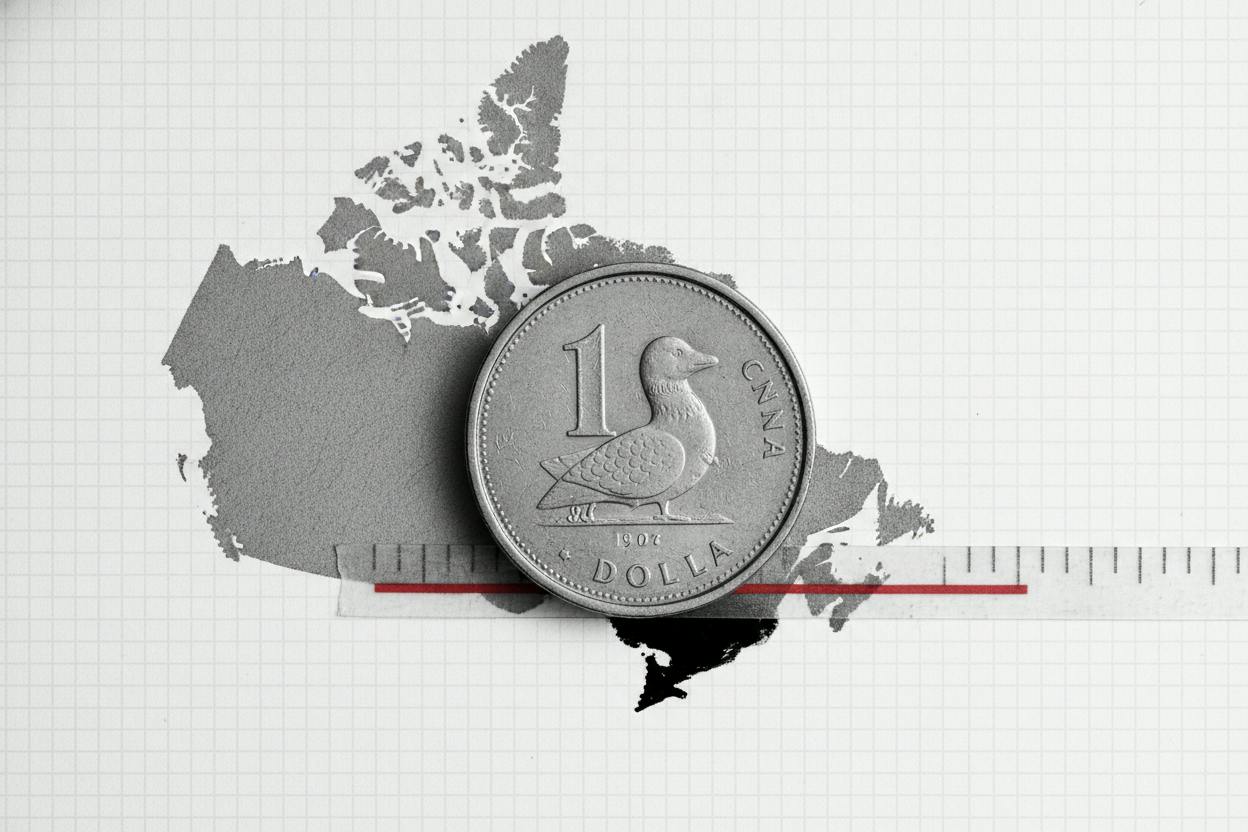
Canada's dollar, known as the loonie, steadied on Tuesday after touching its weakest level in nearly 19 months. The currency hovered around 69.98 US cents, supported by a slight easing in the US dollar and news that Canada and China have agreed to extend their trade deals.
The loonie edged about 0.1% higher to 1.4290 per US dollar, after briefly dipping to 1.4315 earlier in the session—its weakest intraday level since April 2025. The small rebound largely mirrored a broader pause in the US dollar's recent rally, but the bigger story remains the direction of US interest rates.
Why the loonie is under pressure
Firmer US economic data has kept alive expectations that the Federal Reserve will keep interest rates higher for longer. Higher US rates tend to support the greenback because they offer better returns on dollar-denominated assets, drawing investment away from other currencies like the Canadian dollar.
For everyday Canadians, a weaker loonie means imported goods become more expensive, which can feed into inflation. It also affects travel costs—vacationing in the US or buying products priced in dollars will cost more. On the flip side, Canadian exporters, such as manufacturers and commodity producers, may benefit because their goods become cheaper for foreign buyers.
The loonie's recent slide is part of a broader trend. The US dollar has been strong against many currencies, not just the Canadian dollar. As traders keep a December Fed hike in view, the greenback's strength could persist.
Canada-China trade deal extension
In a separate development, Canada and China agreed to extend their existing trade agreements. While the details are not yet public, the extension signals a willingness to maintain economic ties between the two countries. This could provide some support for the loonie by reducing uncertainty around trade relations, which is often a drag on a currency.
However, the impact is likely modest compared with the dominant influence of US monetary policy. As softer US data can pull Treasury yields lower, any shift in the Fed's stance would have a more pronounced effect on the loonie.
What it means for investors
For investors holding Canadian assets, a weaker loonie can erode returns when converted back to US dollars. Conversely, US investors with Canadian exposure may see a boost. Currency movements are a key consideration for international portfolios.
The loonie's path ahead will likely hinge on the Federal Reserve's next moves. If US data continues to come in strong, the dollar could stay firm, keeping the loonie under pressure. On the other hand, any signs of a slowdown in the US economy could ease those expectations and give the loonie some breathing room.
Investors should also watch for foreign inflows into Canadian short-term debt, which have been record-breaking recently. Such flows can provide support for the currency, but they are often sensitive to interest rate differentials.
As always, currency markets are volatile and influenced by a complex mix of factors. For the average investor, the key takeaway is that the loonie's weakness is a symptom of broader global trends, particularly the strength of the US dollar. Keeping an eye on US economic data and Fed commentary can offer clues about where the currency might head next.
In the meantime, the loonie's stability near its lows suggests that the market is waiting for a clearer signal—whether from the Fed, trade negotiations, or economic data—before making its next big move.