The US dollar eased a touch on Tuesday after a batch of mixed economic data, but the pullback was barely enough to dent a rally that has carried the currency to its strongest level since April 2025. With traders still pricing in a Federal Reserve rate hike in December, the greenback remains firmly in the driver's seat.
The dollar index, which measures the currency against a basket of major peers, was roughly flat near 103.6 after a strong multi-day run. That followed data showing US retail sales held up in October, while homebuilder confidence sank as high mortgage rates and labor shortages weighed on new supply. The split picture did little to change the market's view that the Fed will move again before year-end.
Why the dollar keeps climbing
The recent rally has been tied to a few key forces. First, inflation has come in hotter than expected, which tends to push the Fed toward tighter policy. Second, Fed officials have sounded more hawkish in recent speeches, signaling they are not done fighting price pressures. And third, futures markets tracked by the CME FedWatch tool now treat a quarter-point rate hike in December as the base case.
That expectation has kept US yields relatively attractive compared with other major economies, and higher yields tend to support a currency by drawing in foreign capital. When investors can earn more on US bonds than on comparable debt elsewhere, they have a reason to hold dollars.
Add in choppier equity sentiment, and the dollar can stay bid simply because it is the world's main source of liquidity when investors get cautious. In times of uncertainty, money tends to flow into the greenback, often at the expense of risk-sensitive currencies like the Australian and New Zealand dollars. Those currencies have already slid to multi-month lows as risk-off mood grips markets, as we noted in our coverage of the aussie and kiwi slide.
What the data says
Tuesday's reports painted a mixed picture of the US economy. On the one hand, retail sales held up, suggesting consumers are still spending despite higher borrowing costs. That resilience supports the case for the Fed to keep tightening. On the other hand, homebuilder confidence fell, reflecting the strain of elevated mortgage rates and persistent labor shortages in the construction sector. The housing market has been one of the most rate-sensitive parts of the economy, and the latest numbers echo the slow recovery we've seen in the home improvement sector, as Home Depot and Lowe's face a still-slow housing fix.
For the dollar, the mixed data was not enough to shift the narrative. As long as growth and inflation remain firm, traders have a clear reason to keep leaning toward the greenback.
What it means for investors
For everyday investors, a strong dollar has ripple effects beyond the currency market. It can pressure US multinational companies that earn revenue overseas, because those foreign earnings are worth less when converted back into dollars. It can also weigh on commodity prices, since many raw materials are priced in dollars. A stronger dollar has already been cited as a factor in wheat slipping near multi-month lows and in pushing the Canadian dollar to its weakest since March 2025.
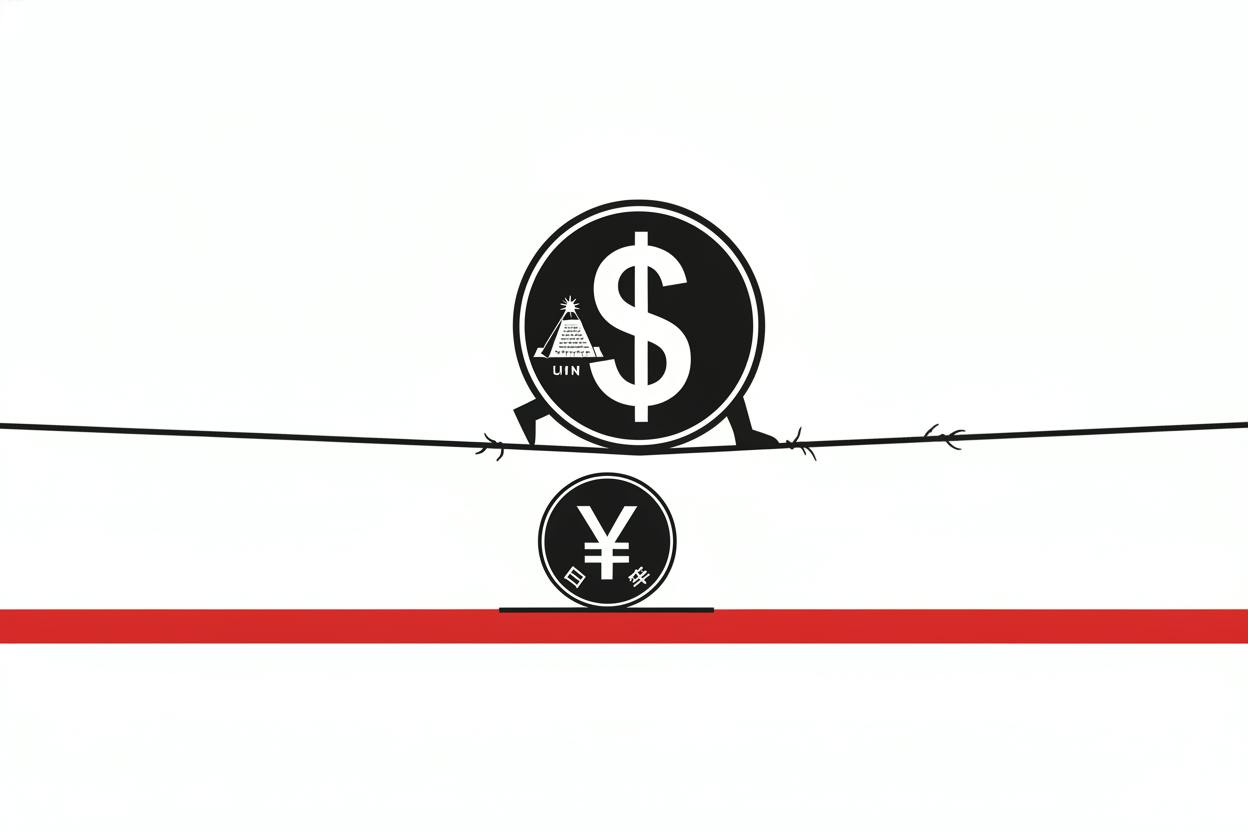
One area to watch closely is dollar/yen. The pair is trading around 159.2, just below the 160 level that many traders treat as a potential trigger for Japanese authorities to step in and support the yen. Intervention can create what strategists call "jump risk" — a sudden move that punishes investors positioned for a slow grind higher. The closer the pair gets to 160, the more traders tend to trim long positions or buy options as insurance, which can lift hedging costs and make price action more two-way.
If volatility picks up around 160, the effects can spill into yen-funded carry trades — where investors borrow yen at low rates to buy higher-yielding assets elsewhere — and into the currency-hedging costs faced by Japan-based investors holding overseas stocks and bonds.
The bigger picture
Some analysts argue the dollar's move is getting stretched, especially if other central banks keep tightening too, which would narrow the rate gap. But for now, the market's focus remains on the Fed. With a December hike priced in, the dollar has a solid foundation. The question is how long that support lasts, and whether the Fed's next move is already fully reflected in the price.
For investors, the key takeaway is that the dollar's strength is not just a currency story — it affects portfolios across asset classes. Keeping an eye on the dollar index and on central bank signals can help you understand the broader market moves, from stocks to commodities to emerging-market currencies.