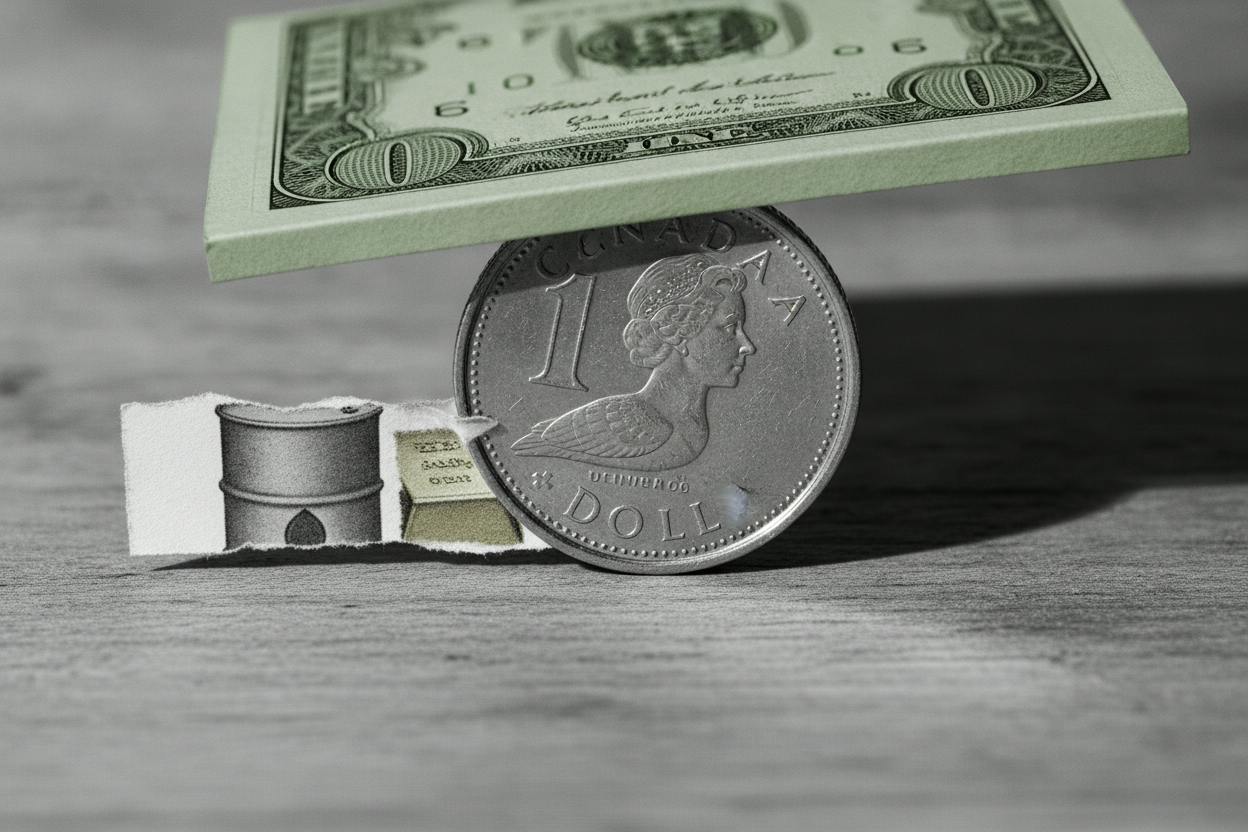
The US dollar climbed to CA$1.4303 against the Canadian dollar on Monday afternoon, marking the loonie's weakest level since March 2025. The move came even as US Treasury yields eased and both oil and gold prices declined — a combination that would normally offer Canada's currency some support.
Currency markets are often driven by relative interest rates and commodity prices, and Monday's session offered a reminder that those relationships don't always hold in a straight line. The greenback's advance suggests global investors are still willing to pay up for US assets, even when the yield on US government debt slips.
Why the dollar rose despite lower yields
Lower US Treasury yields typically make the dollar less appealing, because investors earn less for holding US government bonds. But yields remain elevated by recent standards, and that can keep global money flowing toward the US — supporting the greenback even on days when yields tick down. In other words, the level matters more than the direction for many currency traders.
Canada also failed to get its usual lift from commodities. Oil prices slipped, which matters because energy exports are a major source of foreign income for Canada and often help support the loonie. Analysts have also pointed to longer-term concerns about demand growth, which can weigh on currencies tied to oil when traders expect future export revenues to soften.
Gold fell as well, a reminder that a stronger dollar can pressure dollar-priced assets. When the greenback rises, gold becomes more expensive for buyers using other currencies, and demand can cool. That dynamic was on display Monday, with the yellow metal joining oil in the red. For more on how the dollar and rate expectations are shaping gold, see gold's slide on rate bets.
What it means for investors
For everyday investors, a loonie at CA$1.4303 is more than a chart move — it can show up as a higher Canadian-dollar bill anywhere the sticker price is effectively set in US dollars. That includes obvious items like US travel, where flights, hotels and credit card charges convert at the day's exchange rate, but also some imported goods whose costs are negotiated in dollars somewhere along the supply chain.
Timing is the key point. Exchange-rate changes can hit out-of-pocket costs quickly, while "good news" like cheaper oil often takes longer to filter into prices you actually pay, because it has to work through contracts, refining, shipping and retail markups. That asymmetry means a weaker loonie can pinch household budgets before any commodity relief arrives.
For investors holding US stocks or US-dollar assets in Canadian-dollar terms, a stronger greenback can flatter returns when converted back home — though it also cuts the other way when the loonie rebounds. Currency moves are a reminder that unhedged foreign exposure carries an extra layer of risk and return beyond the underlying asset.
On the fixed-income side, the yield picture remains central. Even with Monday's easing, US yields are still high enough to attract foreign capital, which underpins the dollar. Investors watching the loonie will want to keep an eye on the gap between US and Canadian rates, as well as the path of oil demand. For context on how yields are behaving, see bond yields easing.
Canada's own inflation data could also play a role in the loonie's next move, since it feeds directly into Bank of Canada rate expectations. A softer inflation print might argue for lower Canadian rates, which would tend to weaken the loonie further against the dollar. A hotter reading could do the opposite. That makes upcoming releases worth watching for anyone with cross-border exposure. More on that here: Canada's inflation report.
The bigger picture
Monday's move fits a broader pattern of dollar strength that has pressured a range of currencies and dollar-priced commodities. When the greenback firms, it tends to weigh on metals like copper and gold, and it can squeeze emerging-market currencies that carry dollar-denominated debt. For a sense of how that plays out elsewhere, see copper's drop on dollar strength.
For now, the loonie's slide is a story about relative rates, commodity demand and the persistent appeal of US assets. Investors don't need to predict the next tick, but they should understand that a weaker Canadian dollar changes the real cost of anything priced in US dollars — from a vacation to a portfolio. Keeping an eye on rate differentials and oil demand will be the best guide to where the loonie heads next.