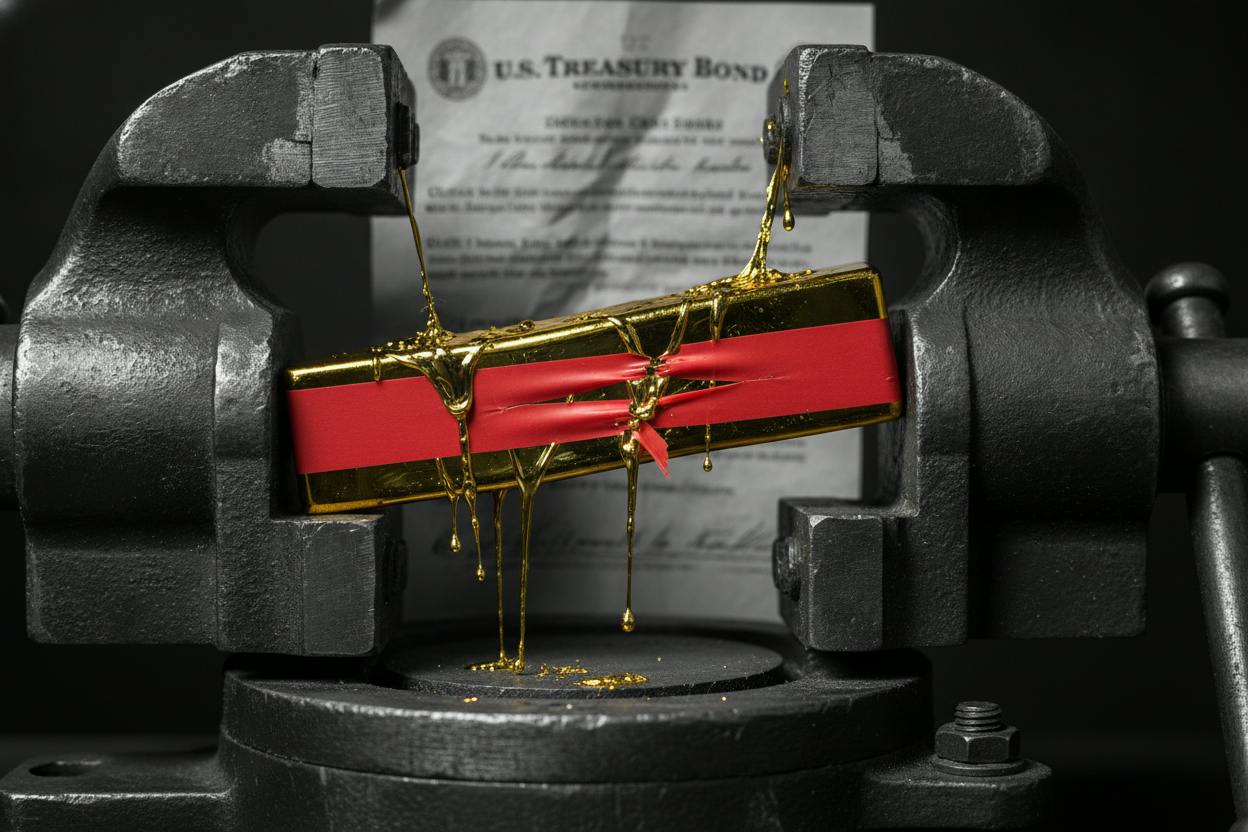
Gold prices dropped to a one-year low on Monday, as a combination of elevated US Treasury yields and a resilient dollar kept pressure on the precious metal. Bullion traded at $3,830.74 an ounce, its weakest level since October 2025, according to Reuters. The move extends a bruising stretch for gold, which is now down 31.5% from the record high it set in January and is on track for its worst annual performance since 2015.
The immediate trigger is the market's shifting view on US interest rates. Traders have been ramping up bets that the Federal Reserve — or the broader rate environment — still has room to tighten, or at least to keep rates higher for longer than previously expected. That matters enormously for gold, because the metal pays no interest. When bonds offer attractive yields, holding a non-yielding asset like gold becomes less appealing by comparison.
Why yields and the dollar are gold's biggest headwinds
Gold is priced in US dollars and traded globally, so two forces tend to dominate its short-term direction: real interest rates and the greenback. When Treasury yields rise, the opportunity cost of owning gold increases — an investor gives up the coupon they could earn from a government bond. At the same time, a stronger dollar makes gold more expensive for buyers using other currencies, which can dampen demand from major consumers such as India and China.
Both of those forces have been working against gold this year. The dollar has held firm near multi-month highs, and yields have stayed elevated as investors reassess the path of monetary policy. You can see the same dynamic playing out across other dollar-sensitive assets, from copper's slide to a four-month low to the dollar's continued strength against major peers.
Reuters also flagged a less intuitive force at work: sharp losses in the stock market can turn gold into a funding source. In other words, when equities sell off hard, some investors sell gold to raise cash and cover losses or margin calls elsewhere. That can amplify gold's declines even when the usual safe-haven logic would suggest it should rise.
What it means for investors
For everyday investors, gold's slump is a reminder that the metal is not a simple hedge that always moves opposite to stocks. It is a real asset with its own supply and demand dynamics, and it is highly sensitive to interest rates and currency moves. When rates are rising and the dollar is strong, gold often struggles — regardless of geopolitical tensions or inflation worries that might otherwise support it.
This year's decline also puts the metal's long-term role in a portfolio into perspective. Gold is often held as a diversifier and a store of value over decades, not as a short-term trading vehicle. A 31.5% drawdown from a record high is painful for anyone who bought near the top, but it is also a normal part of the commodity's cycle. Gold had rallied strongly into January, and some of that move was driven by expectations of rate cuts that have since been pushed back.
Investors watching the space will want to keep an eye on several things. First, the trajectory of US Treasury yields — if they continue to climb, gold faces more headwinds. Second, the dollar's direction, since a weaker greenback would provide relief. Third, the Fed's messaging on rates, as any hint of a pause or pivot could quickly change sentiment. Finally, physical demand from central banks and consumers in Asia, which has historically provided a floor for prices during downturns.
It is also worth noting that gold miners and gold-backed exchange-traded funds tend to amplify moves in the metal itself. Mining stocks often fall harder when prices drop because their profit margins compress, while ETFs track the metal more directly. Neither is a recommendation, but understanding the difference helps investors interpret headlines.
The bigger picture
Gold's rough year comes against a backdrop of broad reassessment in global markets. Investors have been recalibrating expectations for interest rates, growth and inflation, and that has rippled through currencies, bonds and commodities. The bond market's recent moves and the dollar's firm tone both reflect that uncertainty.
For now, the trend for gold is clearly down, and the forces driving it — high yields and a strong dollar — show few signs of reversing quickly. Whether 2025 ends as the metal's worst year since 2015 depends largely on whether rate expectations cool. Until then, gold investors may need to brace for more volatility.