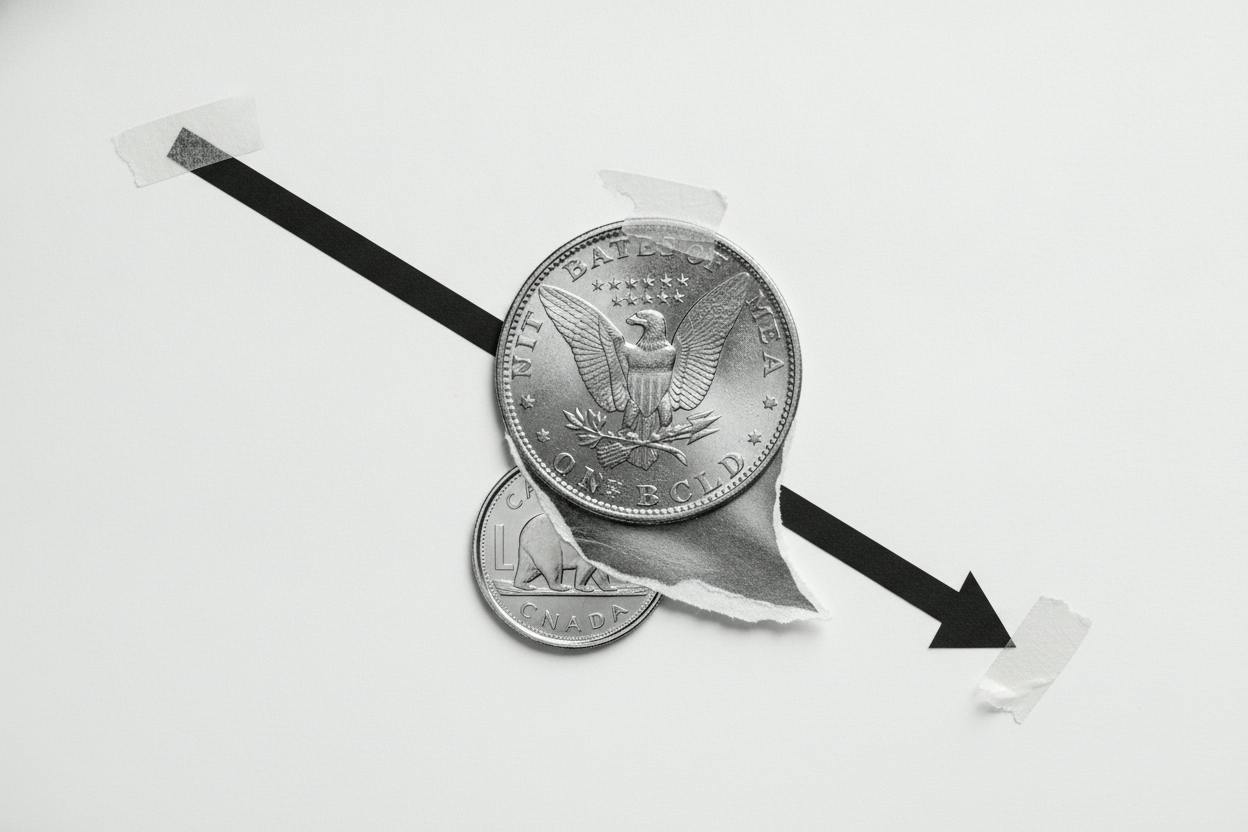
The US dollar edged lower against Canada's loonie on Tuesday, as a fresh batch of October economic data came in cooler than expected and pulled Treasury yields down with it. The greenback slipped about 0.1% to CA$1.4282, a modest move that nonetheless underscores how sensitive currency markets have become to interest-rate expectations.
What the data showed
Retail sales in the US rose 0.2% in October, a noticeable slowdown from September's 0.8% gain. Meanwhile, industrial production fell 0.4% in October, reversing the prior month's increase. Taken together, the figures paint a picture of an economy that is still growing, but at a more subdued pace than earlier in the fall.
That softer tone rippled through the bond market. The 10-year Treasury yield slipped 2.8 basis points to 5.093%, while the 30-year yield fell 1.9 basis points to 5.449%. A basis point is one-hundredth of a percentage point, so these are small but meaningful moves for a market that has been highly sensitive to any hint of economic cooling.
Why yields matter for the dollar
In recent months, interest rates have been doing most of the heavy lifting in currency markets. When US yields are high relative to other countries', holding dollars and US bonds becomes more attractive because investors earn a higher return. That "extra interest" advantage tends to support the dollar.
But when yields ease, that advantage narrows. In this case, the dip in Treasury yields reduced the appeal of the dollar versus the loonie, even though the move was small. The Canadian dollar, often called the loonie because of the bird on its $1 coin, has been particularly sensitive to these dynamics given the close trade and financial ties between the two countries.
Interestingly, not every market read the data as a clear sign of slowdown. Oil prices rose about 1% on the day, and gold edged slightly higher. That mixed reaction suggests investors are still weighing whether the US economy is merely cooling or heading for a more pronounced slowdown.
What it means for investors
For everyday investors, the most immediate impact may be on travel budgets and cross-border transactions. When the dollar weakens against the loonie, a trip to Canada becomes slightly more expensive for US travelers, and Canadians visiting the US get a bit more purchasing power. Even a 0.1% move can translate into a few dollars on a large purchase or a longer stay.
But the bigger picture is about the direction of interest rates. The 10-year Treasury yield at 5.093% is still historically high, and it has been a key driver of everything from mortgage rates to stock valuations. If October's data marks the start of a cooler trend, yields could ease further, which would likely put downward pressure on the dollar and could provide some relief to rate-sensitive sectors like housing and tech.
Investors will be watching upcoming economic releases closely to see if the softer October figures are a one-off or the beginning of a trend. Retail sales data has been a particular focus, as consumer spending drives about two-thirds of US economic activity. A sustained slowdown in spending could prompt the Federal Reserve to reconsider its stance on interest rates.
For now, the market seems to be in a wait-and-see mode. The dollar's slip against the loonie is a reminder that even small shifts in economic data can have ripple effects across currencies and asset classes. As traders brace for more data and Fed comments, the interplay between yields and the dollar will likely remain a central theme.
The road ahead
The Federal Reserve's next moves will be crucial. If inflation continues to ease and the labor market softens, the central bank may feel less pressure to keep rates high, which could further weigh on the dollar. On the other hand, if the economy remains resilient, yields could stay elevated, supporting the greenback.
For investors with exposure to currencies or international assets, these dynamics are worth monitoring. A weaker dollar can boost returns on foreign investments when converted back to US dollars, but it can also signal broader economic concerns. As always, diversification and a long-term perspective remain key.
In the meantime, the loonie's small gain against the dollar is a reminder that currency markets are constantly repricing based on the latest data. Whether you're planning a cross-border trip or managing a portfolio, keeping an eye on Treasury yields and economic indicators can help you anticipate these moves.