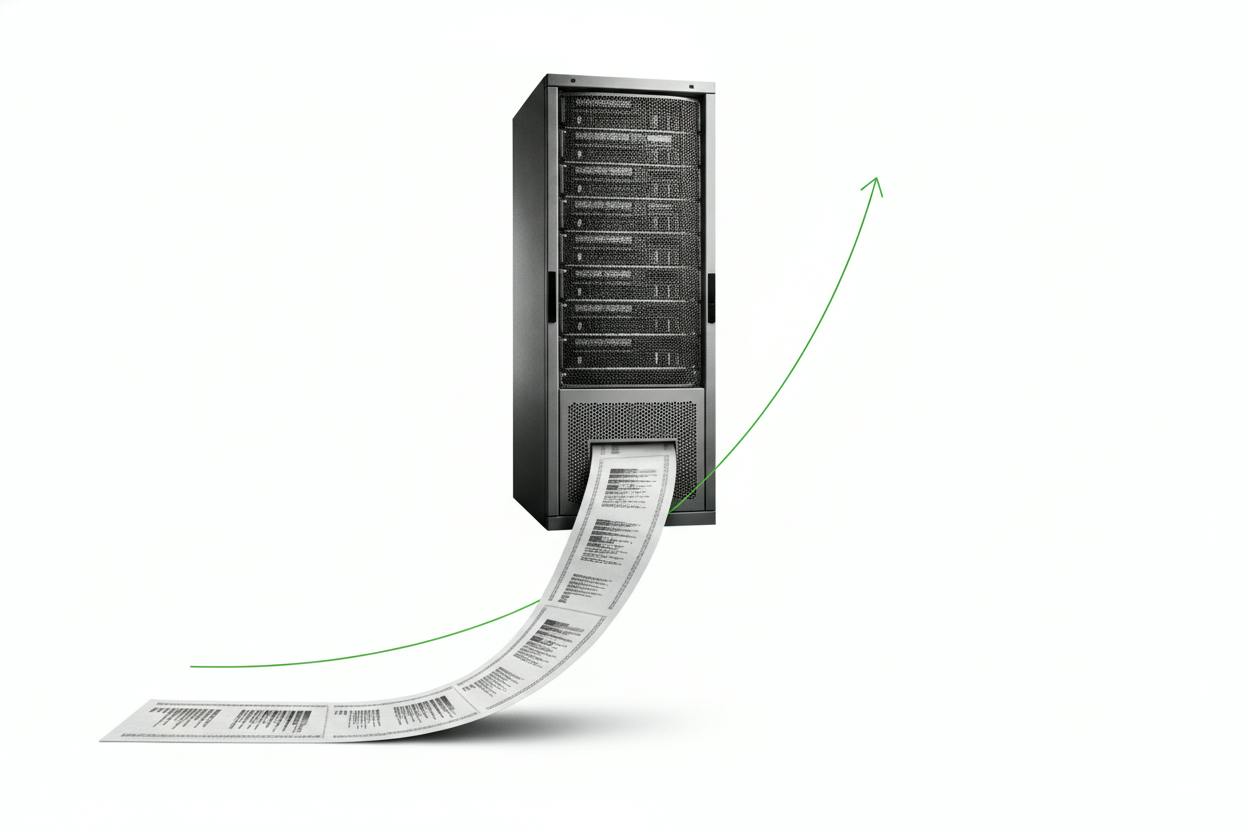
Big technology companies are borrowing heavily to build out artificial intelligence infrastructure, and that wave of bond sales is quietly pushing long-term interest rates higher, according to new research from ING.
The Dutch bank estimates that AI-driven corporate bond issuance explains roughly 20% of the recent rise in long-dated rates. In other words, about a fifth of the upward pressure on long-term borrowing costs is coming not from the Federal Reserve or inflation data, but from the corporate bond market itself.
That is a notable claim. Long-dated Treasury yields have been hovering near multi-decade highs, and most of the public debate has focused on central bank policy and government deficits. ING's analysis suggests the private sector's appetite for debt — specifically, the AI arms race — deserves a place in that conversation too.
Why AI spending shows up in the bond market
Building data centers is capital-intensive. These facilities require land, power, cooling systems and enormous quantities of specialized chips. Companies in this position often have a choice: fund the buildout from cash flow, tap bank credit lines, or sell bonds to institutional investors.
Increasingly, they are choosing bonds. ING notes that US companies have sold $878 billion of bonds so far this year, up 54% from the same period last year. Tech, media and telecom firms alone account for $330 billion of that total.
Because much of this debt is longer-term, it adds what bond investors call "duration" — meaning buyers are being asked to lock up their money for years rather than months. To tempt them, issuers typically have to offer higher yields. When enough companies do this at once, the extra supply can nudge the entire long end of the yield curve upward.
That is the mechanism ING is pointing to. It is not that AI spending is directly setting Treasury yields; rather, the flood of corporate bonds competes for the same pool of investor capital that would otherwise go into government debt.
The broader rate backdrop
This is happening at a delicate moment. Long-dated Treasury yields have been elevated, with the 10-year note recently touching levels not seen in roughly two decades. Investors have been wrestling with persistent inflation, a Federal Reserve that has been cautious about cutting rates, and heavy government borrowing needs.
Against that backdrop, a surge in corporate supply adds another layer of pressure. When yields rise, borrowing costs go up across the economy — mortgages, auto loans, corporate credit lines and everything in between.
It also matters for stock valuations. Higher long-term rates reduce the present value of future corporate earnings, which tends to weigh most heavily on growth-oriented sectors like technology. That creates an awkward feedback loop: the same AI spending that is driving excitement about future profits is also contributing to the higher rates that make those future profits worth less today.
What it means for investors
For everyday investors, the takeaway is not that AI is bad for markets. It is that the financing of the AI boom has consequences that show up in places many people do not watch closely — namely, the bond market.
- Bond investors: More long-dated supply means more competition for your dollars. It can push yields higher, which is good for new buyers but painful for anyone holding older, lower-yielding bonds.
- Stock investors: Rising long-term yields can pressure equity valuations, particularly in rate-sensitive sectors. Utilities, for example, have already felt the pinch from the bond selloff.
- Rate watchers: If corporate issuance keeps running hot, it could complicate the Fed's job by keeping long-term borrowing costs elevated even as short-term policy rates come down.
It is worth keeping the 20% figure in perspective. ING's estimate is just that — an estimate, and one bank's view. The drivers of long-term yields are complex and include inflation expectations, Fed policy, fiscal deficits and global demand for US debt. But the finding does highlight a real and growing channel through which the AI investment cycle is rippling through financial markets.
Investors will want to watch a few things from here: the pace of new corporate bond deals, especially from large tech issuers; whether long-dated Treasury yields continue to climb; and whether demand for that debt holds up if yields keep rising. If buyers start demanding even bigger concessions, the cost of financing the AI buildout — and the pressure on rates — could grow.
For now, the message from ING is simple: the AI boom is not just a story about chips and software. It is also a story about credit, and about who ultimately pays for all that computing power.