Wall Street's biggest banks are reporting that the artificial intelligence boom is evolving from a narrow chip-stock story into a broad infrastructure spending cycle, and that shift is keeping their dealmaking desks busy. Bank of America, JPMorgan, Citi, Goldman Sachs, and Morgan Stanley are all seeing increased activity in initial public offerings, bond sales, and syndicated loans tied to building and powering data centers.
According to Reuters, Bank of America — one of the largest U.S. banks — says it has helped raise nearly $500 billion for AI-related companies since 2025, representing about 60% of all such fundraising. The bank recently extended OpenAI a $520 million credit line. JPMorgan is also involved in data center financing, including work tied to Meta's roughly $13 billion package for a site in El Paso, Texas.
From Chip Stocks to Bricks and Wires
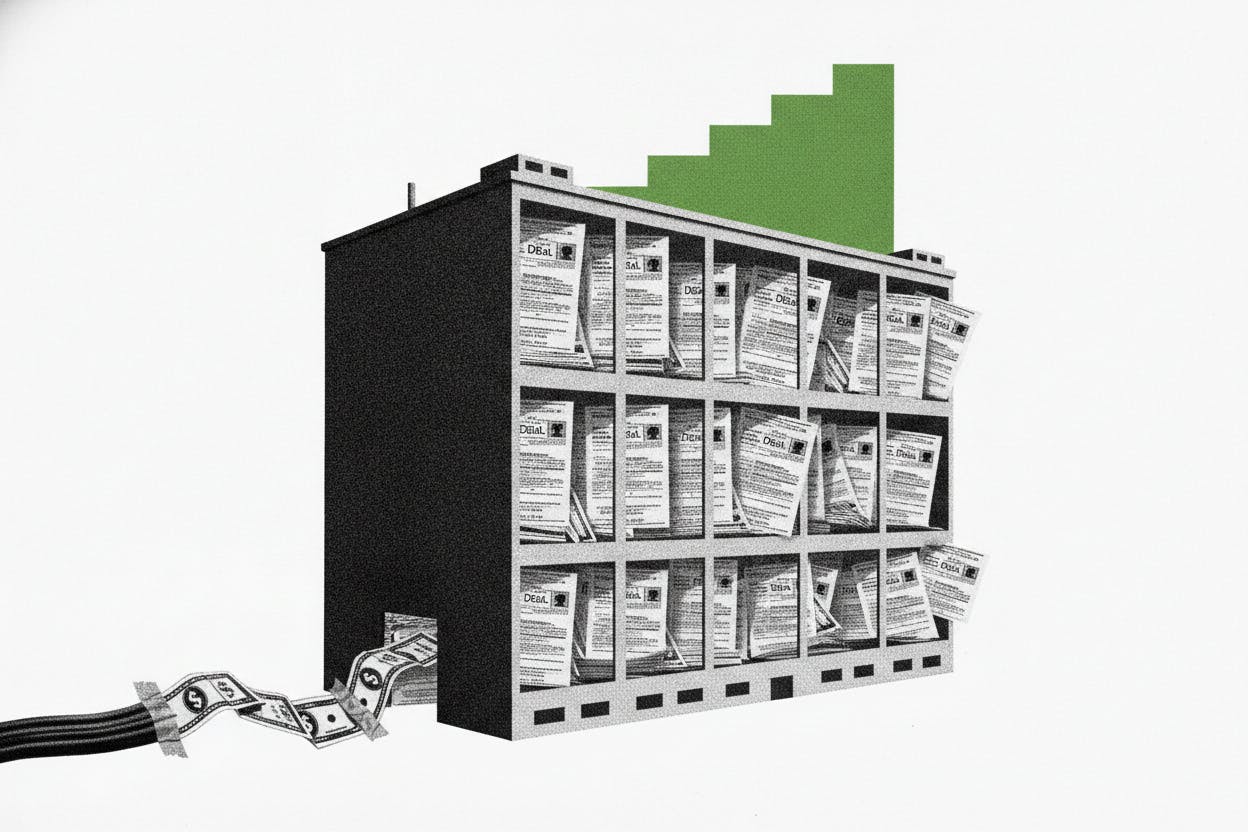
The AI boom initially centered on a handful of chip makers like Nvidia, whose stock soared as demand for AI processors exploded. But the next phase requires massive physical infrastructure: data centers filled with servers, cooling systems, and power supplies. Building and powering these facilities requires large, staged funding — equity and bond sales, syndicated loans (where several banks share one loan), and project-style facilities tied to the asset.
For banks, this is attractive because they can earn fees for arranging deals and interest for lending, then reduce risk by selling pieces of big loans to other lenders. This deal "stack" — multiple transactions over the life of a single build-out — supports underwriting pipelines across the industry.
What It Means for Investors
For everyday investors, the key takeaway is that the AI investment story is broadening. If AI spending keeps flowing into physical infrastructure, banks' AI exposure won't be limited to whether public-market chip valuations look stretched in any given month. A single data center project can generate bond and equity issuance for the developer, loans for construction and equipment, and refinancing once the facility is operational.
This steady deal flow can make investment-banking and lending revenue more predictable than the day-to-day moves in chip shares. It also means that banks are now directly tied to the AI capex cycle, not just through their own technology spending but as financiers of the entire ecosystem.
Broader Banking Context
The AI infrastructure boom comes at a time when Wall Street banks are already enjoying a strong dealmaking environment. Wall Street Banks Surge on IPO and M&A Boom in Q2 and Big Banks Set for Best Dealmaking Quarter Since 2021 as Fees Surge both highlight how rising equity markets and corporate confidence are fueling merger and IPO activity. The AI build-out adds another layer of demand for banking services.
Banks are also experimenting with AI internally. Big Banks Pilot AI Agents for Wealth Management, Compliance, and Trading shows how the same institutions financing AI infrastructure are also deploying the technology to improve their own operations.
Risks to Watch
While the AI capex cycle looks promising for bank revenues, it is not without risks. Data center construction is capital-intensive and can face delays from supply chain issues, regulatory hurdles, or rising interest rates. If the AI boom falters or if energy costs spike, some projects could become uneconomical, potentially leading to loan losses for banks that hold onto the debt.
Syndication helps spread risk across many lenders, but it does not eliminate it entirely. Investors should monitor how much AI-related exposure each bank carries on its balance sheet versus how much it has sold off to other institutions.
The Bottom Line
The AI infrastructure build-out is creating a new, durable source of fee income for Wall Street's largest banks. For investors, this means that the AI story is no longer just about chip stocks — it is also about the banks that finance the physical backbone of the technology. As long as AI spending continues, banks like Bank of America, JPMorgan, Citi, Goldman Sachs, and Morgan Stanley stand to benefit from a steady stream of dealmaking and lending opportunities.