If you've shopped for a new laptop, phone, or gaming console lately, you may have noticed something unusual: prices are going up, not down. The culprit is a memory chip shortage driven by the artificial intelligence boom, a phenomenon industry watchers have dubbed “RAMageddon.”
At the heart of the problem is DRAM (dynamic random access memory), the type of memory that powers the apps and tasks on your devices. Over the past year, DRAM prices have quintupled, according to the source brief. That's a massive jump, and manufacturers are passing those higher costs on to consumers.
Why memory prices are soaring
The surge is being driven by two forces. First, hyperscalers—the giant cloud computing companies like Amazon, Microsoft, and Google—are buying up memory chips in enormous quantities to build AI infrastructure. AI models require vast amounts of memory to process data, and these companies are spending billions to keep up.
Second, chipmakers are prioritizing production of high-bandwidth memory (HBM), a specialized, high-performance memory used in AI accelerators. HBM is far more profitable than the standard DRAM used in consumer electronics, so manufacturers are shifting their production lines to meet that demand. That leaves less capacity for the lower-end memory chips that go into phones, laptops, and consoles.
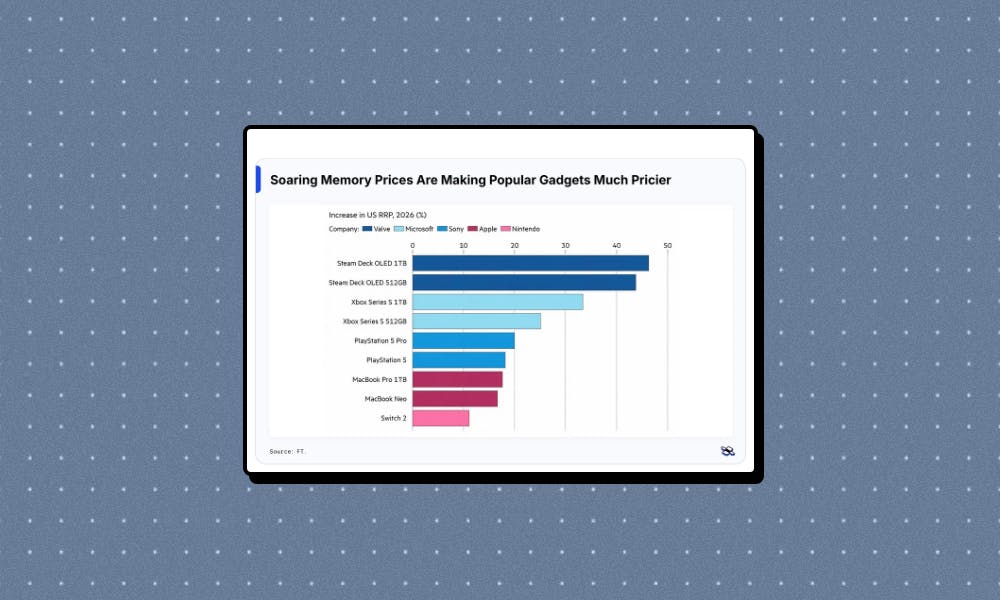
The result is a supply squeeze that has sent prices soaring. For consumers, it's a reversal of a decades-long trend. For years, electronics have followed a predictable pattern: they get better and cheaper over time. Now, that's changing. Prices for some gadgets are climbing by as much as 20%, according to the brief.
Who's feeling the pinch
The price hikes are showing up across the consumer electronics market. Apple has raised prices on some laptops and tablets by up to $300. Gaming companies, including Microsoft, Sony, and Nintendo, have also increased console prices, with some hikes reaching as much as 10% or more (the brief notes increases “as much as” a certain amount, but the exact figure isn't specified).
This isn't just a consumer problem. PC makers like HP have already flagged that memory costs are squeezing their margins, even when they beat revenue expectations. As we've reported, HP's PC business is feeling the pressure from higher memory prices. Similarly, Nvidia is expected to raise AI server prices by 15% or more due to memory costs, which could ripple through the entire tech ecosystem.
What this means for your wallet
For everyday investors, the immediate takeaway is that your next gadget purchase may cost more than you expected. If you're in the market for a new phone, laptop, or console, you might want to factor in higher prices. But there's also a bigger picture: this is a sign of how AI is reshaping the economics of the tech industry.
Memory chip makers are the clear winners. Companies like Micron and SK Hynix are investing heavily to expand production. Micron, for instance, is putting $10 billion into a new AI memory research lab in Idaho, as we've noted. SK Hynix has approved a massive $38 billion expansion through 2031, and its shares have jumped as analysts turn bullish on AI memory. These investments suggest that the memory boom is expected to last for years.
But for consumers, the boom means higher prices for everyday electronics. The era of ever-cheaper gadgets may be on hold, at least for now.
What to watch next
Investors should keep an eye on how long the memory shortage lasts. If chipmakers' expansion plans come online as scheduled, supply could catch up with demand, and prices might stabilize or even fall. But if AI demand continues to outpace supply, the “RAMageddon” could persist.
Also watch how companies respond. Some may absorb costs to stay competitive, while others will pass them on to consumers. The gaming industry, in particular, is sensitive to price hikes, as console makers often sell hardware at a loss and rely on software sales for profit.
For now, the message is clear: AI's appetite for memory is making your gadgets more expensive. It's a reminder that the technology boom has real-world costs, and they're showing up in your shopping cart.