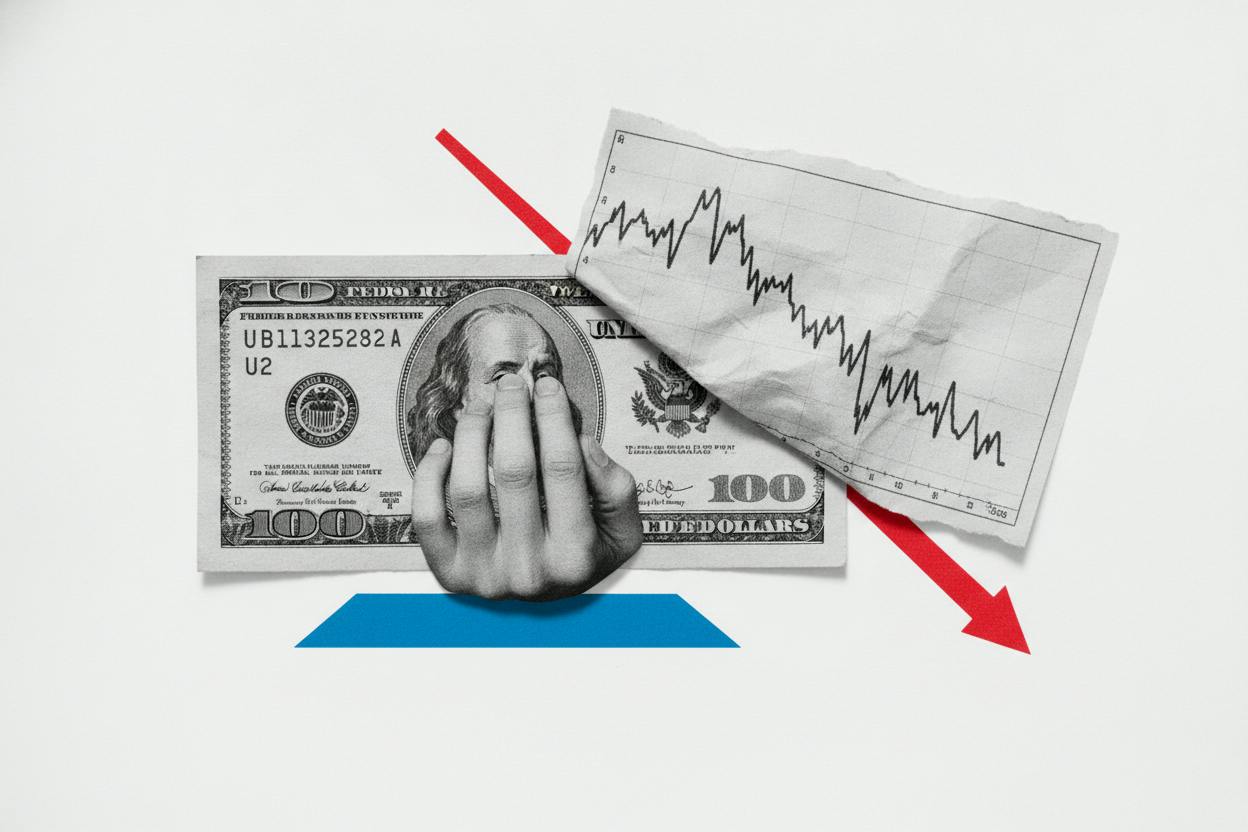
A fresh bout of anxiety over the artificial-intelligence trade rattled US stocks on Thursday, and investors responded by piling into US Treasuries, sending bond yields sharply lower. The move was a classic “flight to quality,” as money rotated out of riskier assets and into the safety of government debt.
The tech-heavy Nasdaq fell about 2%, with Meta Platforms dropping roughly 6% after its quarterly report and news that it plans to issue new non-voting shares to help fund its AI push. The selloff was part of a broader pattern: in recent sessions, worries that AI spending could cool—and that economic growth could slow with it—have started to outweigh data that still points to persistent inflation.
What happened in the bond market
When investors buy Treasuries, prices rise and yields fall. That’s exactly what happened across the curve on Thursday. The benchmark 10-year Treasury yield dropped 12.3 basis points to 5.023%, while the 30-year yield fell 10 basis points to 5.337%. A basis point is one-hundredth of a percentage point.
The move was notable because it came even as inflation data remains sticky. Typically, higher inflation pushes bond yields up, not down. But the sudden shift in market mood—driven by AI-related jitters—overrode that concern. As Thomas Urano of Sage Advisory put it, the market is seeing a “flight to quality.”
That same mood is also showing up in expectations for the Federal Reserve. According to CME Group’s FedWatch tool, the odds of at least a quarter-point rate hike at next week’s Fed meeting fell to 10.5%, down from 27.7% a week ago. In other words, traders are now much less convinced the central bank will tighten policy anytime soon.
Why AI spending fears matter
The trigger for Thursday’s selloff was a mix of earnings and corporate news. Meta’s plan to issue new non-voting shares to fund its AI push raised questions about how much companies are willing to spend on artificial intelligence—and whether that spending will pay off. When a tech giant like Meta signals it needs more capital for AI, investors start to worry that the whole sector might be overextended.
That concern has been building for weeks. In fact, AI spending fears have already weighed on markets, even when earnings reports were strong. The pattern is familiar: tech companies report solid numbers, but investors focus on the rising costs of AI infrastructure and wonder if growth can keep up.
This isn’t just a US story. Global stocks have slipped on similar doubts, and the ripple effects are being felt across asset classes. When investors get nervous about tech, they often sell stocks and buy bonds, which is exactly what happened on Thursday.
What it means for your money
For everyday investors, the most immediate impact may be on borrowing costs. Many rates that people actually notice—especially fixed-rate mortgages—are influenced by longer-dated Treasury yields, not just the Fed’s overnight rate. When the 10-year yield drops quickly, lenders and bond investors often start repricing long-term loans off a lower benchmark, even if inflation still looks stubborn.
So a rush into Treasuries during an equity selloff can loosen household borrowing costs faster than any change in the Fed’s next-meeting odds. If you’re shopping for a mortgage or a car loan, a drop in the 10-year yield could translate into slightly lower rates, though the effect may take time to show up.
For investors holding bonds, the yield decline means bond prices rose—a welcome reprieve after a period of rising yields. But it also signals that the market is worried about growth, not just inflation. That’s a shift worth watching.
What to watch next
The key question is whether this is a temporary blip or the start of a broader trend. If AI spending concerns continue to weigh on tech stocks, more investors may seek safety in Treasuries, pushing yields even lower. On the other hand, if inflation data remains hot, the Fed could still surprise with a hike, which would likely push yields back up.
Next week’s Fed meeting will be a major focus. The drop in hike odds suggests traders are betting the central bank will hold steady, but the decision is far from certain. Traders are also watching other central banks, as global monetary policy remains in flux.
For now, the message from the markets is clear: when AI jitters hit, investors run to safety. That’s a pattern that could continue as long as the AI trade remains volatile.