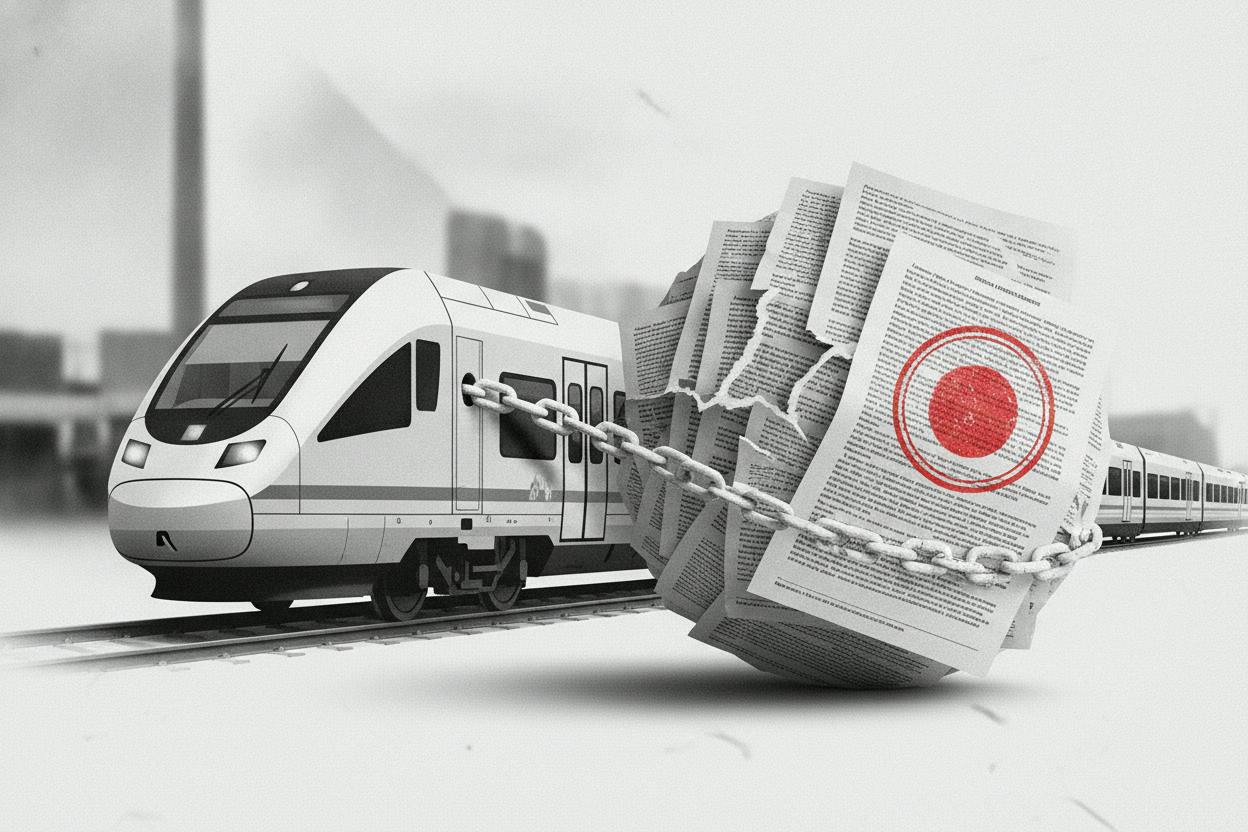
French rail manufacturer Alstom reported a first-half adjusted net loss of €822 million, a sharp reversal from profitability a year earlier, as delays and technical problems on German train contracts weighed on results. The company also outlined a €2 billion debt-reduction plan, and on November 9, Moody's changed its outlook on Alstom's credit rating to negative.
What went wrong
Train manufacturing is a project-based business. Contracts are signed years in advance, and when designs change or testing runs late, the supplier often absorbs the extra costs. Alstom cited "execution challenges" on several programs, including its Coradia Max trains in Germany, as a key drag on profits and cash flow.
The impact was stark. Adjusted operating profit—earnings before interest and taxes, or EBIT—swung to a €396 million loss from a €580 million profit in the same period last year. The adjusted operating margin fell to negative 4.2% from a positive 6.4%. Net debt climbed to €1.104 billion as of September 30, up from €404 million six months earlier.
These numbers reflect the reality of long-term infrastructure projects: a handful of problem contracts can overshadow otherwise healthy operations. For Alstom, the German delays are not just a short-term headache—they are reshaping its balance sheet and its standing with creditors.
The debt plan and credit rating
To address the rising debt, Alstom management has committed to a €2 billion debt-reduction plan. The details of how the company will achieve that target—whether through asset sales, cost cuts, or other measures—remain to be seen, but the goal is clear: bring leverage back under control.
Credit ratings are now part of the story. Moody's kept Alstom's rating at Baa3, the lowest rung of investment grade, but the negative outlook signals that progress on the German contracts is the key test for maintaining that status. A negative outlook means there is a meaningful chance of a downgrade in the next 12 to 18 months if things don't improve.
What it means for investors
For bond investors, the stakes are higher than they might appear. When a company sits on the bottom rung of investment grade, even a small shift in perceived risk can widen its credit spread—the extra interest investors demand over safer bonds. That can make refinancing and new borrowing more expensive, offsetting some of the cash Alstom is trying to free up to reduce debt.
There is also a threshold effect. If Baa3 slips into high-yield territory, some investment-grade-only funds may be forced to sell their holdings, shrinking the buyer base and making bond prices more sensitive to news about the German projects. That could amplify volatility in Alstom's debt and, by extension, its equity.
For everyday investors, the key takeaway is that Alstom's troubles are a reminder of how project-based businesses can be vulnerable to execution risks. Even a well-known industrial name can see its finances deteriorate quickly when large contracts go off the rails. The company's ability to stabilize the German programs and execute its debt plan will be critical in the coming months.
Investors will also be watching broader signals from the German economy, which has shown signs of a slow recovery, as seen in recent improving investor morale. But for Alstom, the immediate focus is on fixing its own operational issues, not the macro backdrop.
As Alstom works through its challenges, the market will be looking for concrete evidence that the German contracts are stabilizing and that the debt-reduction plan is on track. Until then, the negative outlook from Moody's will keep pressure on the company's finances and its stock.



