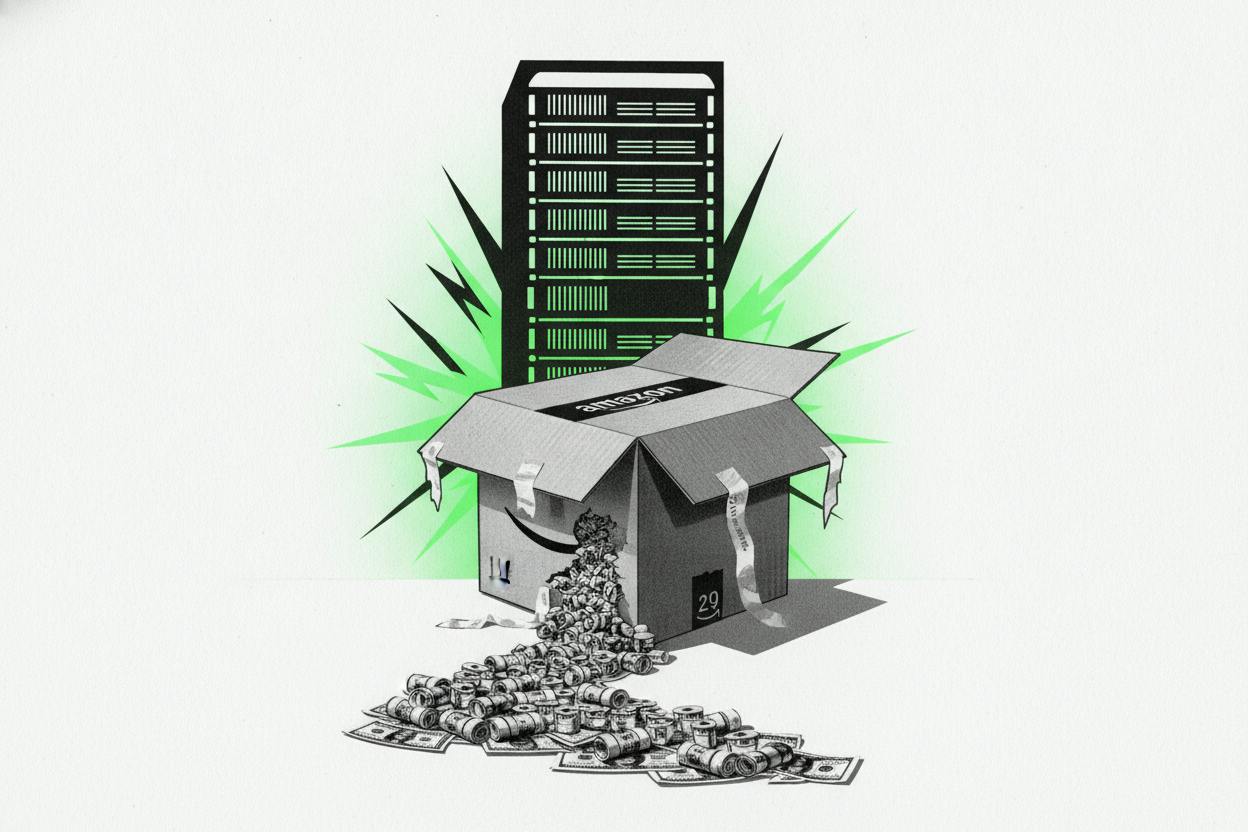
Amazon's holiday-quarter sales outlook landed near the low end of what Wall Street had hoped for, but the bigger concern for investors was the company's deepening cash burn. The e-commerce and cloud giant said it expects fourth-quarter revenue of $240 billion to $247 billion, roughly in line with analysts' average estimate but short of the more optimistic figures that some had priced in.
The more striking number came from the company's cash flow statement. Over the twelve months through September, Amazon reported negative free cash flow of $42.4 billion, meaning it spent far more on capital projects than it generated from operations. That spending spree—largely tied to building out data centers for its AWS cloud business and expanding logistics networks—totaled $77.26 billion in capital expenditures, about $20 billion more than analysts had expected.
Why the cash burn matters
Free cash flow is a key metric for investors because it shows how much money a company actually has left after maintaining and growing its business. When a company like Amazon invests heavily in new infrastructure, it often sacrifices near-term cash flow in hopes of generating bigger profits later. But the scale of Amazon's spending—and management's decision to stick with a full-year capital expenditure target of roughly $220 billion—signals that the cash drain is not about to ease quickly.
For shareholders, the timing of these investments matters. Many valuation models place greater weight on cash flows expected in the near future, because money received sooner is worth more than money that arrives years down the road. When a company burns cash today, it reduces the value that models assign to the business, even if the long-term payoff looks promising.
Amazon's situation is not unusual for a company in a heavy investment phase. Tech giants and industrial firms often go through periods where capital spending outpaces operating cash flow, especially when they are building large-scale infrastructure. The key question investors ask is not whether the spending is smart, but how long it will take to convert into actual cash returns.
AWS growth provides a bright spot
One area of strength was Amazon Web Services, the company's cloud computing division. AWS revenue grew 39% to $46 billion in the quarter, continuing a strong run as businesses and governments increase their use of cloud services. Cloud computing is a high-margin business, and its growth helps offset some of the pressure from Amazon's lower-margin retail operations.
However, AWS still represents only a portion of Amazon's total revenue, with retail making up the bulk of sales. That means the holiday shopping season—typically the biggest quarter for Amazon's retail business—carries significant weight. A softer-than-expected outlook for the fourth quarter adds another layer of uncertainty about consumer demand, especially as shoppers remain cautious about spending on discretionary items.
What it means for investors
For everyday investors, the key takeaway is that Amazon is in a period of heavy investment that is weighing on its cash flow. While the company's long-term strategy—building out data centers and logistics to support growth—may pay off, the near-term financial picture is less rosy. Investors should watch for signs that capital spending is starting to moderate or that AWS growth is translating into stronger cash generation.
Amazon's stock price may become more sensitive to any hints about the pace of spending or the timing of returns from these investments. Small revenue beats may matter less than they used to, while any news about the company's ability to turn its spending into profits could move the shares.
For context, other companies have faced similar dynamics. For instance, Air Canada recently cut its profit outlook as costs rose, showing how external factors can pressure even large companies. And in the tech sector, InterDigital beat estimates but warned on its outlook, a reminder that guidance often carries more weight than past results.
Investors will also be watching broader economic signals, such as Treasury yields slipping below 5% as inflation data came in as expected, which could influence consumer spending and borrowing costs. And while Amazon's situation is unique, it's part of a broader trend of companies investing heavily in AI and cloud infrastructure, as seen in our earlier coverage of Amazon's holiday forecast.
Ultimately, Amazon's story is one of a company making big bets on its future. The question is whether those bets will pay off quickly enough to satisfy investors who are watching the cash burn closely. For now, the market is taking a cautious view, and the holiday quarter will be a key test of whether Amazon can deliver on its promises.