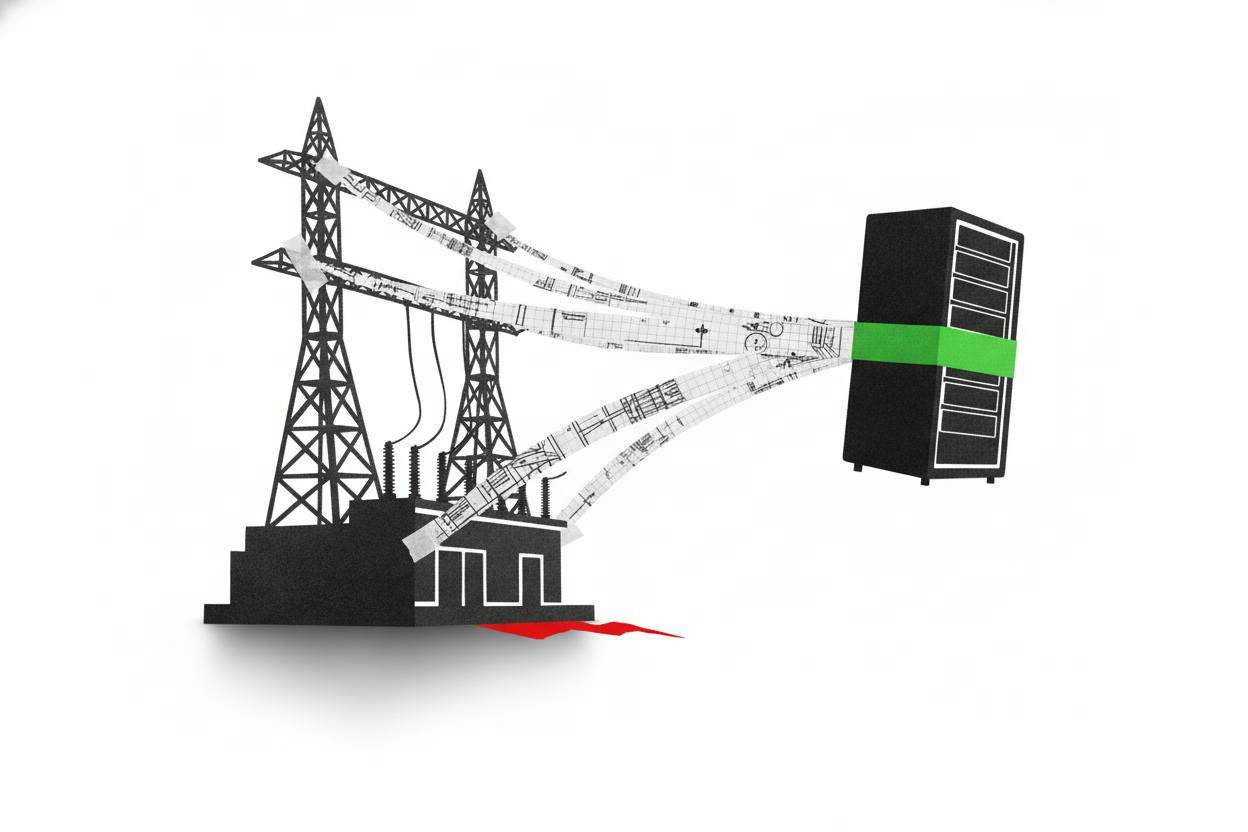
Bank of America sees more than just a steady earnings report from Ameren (NYSE: AEE) in the coming quarters. The real story, according to the bank, is the utility's growing roster of data center customers, which could force it to spend billions more on new power plants and grid upgrades.
In a note to clients, BofA Securities said it expects Ameren to earn $2.30 per share this quarter, slightly below the $2.33 consensus among Wall Street analysts. The shortfall would come from higher operating costs, rising interest expenses, and the dilution from recent share issuance, which offset gains from infrastructure spending and a growing rate base.
But the more significant update, the bank says, is Ameren's Missouri Integrated Resource Plan, which outlines how the utility intends to meet future electricity demand. That plan is where the data center opportunity becomes visible.
What the data center demand means
BofA expects Ameren to have signed contracts for 2.8 gigawatts of new load, with that power demand starting to ramp up in the second half of 2027. To put that in perspective, a gigawatt can power roughly 750,000 homes, so 2.8 gigawatts is a substantial addition to a utility's customer base.
That kind of demand would require significant investment in generation, transmission, and distribution infrastructure. BofA estimates it could add $4 billion to $6 billion to Ameren's five-year capital plan, which currently stands at around $20 billion. That would be a meaningful increase, potentially boosting the company's rate base and, in turn, its future earnings.
Utilities are regulated, and they earn a return on the assets they build, known as the rate base. So more capital spending typically means more revenue and profit over time, as long as regulators approve the projects and the costs are recoverable from customers.
Why data centers are driving utility demand
Data centers, especially those supporting artificial intelligence and cloud computing, are power-hungry. They run servers around the clock, and the rapid growth of AI has led to a surge in electricity demand forecasts. That has made utilities like Ameren attractive to investors looking for growth tied to the AI boom.
Other companies are seeing similar trends. For example, Super Micro's strong forecast signals steady AI data center demand, and NEXTDC's plunge highlights power grid risks for data-center stocks, showing that the opportunity comes with challenges, particularly around grid capacity and reliability.
For Ameren, the key is whether it can convert signed contracts into actual revenue. The ramp starting in late 2027 gives the company time to build the necessary infrastructure, but it also means investors will need to be patient.
What it means for investors
For everyday investors, the takeaway is that Ameren's earnings may be modest in the near term, but the long-term growth story could be substantial. The addition of billions in capital spending could translate into higher earnings per share down the road, as the rate base grows and the company earns returns on new investments.
However, there are risks. The ramp is still a couple of years away, and there's no guarantee that all signed contracts will materialize into actual demand. Utilities also face regulatory hurdles, and rate cases can be contentious, with consumer advocates pushing back against rate increases.
BofA's view is that the market may be underestimating the potential upside from data center demand. If Ameren's capital plan expands as expected, it could lead to upward revisions in earnings estimates and a higher stock price over time.
Investors should also consider the broader context. The utility sector has been a popular haven for income-seeking investors, but it's also sensitive to interest rates. Higher rates increase borrowing costs for capital-intensive utilities, which is one reason Ameren's interest expenses are up. As the Federal Reserve navigates its rate policy, that could affect the stock's appeal.
For now, Ameren's story is one of patience. The near-term earnings may be slightly below expectations, but the data center pipeline offers a clear path to growth. As always, investors should weigh the risks and do their own research before making any decisions.