Halliburton's third-quarter results were a bit softer than Wall Street expected, but the oilfield services giant used its latest update to look further down the road—and that longer-term vision is what caught investors' attention.
According to RBC Capital Markets, Halliburton's adjusted earnings before interest, taxes, depreciation, and amortization (EBITDA) came in about 3% below analyst estimates for the quarter. That shortfall was largely tied to a slowdown in North America, where drilling activity has cooled. However, management's early guidance for 2027—pointing to mid-single-digit revenue growth and operating margins around 15%—helped refocus the narrative on the company's growth potential rather than the near-term weakness.
What's behind the soft quarter?
The third quarter is often a transitional period for energy services companies, as summer activity winds down and operators finalize budgets for the following year. In this case, Halliburton felt the pinch from reduced drilling and completion work in North America, a trend that has been visible across the sector as oil and gas producers remain cautious about spending.
For everyday investors, it's worth understanding what EBITDA and operating margins mean. EBITDA is a measure of a company's profitability that strips out interest, taxes, depreciation, and amortization—essentially showing how much cash a business generates from its core operations. Operating margin, meanwhile, is the percentage of revenue left after covering operating costs, and it's a key indicator of efficiency and pricing power.
Halliburton's 3% miss on adjusted EBITDA is not a dramatic shortfall, but in a market where investors are quick to punish any sign of weakness, it could have weighed on the stock. Instead, the company's forward-looking comments appear to have taken center stage.
The 2027 plan: growth and efficiency
Management's 2027 targets are ambitious but not outlandish for a company of Halliburton's scale. Mid-single-digit revenue growth would mean annual increases in the range of 4% to 6%, which, while modest, would outpace the current sluggishness in North America. The 15% operating margin target is notably higher than recent levels, suggesting the company expects to squeeze more efficiency out of its operations as it expands internationally.
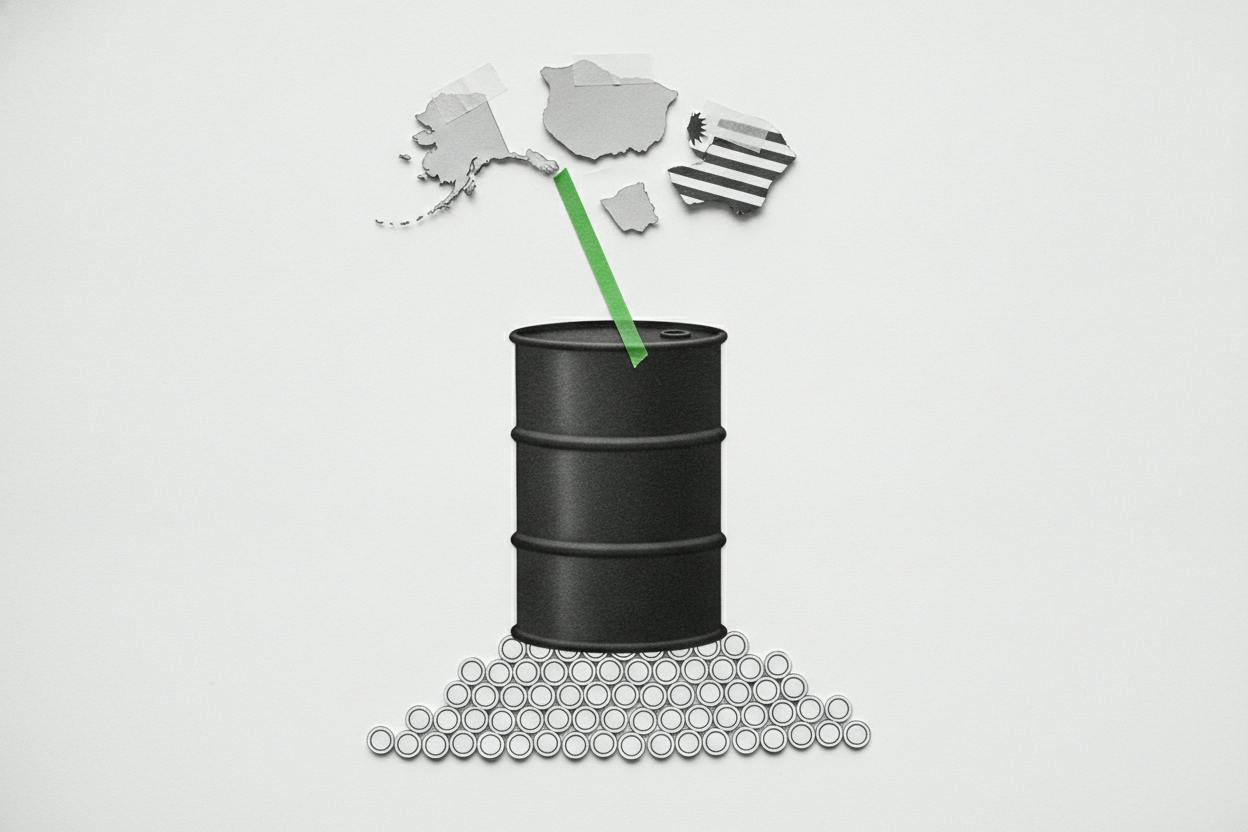
Halliburton's strategy leans heavily on international markets, particularly the Middle East, where energy demand and investment remain robust. This is a shift from the company's traditional reliance on U.S. shale, which has become more volatile as producers prioritize capital discipline over growth. The company's 2027 plan leans on Middle East, not US fracking, a move that could provide more stable revenue streams.
For context, Halliburton is one of the world's largest oilfield services companies, providing equipment and expertise for drilling and completing wells. Its fortunes are closely tied to the health of the global energy industry, and its results often serve as a bellwether for broader oilfield activity.
What it means for investors
For investors, the key takeaway is that Halliburton is positioning itself for a future that looks different from its past. The North American slowdown is real, but the company's management is signaling that international growth—especially in the Middle East—will be the engine of future earnings. The 2027 targets suggest confidence in that strategy, even if the current quarter didn't meet expectations.
It's also worth noting that Halliburton's fourth-quarter guidance was described as "steadier," which could reassure investors that the worst of the North American weakness is behind. In the energy sector, where commodity prices and drilling activity can swing sharply, a steady quarter is often seen as a positive.
That said, investors should keep an eye on oil prices, which remain a major driver of energy stocks. If crude prices stay elevated, drilling activity could pick up, benefiting companies like Halliburton. Conversely, a sharp drop in oil prices would likely dampen demand for services, making the 2027 targets harder to achieve.
Halliburton's results also come amid a mixed earnings season for energy and industrial companies. Some firms, like NextEra, have beaten estimates on the strength of their renewables unit, while others have struggled with weaker guidance. The contrast highlights the divergent paths within the broader energy sector, as traditional oilfield services face headwinds while clean energy plays gain momentum.
For now, Halliburton's stock reaction will likely hinge on how investors weigh the near-term miss against the long-term promise. The company's ability to hit its 2027 targets will depend on execution, international demand, and the global energy landscape. As always, past performance is no guarantee of future results, but the company's forward-looking guidance offers a roadmap worth watching.
In the meantime, investors in Halliburton and other oilfield services firms should monitor quarterly updates for signs of stabilization in North America and continued growth abroad. The energy sector remains cyclical, and companies that can navigate the ups and downs while investing for the long term are often the ones that reward patient shareholders.