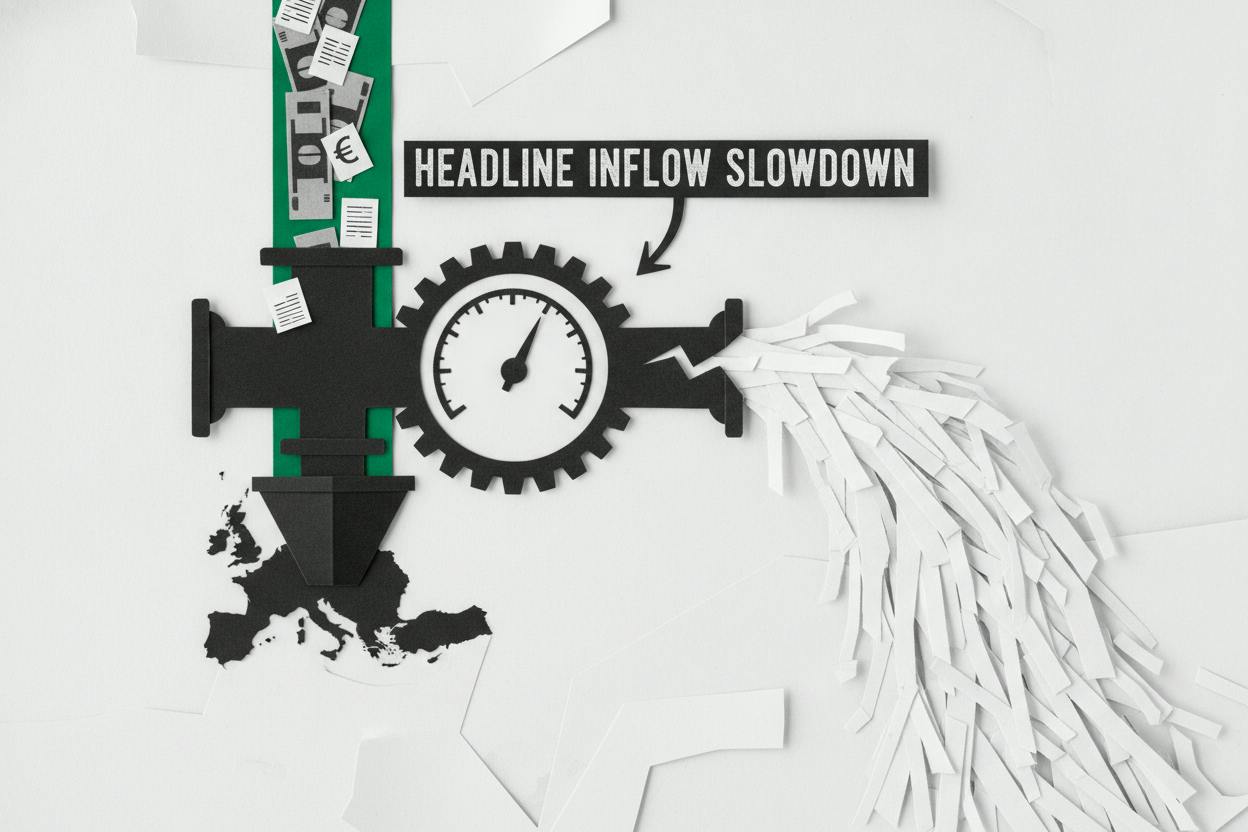
Amundi, Europe's biggest asset manager, said third-quarter net inflows cooled to €6.5 billion, a slowdown from the pace seen earlier in the year. But beneath the headline number, a notable shift was underway: everyday European savers, particularly in Northern Europe, kept adding money to funds, helping to offset weaker demand from institutional clients.
The French firm, which manages over €2 trillion in assets, said the inflows were driven largely by retail investors in countries like Germany, where recent pension reforms have encouraged more people to save for retirement through investment funds. In total, Northern Europe contributed €18 billion of net inflows during the quarter, a sign that policy changes are beginning to reshape how ordinary Europeans invest.
What's behind the slowdown?
The €6.5 billion figure marks a clear deceleration from the first half of the year, when Amundi was pulling in money at a faster clip. The slowdown appears to reflect caution among institutional investors, who have been more hesitant to commit new capital amid uncertainty over interest rates and economic growth.
For context, asset managers like Amundi earn fees based on the amount of money they oversee. When inflows slow, it can pressure revenue growth, even if the total assets under management remain high. That's why investors in fund managers pay close attention to these quarterly flow numbers.
The broader backdrop has been mixed for European markets. While European stocks have slipped recently on concerns about bank earnings and oil prices, the region's economy has shown resilience in some areas. Amundi's results come as Europe's biggest banks beat Q3 forecasts, suggesting that the financial sector is holding up better than some feared.
German pension reforms: a game changer?
Germany's pension reforms, which were introduced to encourage more private retirement saving, appear to be having a tangible effect. The reforms made it easier for workers to put money into state-subsidised retirement plans, many of which invest in mutual funds and ETFs. As a result, money has been flowing into asset managers like Amundi from retail investors who previously kept their savings in bank deposits.
This is a significant development for the European asset management industry, which has long relied on institutional clients such as pension funds and insurers. A growing base of retail investors could provide a more stable and diversified source of inflows, especially if the reforms are replicated in other countries.
For everyday investors, the takeaway is that policy changes can directly influence where money flows in the financial system. When governments tweak pension rules, it can boost demand for investment products, which in turn benefits fund managers and potentially the broader market.
What it means for investors
For shareholders of Amundi, the slowdown in total inflows is worth watching, but the strength in retail flows is a positive sign. It suggests that the company is successfully tapping into a growing pool of European savers who are becoming more comfortable with investing.
For ordinary investors, the news underscores the importance of understanding where your money is going. If you're investing through a pension plan or a fund, the flows into and out of those funds can affect performance and fees. It's also a reminder that government policies, like pension reforms, can have a direct impact on your savings.
Amundi's results also come at a time when European earnings season is putting 2026 targets under the microscope, as investors look for signs of sustainable growth. While Amundi's inflows are a company-specific metric, they also offer a window into the broader health of European savings and investment culture.
Looking ahead, investors will be watching whether the retail momentum continues and whether institutional demand picks back up. If German-style pension reforms spread across Europe, the flow of money into funds could accelerate, benefiting asset managers and potentially boosting markets.
As always, it's important to remember that past performance and current flows are not guarantees of future results. But for now, Amundi's numbers suggest that Europe's retail investors are stepping up, even as the overall pace of inflows slows.