Anthropic, one of the leading artificial intelligence companies, is preparing for a highly anticipated initial public offering (IPO). According to a draft prospectus reviewed by The Wall Street Journal, the company's revenue is growing at a breakneck pace, but so are its expenses—and the risks that come with them.
Revenue surge, but costs climb faster
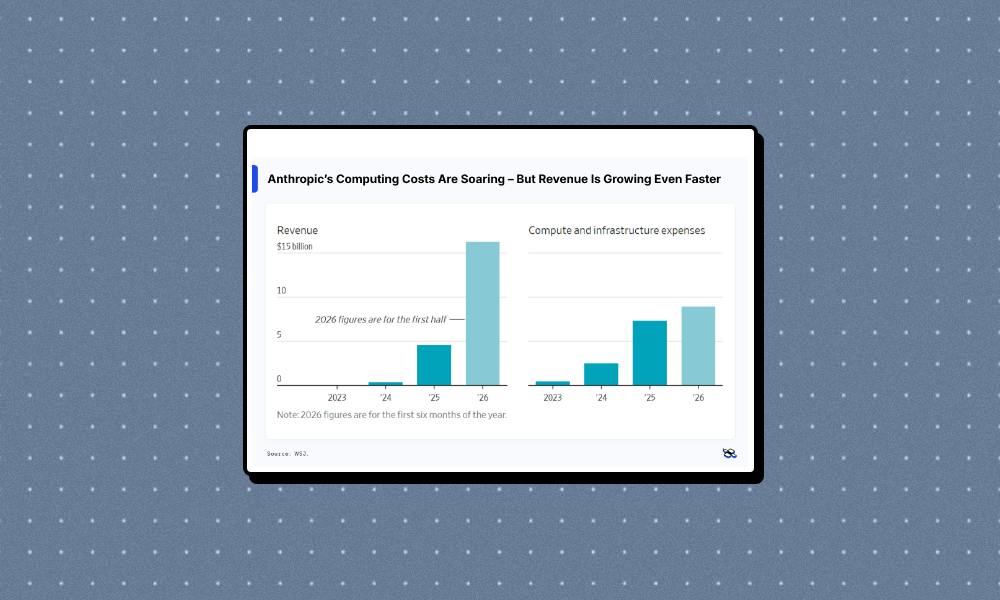
In the first half of 2026, Anthropic pulled in approximately $16.3 billion in revenue, a dramatic jump from $1.1 billion in the same period a year earlier. That's a staggering increase of nearly 15 times. However, the company's spending on computing—the backbone of AI models—also skyrocketed. It spent nearly $9 billion on computing in the first half of 2026, up from $2.3 billion a year prior. That already exceeds what it spent on computing in all of 2025.
This pattern is typical for AI companies: they must invest heavily in the infrastructure needed to train and run their models. But the scale of Anthropic's spending highlights the intense capital demands of the AI race. As one analyst put it, "You have to spend money to make money, but in AI, you have to spend a lot of money just to stay in the game."
The $80.7 billion loss: mostly accounting noise
The headline net loss of $80.7 billion looks alarming at first glance. But the company explains that around $72 billion of that loss comes from accounting charges tied to changes in the value of convertible notes—not from day-to-day operations. Convertible notes are debt instruments that can be converted into stock, and their value fluctuates with the company's valuation. When a company's value rises, the accounting rules require it to record a non-cash expense for the increase in the notes' value. This is a paper loss, not actual cash going out the door.
For everyday investors, this is an important distinction. A net loss driven by accounting charges doesn't mean the company is burning through cash at that rate. The real cash burn is reflected in operating expenses, like the computing costs. Still, the size of the loss underscores the financial complexity of a company that is growing rapidly but not yet profitable.
What it means for investors
Anthropic's IPO is one of the most anticipated in the tech sector. As rivals delay their own listings, Anthropic could be the only major AI IPO this fall, making it a focal point for investors looking to gain exposure to the AI boom.
But the prospectus reveals a company with big revenues, big expenses, and big risks. The revenue growth is impressive, but it comes at a cost. The computing expenses are not just a line item; they represent a strategic bet on the future of AI. If demand for AI services continues to grow, these investments could pay off handsomely. If not, the company could face pressure to cut costs or raise prices.
Another risk is the company's reliance on external suppliers for computing power. Reports suggest that Nscale is in talks to sell $45 billion in AI compute to Anthropic ahead of the IPO. Such a deal would lock in massive costs for years, but it would also secure the computing capacity Anthropic needs to grow. For investors, this means the company's fortunes are tied not just to its own success, but also to the reliability and pricing of its suppliers.
There's also the broader market context. Healthcare stocks led a Wall Street rebound recently as oil cooled and AI steadied, showing that investor sentiment toward AI can shift quickly. If the market turns against high-growth tech stocks, Anthropic's IPO could face headwinds.
The bottom line
Anthropic's draft prospectus paints a picture of a company in hypergrowth mode. Revenue is soaring, but so are costs. The $80.7 billion net loss is mostly a paper loss, but the real expenses—especially computing—are substantial. For investors, the key question is whether Anthropic can maintain its growth trajectory while managing its costs and risks. The IPO will give everyday investors a chance to own a piece of the AI revolution, but it comes with significant uncertainty.
As always, it's wise to read the full prospectus and understand the risks before investing. The numbers are big, but so are the stakes.