Nvidia-backed AI cloud provider Nscale is reportedly in talks to sell roughly $45 billion worth of computing power to Anthropic, according to reports. If completed, the agreement would roughly double the value of the two companies' existing contracts and hand the AI model developer a major expansion of its infrastructure footprint.
The talks come at a sensitive moment for Nscale, which has been preparing for a US stock market debut. A deal of this size would give prospective investors a clearer picture of the company's revenue pipeline — but it would also tie a large chunk of that pipeline to a single customer in a fast-moving industry.
What exactly is a neocloud?
Nscale belongs to a newer category of cloud provider often called a "neocloud." Unlike the legacy hyperscalers — Amazon Web Services, Microsoft Azure and Google Cloud — neoclouds specialize in renting out the high-performance computing power needed to train and run artificial intelligence models. Their data centers are typically built around Nvidia's graphics processing units, or GPUs, the chips that have become the workhorse of modern AI development.
The business model is straightforward: buy or lease expensive hardware, house it in power-hungry data centers, and sell access by the hour or under long-term contracts. Demand has exploded as AI companies race to build larger models, but so have the costs. Building out a campus takes years, enormous capital and reliable access to electricity — which is why contracts are usually signed well before the facilities are finished.
Nvidia's backing gives Nscale both credibility and a supply advantage, since GPU allocation remains tight across the industry. That relationship is a key part of the pitch to public-market investors.
The shape of the reported deal
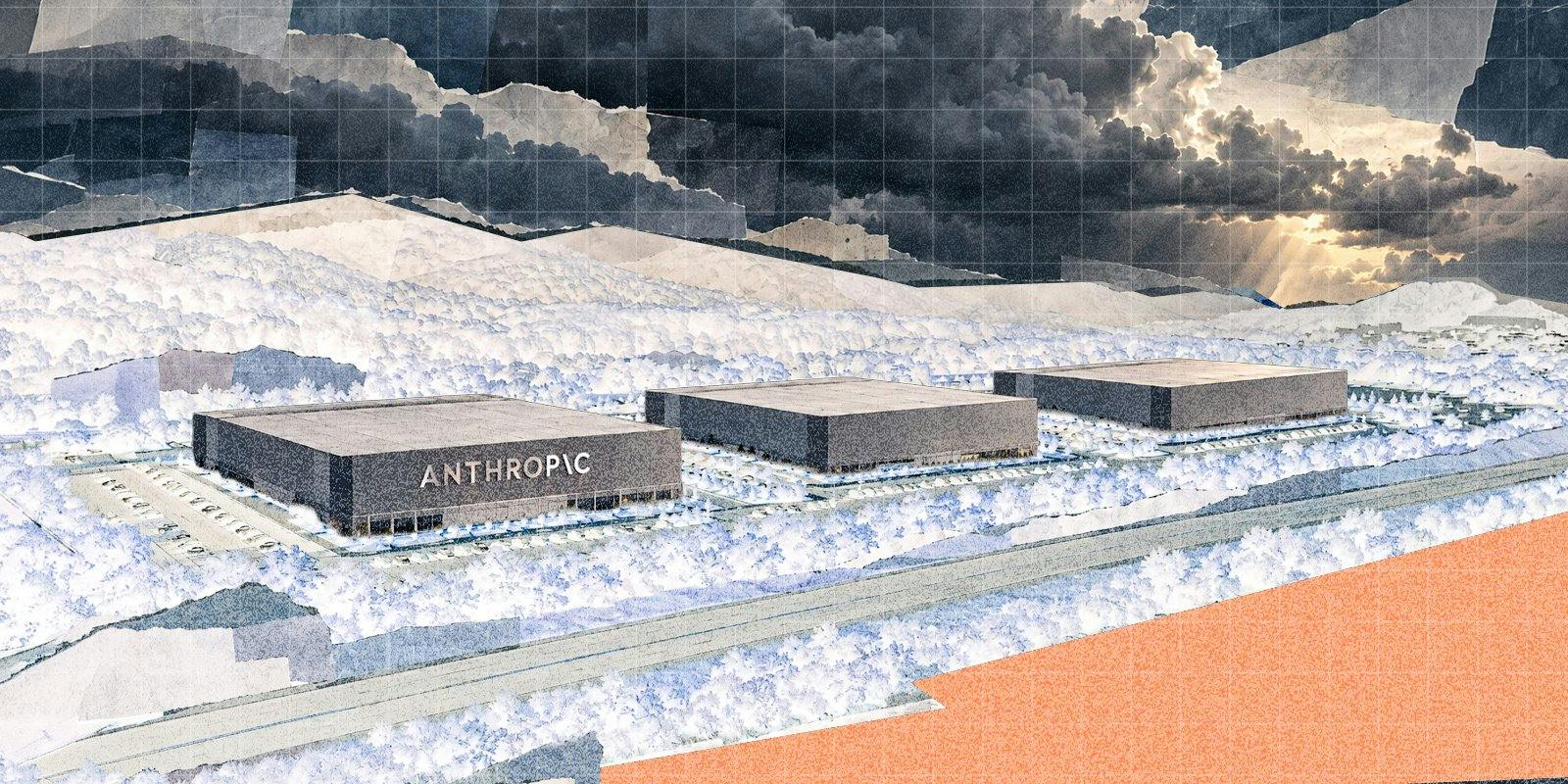
Nscale and Anthropic are not starting from scratch. The two already have an existing agreement, and the reported new arrangement would roughly double it. Under the reported terms, Anthropic would take a second building at Nscale's under-construction West Virginia campus and receive first rights to a third.
That structure is common in the AI infrastructure world. Because data centers are built in phases, customers often sign up for capacity that will only come online later. Locking in a tenant early helps the operator justify the construction spending and can support financing. For the customer, it secures access to compute that might otherwise be unavailable as rivals snap up capacity.
Anthropic has been aggressively expanding its compute base as it competes with other frontier AI labs. The company has been in the news on multiple fronts, including its IPO filing and its reported $80 billion loss, much of which reflects accounting treatment rather than cash burn. It has also been linked to other large infrastructure commitments, including a second $45 billion data center deal.
Why this matters for Nscale's IPO
For a company heading toward a public listing, contract backlog is one of the most closely watched metrics. Investors want to see committed revenue that extends years into the future, because it reduces uncertainty about whether expensive data centers will be filled. A deal that doubles an existing relationship with a well-known AI developer would strengthen that story considerably.
There is a flip side. Concentration risk — relying heavily on one or a few customers — is a common criticism of neoclouds and AI infrastructure companies generally. If a major customer slows its spending, renegotiates or shifts to a competitor, the impact on the provider can be severe. Analysts typically scrutinize the length of contracts, cancellation terms and whether pricing is fixed or variable.
The broader backdrop adds another layer. AI infrastructure spending has been one of the dominant themes in markets, with companies across the sector racing to build capacity. That has raised questions about whether supply will eventually outrun demand, and whether the current pace of investment is sustainable. Any sign of a slowdown in AI capital expenditure tends to ripple through chipmakers, data center operators and their suppliers.
What investors should watch next
Several things could shape how this story develops:
- Confirmation and final terms. Reports of talks are not the same as a signed contract. The size, duration and structure of any final agreement will matter far more than the headline number.
- IPO timing and disclosure. If Nscale proceeds with a listing, its filings should reveal customer concentration, contract details and capital spending plans — the numbers that determine whether the growth story holds up.
- Anthropic's own plans. The AI developer's spending commitments are tied to its own growth and funding. Developments around its fundraising and IPO ambitions could affect how much compute it ultimately needs.
- Demand across the sector. Rival AI cloud businesses are expanding too, as seen in rising revenue from AI compute rentals. Whether demand keeps outpacing supply is the central question for the whole group.
For everyday investors, the takeaway is less about any single deal and more about the trend it represents. AI compute has become a genuine infrastructure business with real contracts, real capital costs and real risks. Companies in this space can grow quickly, but they are also capital-intensive and exposed to the spending decisions of a small number of very large customers. That combination can produce dramatic results in either direction, which is why the details behind the headlines — contract length, customer mix and funding — deserve close attention.