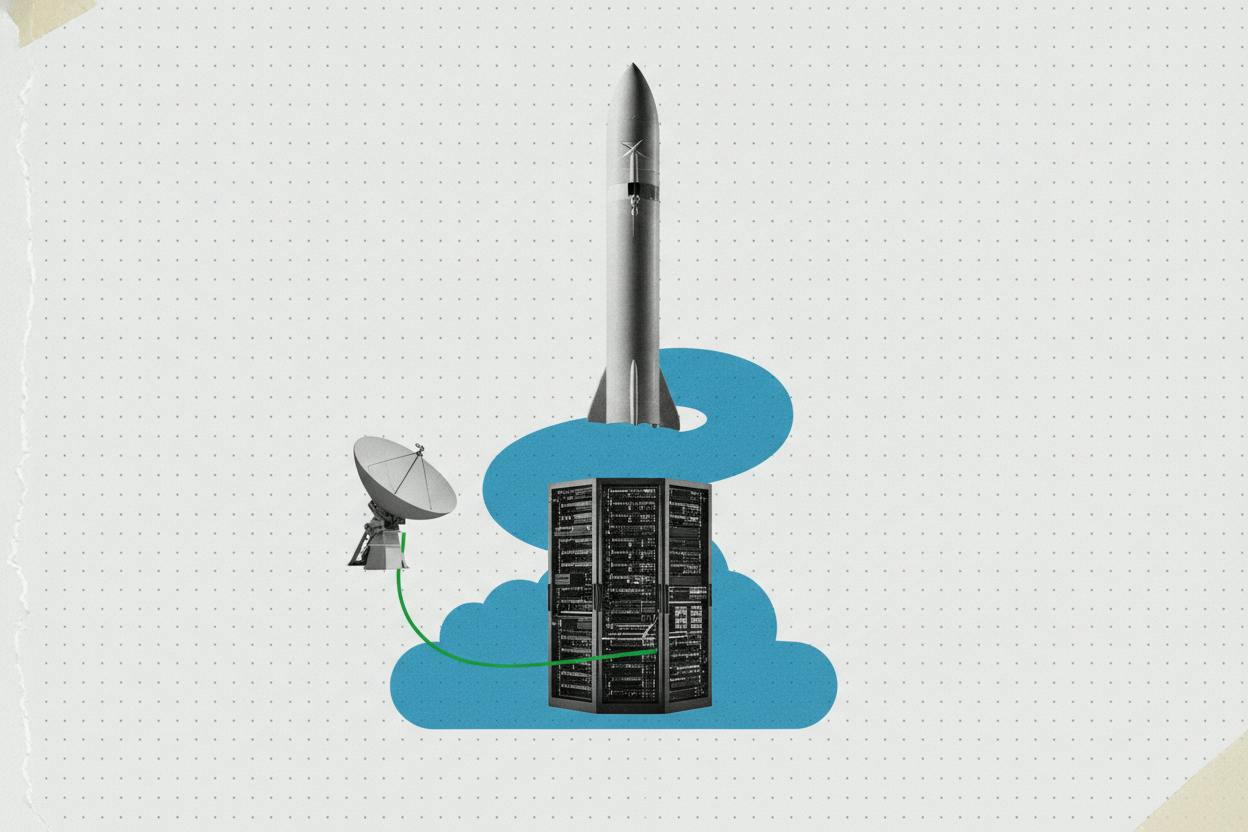
SpaceX reported third-quarter revenue of $14.58 billion, more than double the year-earlier figure, as its artificial intelligence business generated $7.6 billion — mostly by renting out computing power to outside customers. The company's Starlink satellite internet service also expanded to 13.6 million subscribers, even as average revenue per user declined.
The results mark a notable shift in how SpaceX makes money. While the company is still best known for rockets and satellite launches, a growing share of its top line now comes from selling access to AI infrastructure — a business model that looks less like aerospace and more like a cloud provider.
From rockets to rented compute
Renting out compute is the business of selling time on powerful servers, typically packed with specialised chips, to companies that need to train or run AI models. It is the same basic model used by Amazon Web Services, Microsoft Azure and Google Cloud, which have built enormous data-centre footprints to meet demand from AI developers.
What makes SpaceX unusual is that it is arriving at this market from an entirely different starting point. The company's satellite network and launch infrastructure give it assets — bandwidth, ground stations, orbital capacity — that most cloud providers do not own. That has allowed it to package connectivity and computing together in ways traditional providers cannot easily replicate.
The $7.6 billion figure suggests the AI compute business is no longer a side experiment. For a company whose public identity has been defined by reusable rockets and Mars ambitions, it is a meaningful diversification — and one that could change how investors value the business if and when it moves toward a public listing.
Starlink keeps growing, but the economics are shifting
Starlink's subscriber base reached 13.6 million, continuing a rapid expansion that has made the service the largest satellite internet network in the world. The system uses thousands of low-Earth-orbit satellites to deliver broadband to areas where fibre and cable are unavailable or unreliable.
But the brief also notes that revenue per user fell. That is a common pattern for subscription businesses as they scale: growth increasingly comes from lower-priced plans and from markets where customers can afford less. Starlink has rolled out cheaper tiers and hardware discounts in several regions, which brings in more subscribers but lowers the average spend per account.
For investors, the key question is whether volume growth can outpace the decline in per-user revenue. If it can, the total revenue line keeps climbing. If it cannot, the business may need to find new ways to monetise existing subscribers — through faster tiers, mobility plans for vehicles and ships, or bundled services.
What it means for investors
SpaceX is not publicly traded, so most everyday investors cannot buy its shares directly. But the company's results matter well beyond its own balance sheet, for a few reasons.
- Cloud competition: SpaceX is now competing for AI compute spending alongside the major cloud providers. That could pressure pricing or margins across the sector if it adds significant capacity. Investors in Alphabet's cloud and AI chip business and other hyperscalers will want to watch whether a new entrant changes the supply-demand balance.
- Satellite broadband: Starlink's growth affects rival satellite operators and traditional telecom companies that serve rural or hard-to-reach customers. Falling revenue per user is a signal that competition and pricing pressure are real.
- Private-market spillover: SpaceX is one of the most valuable private companies in the world, and its performance influences sentiment around other space and AI infrastructure ventures. It also feeds speculation about a future IPO or a possible tie-up with Tesla, both of which would give public-market investors a direct stake.
The broader backdrop is a surge in demand for AI computing that has strained data-centre capacity and driven heavy spending across the technology industry. Companies that can supply compute — whether through traditional cloud data centres or less conventional infrastructure — are finding willing buyers. SpaceX appears to be capitalising on that demand while its satellite business matures.
What to watch next: whether the AI compute revenue is recurring or tied to a handful of large contracts, how far revenue per Starlink user continues to fall, and whether SpaceX signals any intention to bring either business to public markets. For now, the numbers show a company increasingly funded by the AI boom — not just by rockets.