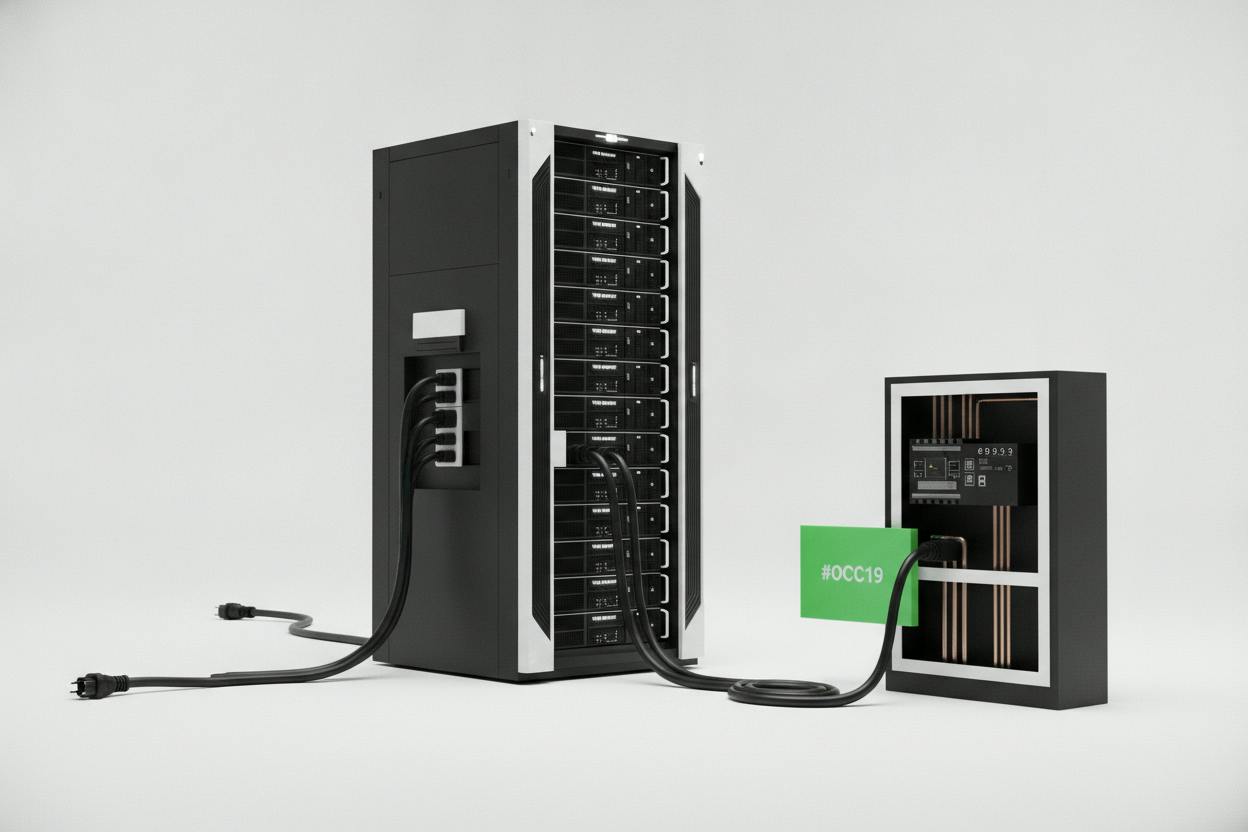
Amazon's cloud unit, AWS, is preparing to deploy a massive batch of Nvidia's latest AI servers, but a surprising obstacle has emerged: not enough electricity to run them. According to internal emails reported by Business Insider, AWS expects to receive $5 billion worth of Nvidia GB300 server racks, yet some of its data center sites don't have the power capacity to turn them on.
The GB300 is Nvidia's next-generation AI computing platform, designed to handle the heavy workloads behind large language models and other artificial intelligence applications. These racks are essentially densely packed supercomputers, and they consume enormous amounts of power. For AWS, the challenge isn't just buying the hardware—it's making sure the physical infrastructure can support it.
Why power is becoming the new bottleneck
For years, the main constraint on AI growth was the supply of advanced chips. Companies like Nvidia have struggled to keep up with demand, and orders for GPUs have reached tens of billions of dollars. But now, as more AI data centers come online, the limiting factor is shifting to electricity.
Data centers need vast amounts of power to run servers and to cool them. Many existing facilities were built before the AI boom and weren't designed for the extreme density of modern AI racks. Upgrading a site's electrical infrastructure can take months or even years, and grid connections aren't always available.
This isn't just an Amazon problem. Across the industry, tech giants are scrambling to secure power for their AI ambitions. Some are turning to alternative sources. Amazon, for instance, has recently signed deals to support small nuclear reactors to power its data centers, and other companies are exploring similar arrangements. The broader takeaway: AI's growth is increasingly tied to the energy sector.
What this means for investors
For everyday investors, this news highlights a key risk in the AI trade. The stock market has rewarded companies that are spending heavily on AI infrastructure—chipmakers like Nvidia, cloud providers like Amazon, and even power utilities. But if those companies can't actually use the hardware they're buying, the expected returns may take longer to materialize.
Amazon's situation shows that even the largest cloud provider can hit physical limits. The $5 billion in GB300 racks represents a significant investment, and if some of that equipment sits idle due to power shortages, it could weigh on AWS's profitability. AWS is Amazon's most profitable segment, so any hiccup there matters for the company's overall earnings.
That said, this is likely a temporary logistical challenge rather than a fundamental flaw in Amazon's strategy. Companies in this position often work through power constraints by upgrading facilities, negotiating with utilities, or shifting workloads to other regions. The fact that Amazon is already investing in nuclear power suggests it's taking the issue seriously.
Broader implications for the AI supply chain
The power crunch also affects other players in the AI ecosystem. Companies that build electrical equipment, like ABB, have seen surges in data center orders as operators race to upgrade their infrastructure. Similarly, utilities and nuclear developers are becoming unexpected beneficiaries of the AI boom.
But the bottleneck could also slow down the pace of AI adoption. If cloud providers can't deploy their servers quickly, it may delay the availability of AI services for businesses and consumers. That could temper some of the most optimistic growth forecasts for AI-related companies.
For investors, the lesson is to pay attention to the physical realities behind the AI hype. While the demand for AI is real, the infrastructure to support it—power, cooling, and grid capacity—isn't always ready. Companies that can solve these problems, or that provide the solutions, may be well-positioned. But those that are simply buying hardware without securing the necessary power could face headwinds.
Amazon's $5 billion order is a sign of confidence in the long-term demand for AI. But it's also a reminder that even the biggest players have to deal with mundane constraints like electricity. As the AI buildout continues, expect power to remain a hot topic—and a potential source of both risk and opportunity.