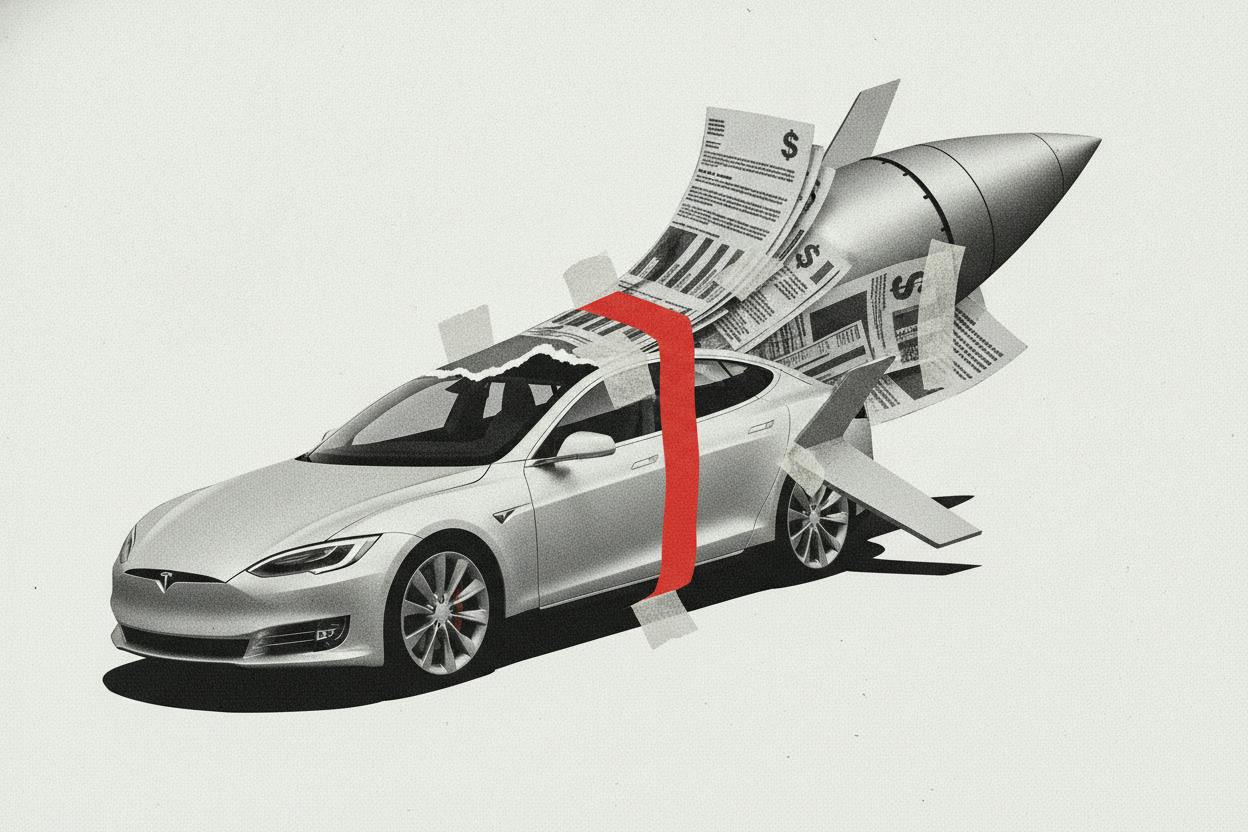
Elon Musk has confirmed that SpaceX and Tesla are in early talks about a possible merger, with special committees formed at both companies to explore the idea. The news, reported by Reuters, comes alongside SpaceX's updated plans for a more rapid Starship launch schedule and a hefty $63 billion backlog of orders.
For everyday investors, the headline is striking: two of the most valuable private and public companies in the world, both led by Musk, could combine. But a merger of this scale would face enormous regulatory, financial, and logistical hurdles, and the formation of committees is just the first step in what could be a long and uncertain process.
What we know about the merger talks
According to Reuters, Musk said that SpaceX and Tesla have each set up special committees to evaluate a potential merger. These committees are typically formed to assess the fairness and feasibility of a deal, especially when there are overlapping interests or when company leaders have ties to both sides.
Musk is the CEO of Tesla and the founder and CEO of SpaceX, so any merger would involve a complex web of related-party transactions. Special committees are meant to protect shareholders by ensuring that any deal is negotiated at arm's length and in the best interest of each company's investors.
This is not the first time merger speculation has surfaced. Investors have previously revived Tesla merger talk around earnings events, though no formal proposal had been confirmed until now.
SpaceX's growth and the Starship plan
SpaceX, best known for its Falcon rockets and Starlink satellite internet, has been expanding rapidly. The company's revenue has jumped sharply, helped in part by growing demand for AI compute rentals through its cloud-like services. That growth has made SpaceX one of the most valuable private companies in the world.
The new Starship launch cadence is central to SpaceX's future. Starship is the massive next-generation rocket designed for missions to the Moon and Mars, as well as for deploying large numbers of Starlink satellites. A faster launch schedule would mean more frequent flights, which could lower costs and increase revenue potential.
The $63 billion backlog—essentially a pipeline of future orders—signals strong demand for SpaceX's services, from satellite launches to space transportation. But turning that backlog into actual revenue depends on executing the launch plan reliably and on time.
What a merger could mean for Tesla
Tesla is primarily an electric vehicle maker, but it also has ambitions in energy storage, robotics, and artificial intelligence. A merger with SpaceX could bring together Tesla's manufacturing expertise and AI capabilities with SpaceX's space infrastructure and satellite network.
Some analysts have speculated that a combined company could leverage Starlink's global internet coverage to support Tesla's autonomous driving and AI initiatives. However, such synergies are speculative at this stage, and the practical challenges of merging two very different businesses are significant.
Tesla shareholders would likely want to know how a merger would affect their ownership and the company's focus. SpaceX is private, so a merger could involve a stock swap or a new public listing for the combined entity—details that have not been disclosed.
What it means for investors
For investors in Tesla, the news adds a new layer of uncertainty. Mergers of this size can be disruptive, and the outcome is far from guaranteed. The special committees could conclude that a merger is not in the best interest of shareholders, or regulators could block it on antitrust or national security grounds.
For those watching SpaceX, the faster Starship schedule and the large backlog are positive signs, but they come with execution risk. Space launches are complex and prone to delays, and the company's spending plans are ambitious.
It's also worth noting that Musk has a history of making bold announcements that don't always come to fruition. His recent pledge of SpaceX stock to every US child was eye-catching but raised many questions about feasibility.
Investors should watch for more details from the special committees, as well as any regulatory filings. The next earnings updates from SpaceX could provide more clarity on the merger talks and the Starship timeline.
The bottom line
The idea of a Tesla-SpaceX merger is a dramatic development, but it's still in the exploratory phase. For now, investors should treat it as a possibility, not a certainty. The more concrete news is SpaceX's operational momentum—its growing backlog and faster launch plans—which could have a more immediate impact on the company's valuation and the broader space industry.
As always, it's wise to stay informed and consider how any major corporate move might affect your portfolio, but avoid making hasty decisions based on early-stage talks.