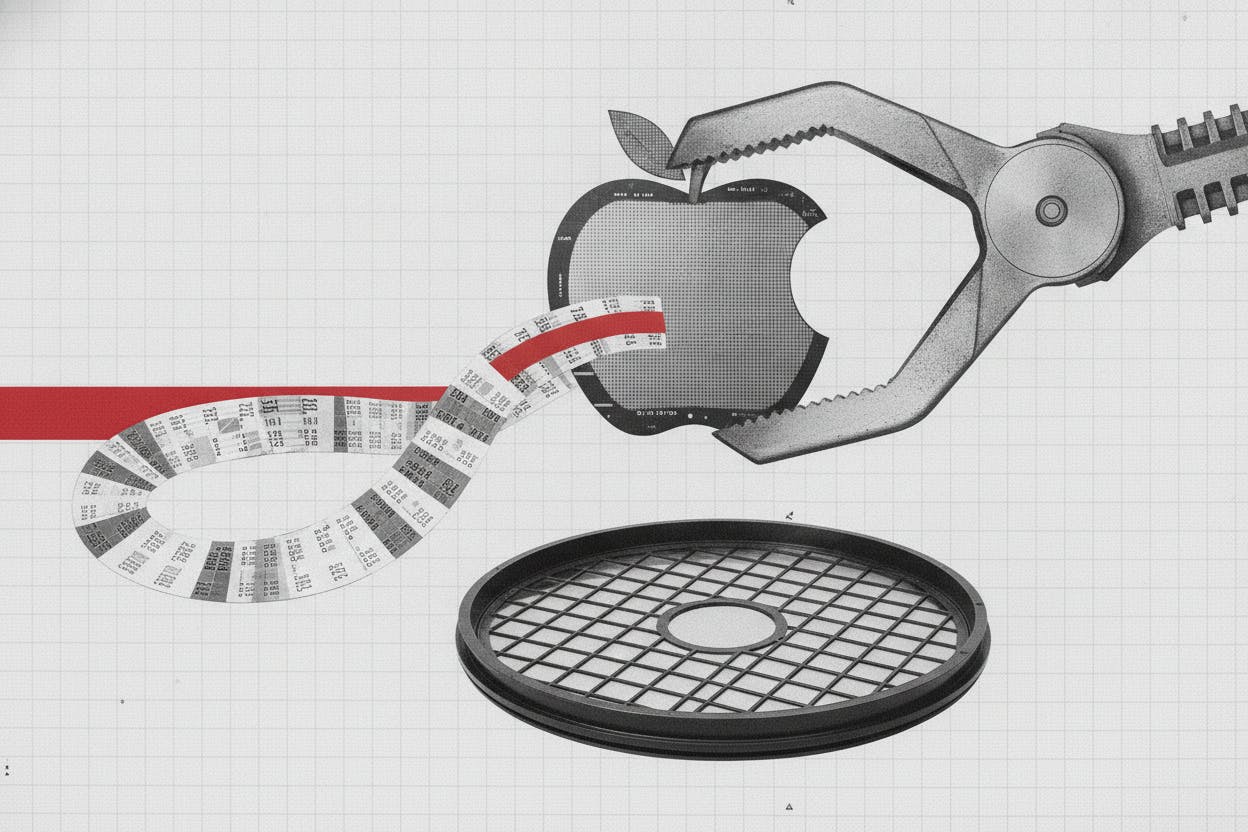
Apple is reportedly considering Intel as a manufacturing partner for some of its custom chips, but analysts caution that even if a deal is struck, turning that into high-volume output could take two to three years or more. The timeline underscores the challenges Intel faces as it tries to establish itself as a major contract chipmaker.
What's happening
Apple designs its own processors but has long relied on Taiwan Semiconductor Manufacturing Company (TSMC) to produce them. CEO Tim Cook has pointed to capacity constraints at TSMC as a factor limiting some iPhone sales, which has fueled speculation that Apple might diversify its supply chain. Intel, meanwhile, is investing heavily to become a foundry—a company that manufactures chips designed by other firms—and has been courting high-profile customers.
Analysts who spoke to Reuters said that even if Apple decides to work with Intel, the road to volume production is long. Designing a complex system-on-a-chip—a single chip that integrates multiple functions like processing, graphics, and memory—typically takes about two years. After that, the manufacturing process must go through a qualification period to ensure reliability and yield, followed by a production ramp to reach scale.
Malcolm Penn of Future Horizons estimated that the best-case timeline is two to three years before the first chips emerge. Daniel Newman of Futurum Group put meaningful volume closer to late 2027 or early 2028. Another open question is which manufacturing process Apple would use. Intel's most advanced node is expected later, while earlier alternatives might be easier to start with but would be less of a strategic win for Intel.
Why it matters for investors
This story is less about whether a partnership exists and more about whether Intel can execute. Foundry sales only become meaningful when a customer's design runs at high yield—meaning most chips coming off the line work—and at high volume. That's when unit costs fall and revenue becomes repeatable. Before that point, Intel still has to spend heavily on process research, equipment, and keeping factories utilized, and those fixed costs can pressure profits even as the "big customer" narrative improves.
The real swing factor for Intel's valuation is whether it can hit Apple-grade yield and quality on whichever process it offers. If Intel can prove it can manufacture chips at the scale and reliability Apple demands, it would be a major validation of its foundry strategy. If not, the headline alone won't move the needle.
For Apple, the potential move is about reducing dependence on a single supplier. TSMC has been a reliable partner, but capacity constraints have already affected iPhone availability. Adding Intel as a second source could give Apple more leverage and supply chain flexibility, but the long timeline means it won't solve any near-term production bottlenecks.
Investors should also consider the broader context. US policy support for domestic chipmaking adds to the appeal of a high-profile customer like Apple, but the semiconductor industry is capital-intensive and cyclical. Intel's foundry business is still in its early stages, and the payoff from a deal with Apple would take years to materialize.
For more on chip sector dynamics, see our coverage of how chip stocks surged recently and the impact of memory costs on Apple's pricing strategy in this article.
What to watch next
Investors should monitor Intel's progress on its advanced manufacturing nodes and any announcements about customer wins. Apple's next earnings call may also shed light on its supply chain strategy. For now, the timeline suggests that any meaningful revenue from an Apple-Intel partnership is years away, and the story is more about Intel's long-term credibility than near-term results.
For a look at how other companies are navigating the chip landscape, see our report on Core Lithium's spin-out and the data center expansion plans that highlight growing demand for computing infrastructure.