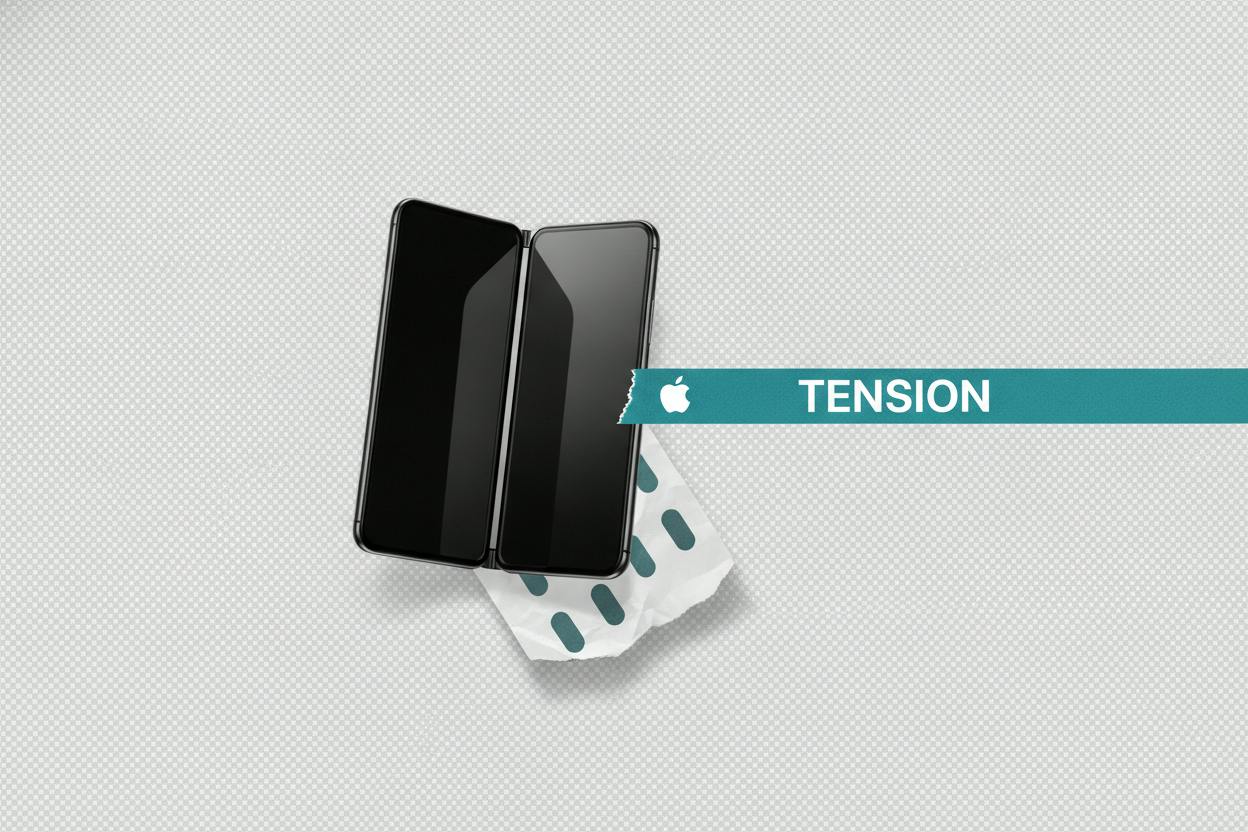
Apple's first foldable phone, the iPhone Duo, went on sale Friday, and within minutes of preorders opening, delivery estimates had already slipped to late January. The quick sell-out signals strong early demand, but it also reflects a deliberately tight supply—Apple told Reuters that walk-in inventory would be limited in many countries, with online-only availability in several major markets.
The launch is an early test of whether Apple can turn foldables from a niche curiosity into a mainstream product. The Duo is priced at the very top end of the smartphone market, stretching well past typical flagship iPhones. Yet shoppers in Australia, China, and Hong Kong still lined up or ordered online, according to Reuters.
What reviewers are saying
Early reviews have been largely positive on the hardware. The hinge and overall build quality drew praise, with many noting that the device feels solid and well-engineered. But reviewers also flagged several trade-offs that come with the new form factor.
- Camera compromises: To fit the foldable design, Apple made some sacrifices in the camera system compared to its traditional flagship models.
- App optimization: Many apps still need to be optimized for the new screen size, meaning some experiences may feel unfinished or awkward on the larger display.
- Smaller closed display: The "closed" screen is smaller than what users might expect, making quick tasks like checking notifications or replying to messages less convenient than on a standard phone.
These trade-offs have led some reviewers to describe the Duo as a "polished prototype"—a device that showcases the potential of foldables but still feels like a first-generation product.
The scarcity factor
Part of the buzz around the launch may be manufactured by scarcity. With limited walk-in inventory and online-only availability in several markets, Apple is creating an environment where demand appears even hotter than it might otherwise be. In Hong Kong, Reuters cited a buyer aiming to flip a unit for about HK$4,000 profit—a sign that scarcity can amplify willingness to pay.
For investors, this means early "sales" headlines will largely reflect what Apple can ship, not the full level of interest. When supply is constrained, the numbers tell you more about production capacity than consumer appetite.
What it means for investors
Longer term, the market research firm IDC expects Apple to capture 44% of foldable sales value in 2026, while accounting for only 31% of units shipped. That gap between value and volume is a pricing and product-mix story.
In the smartphone business, revenue and profits tend to follow average selling price (the typical price a company charges per device) and product mix before they follow unit share. A luxury-priced foldable can take an outsized slice of the category's dollars even while it's a minority of shipments. That's the logic behind IDC's forecast: Apple could own the profit pool early, even if rivals like Samsung ship more devices.
For everyday investors, the key takeaway is that Apple's foldable strategy is less about winning a volume war and more about capturing the high end of the market. If the Duo succeeds, it could boost Apple's already-strong average selling price and margins. If it stumbles, the risk is that foldables remain a niche product that never justifies the development cost.
The broader tech landscape also matters. The launch comes at a time when AI demand is hitting a funding wall and chip stocks are sliding, which could affect consumer sentiment and spending on high-end gadgets. Meanwhile, China's CSI 300 has entered a bear market, and weak demand there could weigh on Apple's sales in a key market.
Investors will be watching several signals in the coming weeks: how long delivery estimates stretch, whether resale prices hold up, and how quickly Apple can ramp production. The cleaner demand signals will be the points of friction people tolerate—like long delivery windows and resale markups—rather than the raw shipment numbers.
For now, the iPhone Duo is a bold bet that foldables can feel mainstream. Whether it pays off will depend on whether Apple can overcome the trade-offs that still make foldables feel like a work in progress.