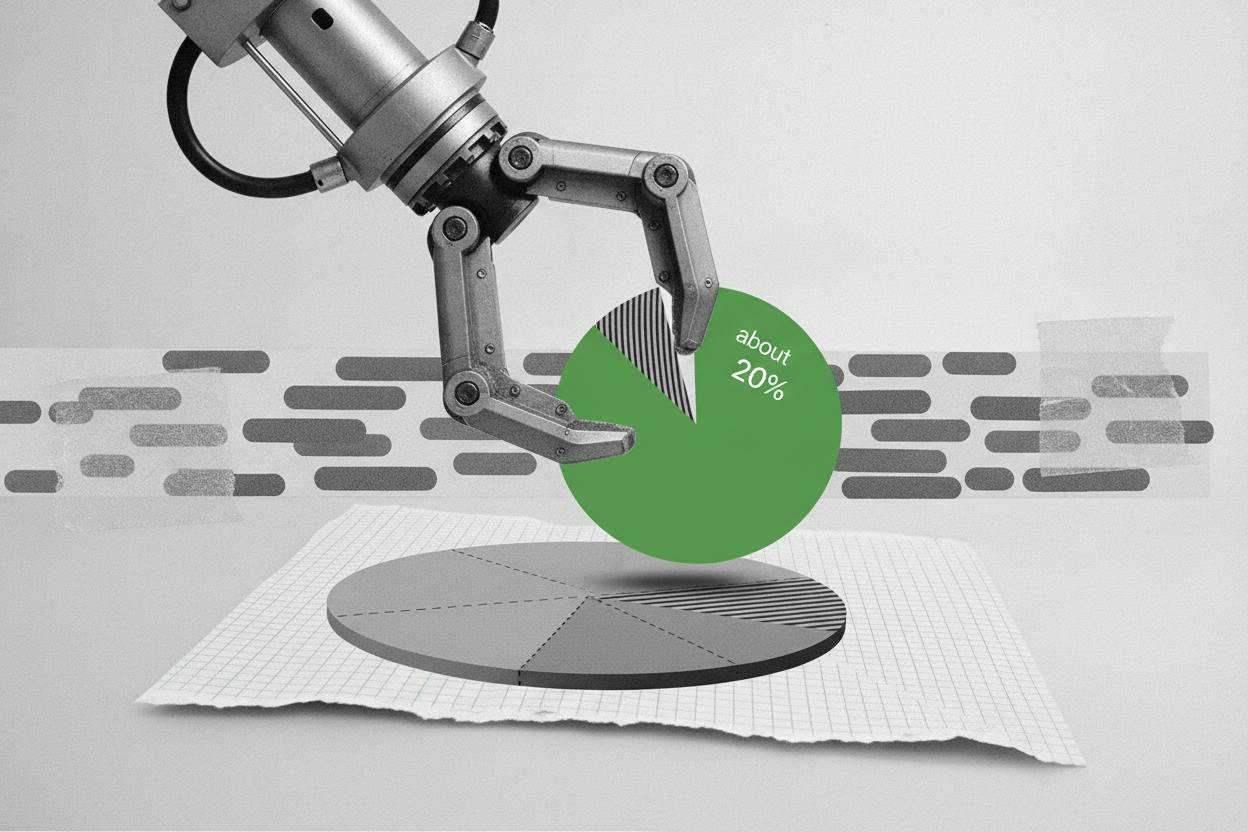
Applied Materials, one of the world's largest semiconductor equipment makers, is deepening its ties with BE Semiconductor Industries (Besi), a Dutch company that makes equipment for packaging chips. The US firm said it entered an accelerated purchase agreement to raise its stake in Besi to about 20%, and Besi shares jumped 8.8% in Amsterdam trading on the news.
The move comes just weeks after the two companies announced they would expand a long-standing partnership focused on hybrid bonding, a technology used to connect chips that is becoming increasingly important for advanced AI hardware. Hybrid bonding allows chips to be stacked and connected more densely, which helps improve performance and energy efficiency in data-hungry applications.
What the stake means
Applied Materials said it has no intention of going beyond roughly 20% and will not seek a seat on Besi's board. That distinction matters in the Netherlands, where crossing the 30% ownership threshold would trigger a mandatory offer for the entire company under Dutch takeover rules. By staying below that line, Applied avoids turning its investment into a full-blown takeover attempt.
For Besi shareholders, the stake increase is a vote of confidence from a major industry player. It gives Applied more economic exposure to Besi's technology and a stronger incentive to align product roadmaps, without the complications of a full acquisition. Markets often treat such arrangements as a “strategic option” – valuable because it can deepen cooperation and leave the door open for future moves, which helps explain the sharp share price reaction.
But the upside from takeover expectations is limited. Because Applied has explicitly ruled out going above about 20% and won't take a board seat, investors can't price in a full “control premium” – the extra value that typically comes with a buyout. Instead, Besi's shares are likely to trade on partnership milestones and regulatory headlines rather than drift toward a full acquisition price.
Regulatory hurdles and the China factor
The deal is still subject to US antitrust review, and that's not the only regulatory hurdle. European brokerage Degroof Petercam argued that China's competition regulator would likely block a full takeover, given both companies' significant business exposure to China. The brokerage also noted that Applied Materials walked away from its planned acquisition of Kokusai Electric in 2021 after Chinese approval dragged on too long.
That history suggests that even if Applied wanted to buy Besi outright, getting the necessary approvals could be a long and uncertain process. For now, the company seems content with a significant minority stake that strengthens its partnership without triggering a full-blown regulatory battle.
What it means for investors
For everyday investors, this news is a reminder that strategic stakes can move stock prices even when they don't lead to a takeover. Besi's shares had fallen sharply from their June peak during a broader semiconductor slump, making a bigger position cheaper for Applied. The timing of the stake increase – right after the partnership expansion – suggests Applied sees value in Besi's technology at current prices.
Investors should also note that the semiconductor sector has been volatile, with concerns about demand and supply chains weighing on many stocks. The role of AI in chip development is a key theme, and hybrid bonding is seen as a critical enabler for next-generation AI hardware. That could give Besi's technology a long-term growth runway, even if the stock remains sensitive to broader market swings.
For those watching the sector, the key things to track are the US antitrust review, any updates on the partnership's progress, and how Besi's technology is adopted by major chipmakers. The broader market sentiment and global economic conditions will also play a role in how these stocks perform.
In the end, Applied's move is a strategic bet on the future of chip packaging, not a prelude to a takeover. That distinction is important for investors who might otherwise expect a buyout premium. Instead, the value lies in the partnership's potential to drive innovation and growth in the AI era.