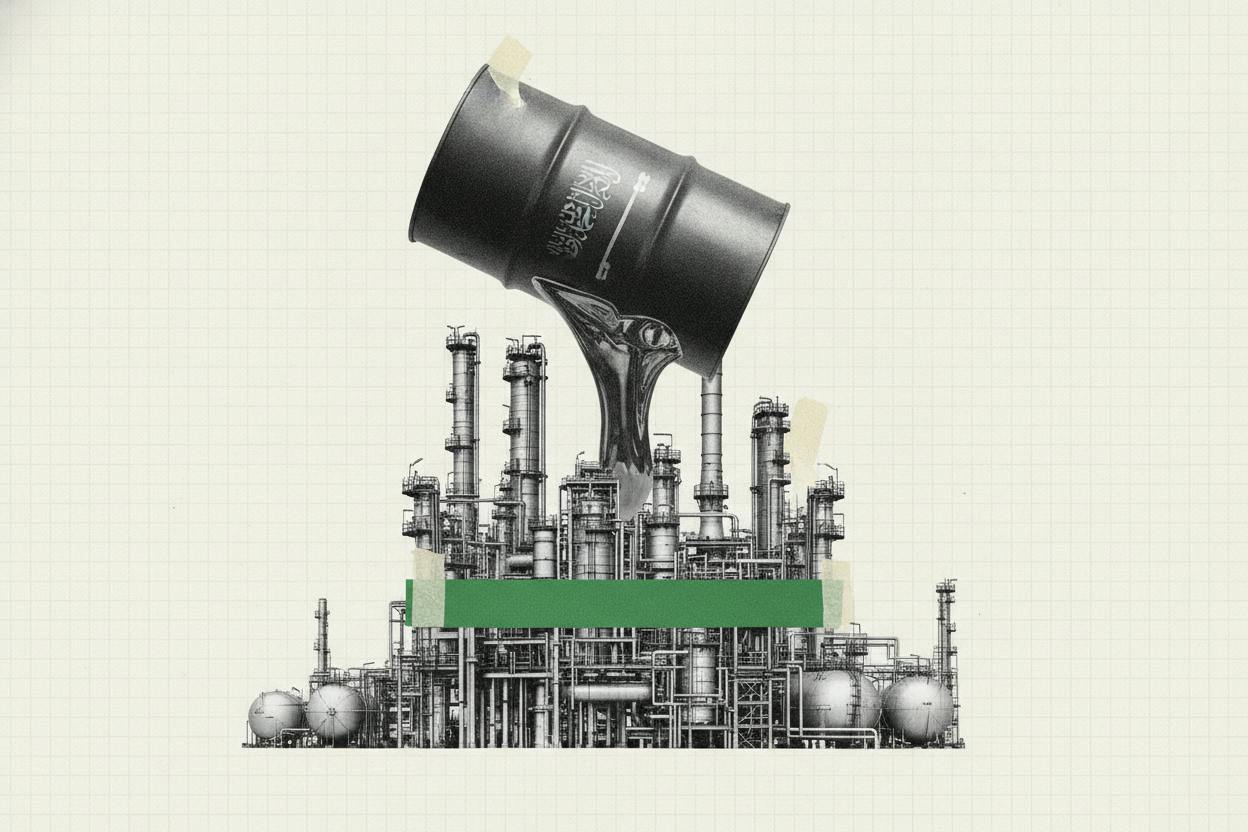
Saudi Aramco's third-quarter results may lean more on its refineries than its oil wells, according to a new forecast from AlJazira Capital. The analyst firm expects downstream revenue—the part of the business that refines crude into fuels and chemicals—to rise 3.6% from the previous quarter to SAR 334.8 billion, even as weaker oil prices drag on the company's upstream operations.
In a recent note, AlJazira Capital projected Aramco's total third-quarter revenue at SAR 530.0 billion, up 1.6% from the prior quarter. However, net income attributable to shareholders is seen falling 6.5% to SAR 113.6 billion. The tug-of-war between upstream and downstream is at the heart of the forecast.
Upstream vs. downstream: what's driving the numbers
Aramco's upstream business sells crude oil and natural gas. Its downstream business takes that crude and processes it into refined products like gasoline, diesel, and jet fuel, as well as petrochemicals. The two sides of the business respond differently to market conditions.
AlJazira Capital expects realized oil prices—the actual prices Aramco receives for its crude—to drop 13.3% quarter over quarter. That would weigh on upstream revenue and profits. But refining margins, the difference between what a refinery pays for crude and what it earns from selling refined products, are expected to improve, boosting downstream revenue.
This kind of split is not unusual for integrated oil companies. When crude prices fall, upstream earnings tend to suffer, but refining margins often widen because product prices don't always fall as quickly as crude. That can provide a natural hedge for companies like Aramco that operate across the value chain.
What the forecast means for investors
For everyday investors, the key takeaway is that Aramco's earnings are not just about the price of oil. The company's refining and chemicals operations can cushion the blow when crude prices soften, as they appear to be doing this quarter.
The expected decline in net income—down 6.5% quarter over quarter—shows that the upstream weakness is still significant. But the fact that total revenue is expected to rise suggests the downstream strength is helping to offset some of that pressure.
Investors should watch how refining margins evolve in the coming quarters. If they stay strong, they could continue to support Aramco's results even if oil prices remain subdued. Conversely, if refining margins weaken, the company could feel more pain from lower crude prices.
It's also worth noting that Aramco's results are a bellwether for the broader energy sector. When the world's largest oil company reports, it offers clues about global demand, supply dynamics, and the health of the refining industry. Other energy companies, from refiners like Viva Energy to miners like BHP, are also navigating a mixed commodity environment.
Broader market context
The forecast comes at a time when oil prices have been volatile, influenced by geopolitical tensions, OPEC+ production decisions, and global economic uncertainty. For Aramco, which is majority-owned by the Saudi government, its results also have implications for the kingdom's budget and its ability to fund large-scale projects.
Investors in Aramco shares—which trade on the Saudi stock exchange—will be looking for more than just revenue and profit numbers. They'll also want to see how the company manages its dividend, which is a key reason many hold the stock. Aramco has committed to a performance-based dividend that is tied to earnings, so the expected drop in net income could affect that payout.
AlJazira Capital's note is just one analyst's view, and actual results could differ. But the forecast highlights a broader trend: energy companies are increasingly reliant on their downstream and chemicals businesses to generate stable returns, especially when crude prices are weak.
For comparison, other companies have also seen their fortunes tied to specific segments. For instance, SAP's cloud business drove its first €10 billion quarter, and Cleveland-Cliffs benefited from strong steel demand. The lesson is the same: understanding which part of a business is driving results is crucial for investors.
What to watch next
Aramco is expected to report its third-quarter results in the coming weeks. Investors will be watching to see if the actual numbers match AlJazira Capital's forecast, and more importantly, what management says about the outlook for oil prices, refining margins, and future capital spending.
If downstream continues to carry the load, it could signal that Aramco is becoming more resilient to oil price swings. That would be a positive for long-term investors who value stability. On the other hand, if upstream weakness deepens, it could put more pressure on earnings and dividends.
As always, it's important to remember that analyst forecasts are just estimates. They can be wrong. But they do provide a useful framework for understanding the forces at play. For now, the message from AlJazira Capital is clear: Aramco's refineries are likely to be the bright spot in an otherwise mixed quarter.