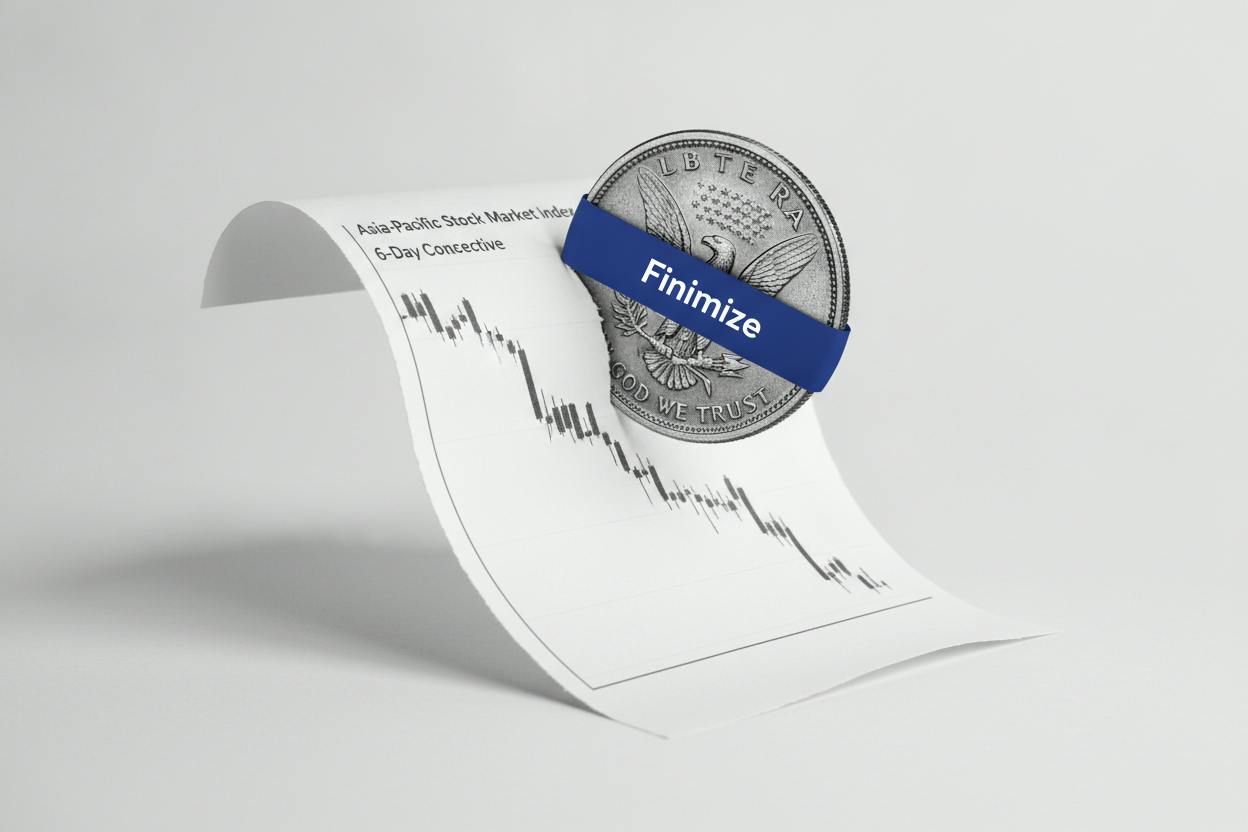
Asian stocks fell for a sixth straight session on Friday, extending a broad selloff as investors stepped back from the artificial-intelligence trade that has driven markets for much of the past year. The pullback was widespread, with major indexes in Japan and South Korea posting sharp losses, and the region's benchmark on track for its worst week in months.
The weakness came despite a standout debut from Anthropic, the frontier AI company whose shares jumped more than 30% in their first day of trading. The pop was a bright spot in an otherwise gloomy session, but it wasn't enough to reverse the broader mood. When a crowded trade starts to wobble, good news in one name often can't offset investors cutting exposure across the whole sector.
What's driving the selloff?
The recent slide has been broad. MSCI's Asia-Pacific index fell again on Friday and was down about 7% for the week, according to Reuters, with steep declines in Japan and South Korea. US stocks also slid earlier in the week, setting a cautious tone for Asian markets that often follow Wall Street's lead.
Part of the story is AI fatigue. After a long run-up in shares of companies tied to artificial intelligence, from chipmakers to software firms, some investors are taking profits or reducing risk. The Nikkei's slide this week, for example, was tied to concerns about chip export curbs and inflation, showing how multiple factors are weighing on the sector.
But the macro backdrop is doing just as much work. Markets increasingly expect the Federal Reserve to keep interest rates "higher for longer," and CME's FedWatch tool points to a quarter-point rate hike next month. That expectation has kept the US dollar near its strongest level since April 2025, with the dollar index hovering around 103.86.
Why a strong dollar matters
A firm dollar and higher US rates have global consequences. Many companies and investors borrow in dollars or hedge their foreign holdings back into the greenback. When US rates rise and the dollar strengthens, those borrowing and hedging costs go up. That can push investors to trim leveraged and cross-border bets first, even if local economic headlines look fine.
For Asia, this often means risk assets feel the squeeze disproportionately. The region's markets are sensitive to global liquidity conditions, and a stronger dollar can make dollar-denominated debt more expensive to service, putting pressure on companies and governments alike.
The result is that a cooling AI trade can turn into broader de-risking when the dollar is firm. As one market strategist put it, a dollar index at 103.86 can turn an AI wobble into a region-wide selloff.
What it means for investors
For everyday investors, the key takeaway is that market moves are rarely driven by a single factor. The AI trade has been a powerful driver of returns, but it's not immune to shifts in interest rates and currency markets. When the Fed signals tighter policy, it ripples through global markets, and Asia often feels it first.
The KOSPI's drop to a 10-month low and the ASX 200's slide this week are reminders that even strong local fundamentals can be overshadowed by global forces.
For those with diversified portfolios, this kind of pullback is a normal part of market cycles. It's also a reminder that concentrated bets on a single theme, like AI, carry higher risk. While the long-term potential of AI remains a major investment theme, short-term volatility is likely to continue as investors digest the interplay between tech enthusiasm and macroeconomic reality.
Looking ahead, all eyes will be on the Fed's next meeting. If the central bank does hike rates, as markets expect, the dollar could stay firm, keeping pressure on Asian equities. But if inflation data surprises to the downside, the picture could shift quickly. For now, investors should expect continued volatility and keep an eye on how the AI trade evolves in this higher-rate environment.