Samsung Electronics announced a reshuffle of its semiconductor leadership on Friday, naming Hwang Sang-joon to head its memory chip unit. The move comes as the company reported a 15-fold jump in third-quarter chip profit, driven by surging demand from AI data centers.
Why memory chips are suddenly so important
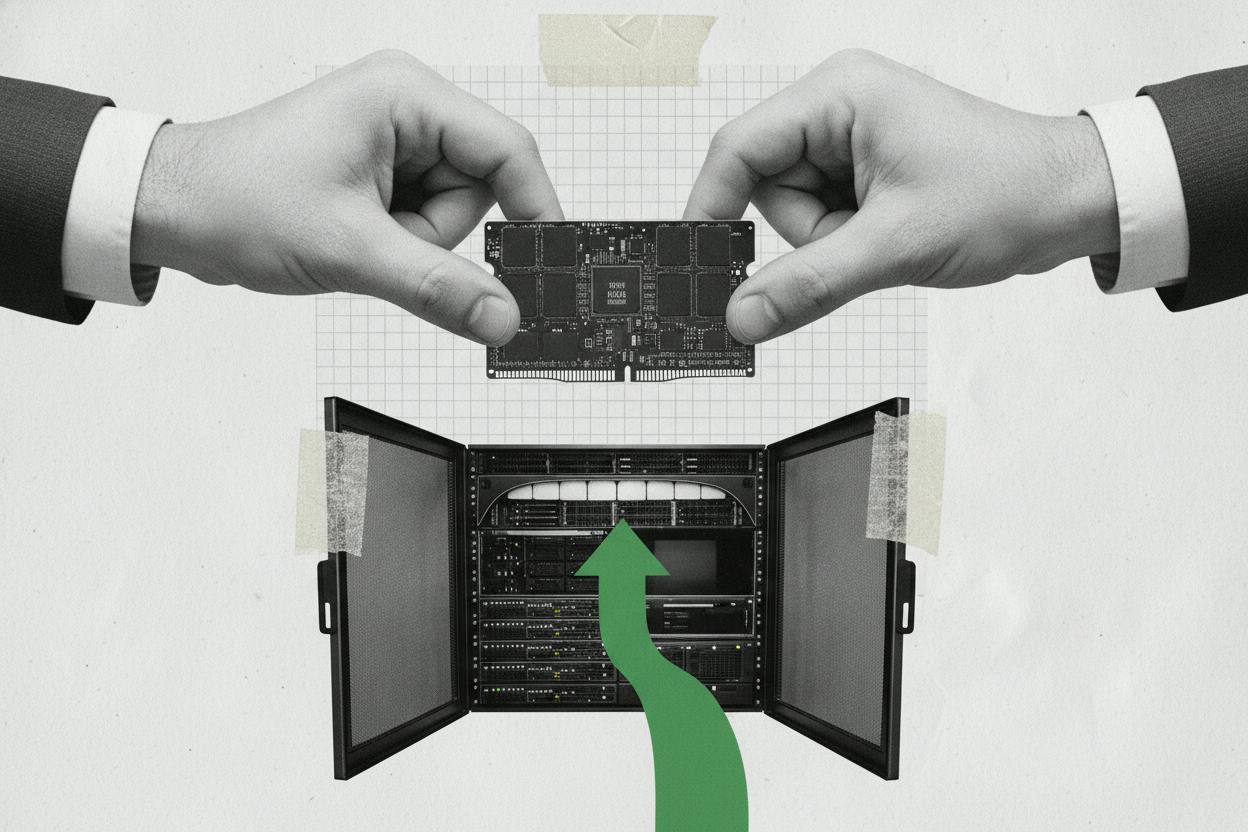
Memory chips have become one of the main bottlenecks in the global AI buildout. Data centers that train and run large AI models need enormous amounts of DRAM and high-bandwidth memory (HBM) to keep advanced processors fed with data. Without enough of these chips, even the most powerful GPUs can't operate at full capacity.
Hwang, who previously oversaw memory development at Samsung, will now be responsible for strengthening the company's product lineup "in the AI era," according to the company. The promotion signals that Samsung wants to capitalize on the current boom in AI-related memory demand.
Above Hwang, co-CEO and Vice Chairman Jun Young-hyun will continue to lead the overall semiconductor division, ensuring continuity at the top while the company adjusts its operational leadership.
What this means for investors
For everyday investors, this leadership change is a signal that Samsung sees AI memory as a long-term growth engine, not just a temporary tailwind. The company is positioning itself to compete aggressively in the high-end memory market, where rivals like SK Hynix and Micron also play a major role.
The 15-fold profit jump is a striking number, but it's important to remember that it comes off a very low base. Last year, the memory industry was in a severe downturn, with prices and profits collapsing. The current recovery is partly a rebound from those depressed levels, but the AI-driven demand for HBM and high-capacity DRAM is adding a new layer of growth.
Investors should watch how Samsung executes on its AI memory strategy, particularly in HBM, where it has been trying to catch up to SK Hynix in supplying Nvidia and other AI chipmakers. The reshuffle suggests Samsung is serious about closing that gap.
For those with exposure to Samsung stock, either directly or through funds, the key question is whether the company can convert its memory strength into sustained profitability. The broader AI trade has been a major driver of global equity markets, and memory chips are a critical piece of that story. As Alibaba's AI cloud demand and other tech earnings have shown, AI spending remains robust, but it also comes with heavy capital costs.
At the same time, the AI infrastructure buildout is creating opportunities beyond the chipmakers themselves. For instance, CATL is pitching off-grid power solutions for AI data centers, highlighting the energy demands of the sector. And the Anthropic IPO has tested investor appetite for AI-related companies, with strong demand.
For Samsung, the leadership shuffle is a clear statement that it intends to stay at the forefront of the AI memory wave. Whether that translates into sustained profit growth will depend on its ability to ramp up production of advanced memory chips and win over key customers.
In the near term, investors will be watching for Samsung's next earnings report and any updates on its HBM supply deals. The company's ability to maintain its profit momentum will be a key test of whether the AI memory boom is as durable as many hope.