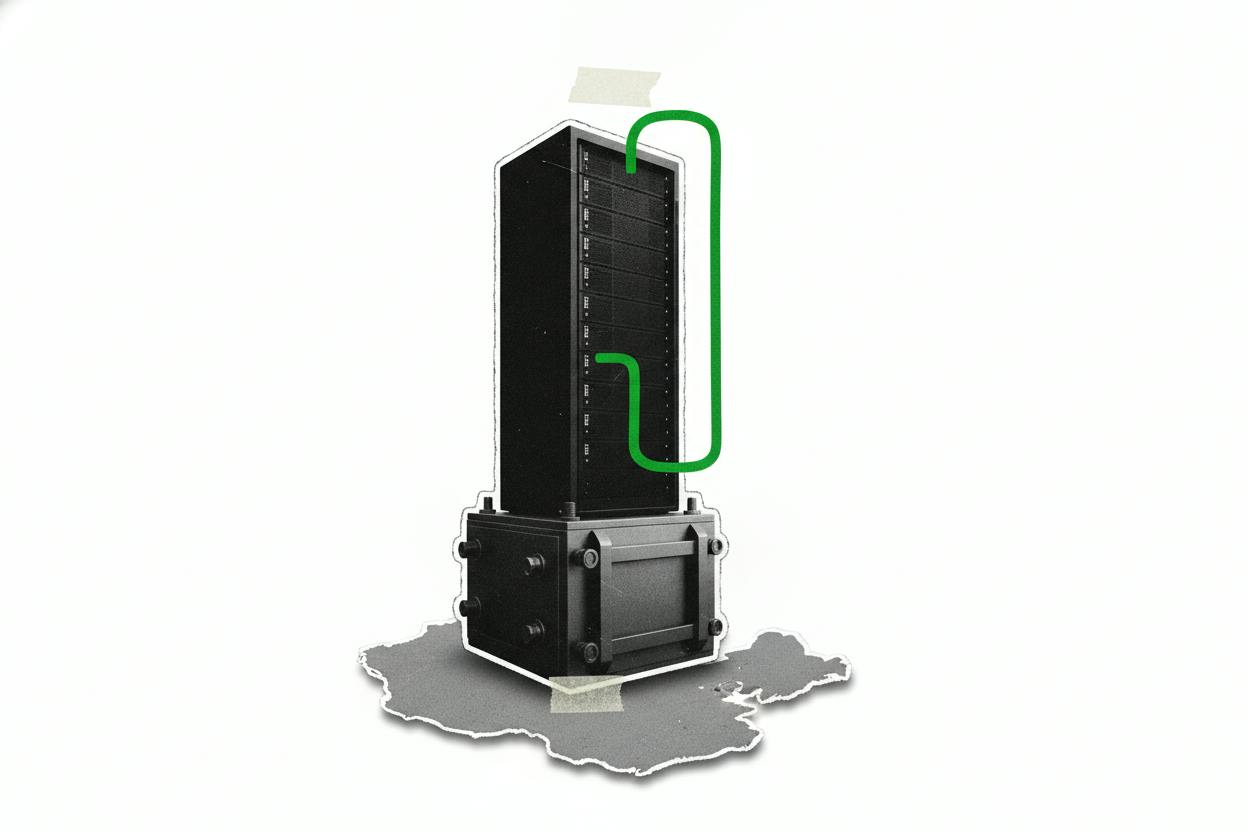
Battery giant CATL is making a bold move beyond electric vehicles: it wants to power the next wave of AI data centers with off-grid renewable energy and battery storage. The company has already registered a business in Inner Mongolia, a key hub for data center construction, according to a report from Bloomberg.
CATL, already the world's largest maker of EV batteries, is trying to turn a growing bottleneck—the struggle to connect massive new data centers to the electricity grid—into a new revenue stream. CEO Robin Zeng told Bloomberg that the company is in talks with developers about bundled “energy solutions.” These packages combine renewable generation, battery storage, software to balance supply and demand, and the hardware that converts and routes electricity.
The pitch is straightforward: instead of waiting months or years for a utility hookup and costly grid upgrades, a data center can buy a self-contained power block designed to run as a system. That approach could be especially appealing in regions where grid connection queues are long, such as parts of the United States.
From battery packs to infrastructure projects
CATL's move signals a strategic shift. Historically, the company has been known for selling battery packs to automakers and energy storage developers. But this new initiative aims to deliver complete, integrated power systems—essentially infrastructure projects that require ongoing operation and maintenance.
Registering a company in Inner Mongolia is a telling step. That region has become a focal point for China's data center buildout, partly because of its cooler climate and access to renewable energy. By setting up locally, CATL positions itself close to where projects are actually being built.
At the same time, Zeng said the biggest demand right now is in the US, where connection queues are notoriously long. Data center developers there are increasingly exploring off-grid options to avoid delays. This isn't just a niche experiment; it's a potential answer to a real problem that has been highlighted by other industry players. For instance, power shortages have already capped growth for some AI companies, underscoring how critical electricity access has become.
What it means for investors
For markets, the key takeaway is that CATL is aiming for data center dollars beyond the battery cycle. Selling a “full-stack” power package could change how investors view CATL's earnings. Hardware sales tend to be cyclical and price-competitive, but integrated projects can bring fatter margins through engineering, system integration, and long-lived service contracts that depend on uptime and performance.
That's a meaningful difference. If CATL can successfully execute, it could reduce its reliance on the volatile EV market. The company has already been pushing into other areas, such as battery-swap technology, which aims to lock automakers into its ecosystem. Now, data centers offer another potential growth avenue.
But the risks are real. Building and operating power systems is more complex than shipping batteries. Success depends on permitting, partner quality, and whether data center developers keep choosing off-grid setups over waiting for the grid. There's also execution risk: CATL has little experience running large-scale power infrastructure, and any missteps could hurt its reputation.
Still, the broader trend is clear. AI data centers are hungry for electricity, and the grid isn't keeping up. That's why we're seeing a wave of investment in power solutions, from major data center expansions to new funds dedicated to building them. CATL's move is part of that larger story.
What to watch next
Investors will be watching several things. First, whether CATL can sign actual contracts with data center developers, especially in the US. Second, how the Inner Mongolia operation progresses—if it delivers reliable power, it could serve as a proof of concept. Third, whether the company can maintain margins as it moves into this new business.
For everyday investors, this is a reminder that the AI boom isn't just about chips and software. It's also about the physical infrastructure—power, cooling, and connectivity—that makes AI possible. Companies that can solve the power puzzle could be well-positioned, but it's still early days.
CATL's pivot to off-grid data center power is a smart strategic bet, but it's not a guaranteed win. The company is betting that the grid bottleneck will persist, and that developers will prefer self-supplied power over waiting. If that bet pays off, CATL could become a key player in the AI infrastructure buildout, with earnings tied to a multi-year investment cycle rather than just EV demand swings.