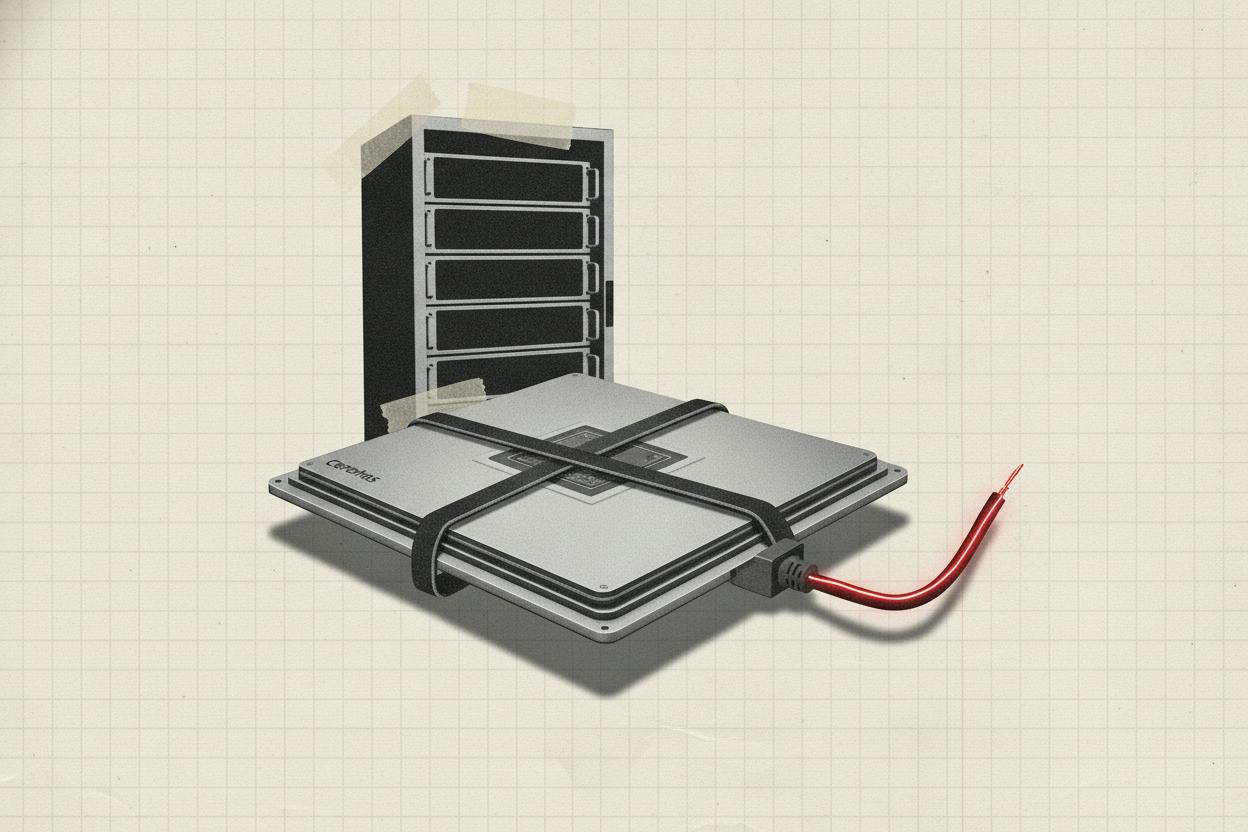
Cerebras, the AI chipmaker and cloud compute provider, gave investors a mixed update: demand is improving, highlighted by a new agreement with Microsoft, but the company's near-term growth is being held back by something far less glamorous than silicon—basic infrastructure like power and physical space in data centers.
In its latest guidance, Cerebras raised its broader outlook, citing new customer wins and an "important" deal with Microsoft. Yet the company's CFO said fourth-quarter cloud revenue is likely to be "flattish" sequentially, because the company cannot bring enough data center capacity online quickly enough to turn that demand into billable compute.
Why capacity, not chips, is the constraint
Cerebras argues that the bottleneck is not manufacturing. The company says it has secured wafer supply with TSMC, the contract chipmaker, and is ramping up new systems, including its CS4 and the next-generation Wafer-Scale Engine 5. In other words, the chips are coming.
The limiting factor is infrastructure. Data centers need power, cooling, and physical space, and those take time to build and connect to the grid. Cerebras said it has secured about 700 gross megawatts of capacity for delivery by the end of 2027, but it also noted delays in getting its initial OpenAI capacity tranches online. The company warned that shifts in US policy could make data center development harder, adding another layer of uncertainty.
For now, the CFO expects Q4 cloud revenue to be roughly flat from the prior quarter, because only energized, ready-to-use sites can generate revenue. Contracted megawatts don't count until the lights are on and the servers are humming.
What this means for investors
The 700-megawatt figure matters as much as the Microsoft win. Cerebras is essentially saying its growth unit is delivered, powered data center capacity, not just chips or customer logos. Even a marquee deal like Microsoft's won't move the needle until the infrastructure is in place.
That's why Q4 can look capped even as product roadmaps improve and deals stack up, including the Microsoft agreement and early OpenAI deployments. For investors, this shifts the scoreboard: quarterly momentum may hinge less on announcements and more on how quickly those megawatts show up online.
This is a familiar story across the AI infrastructure space. Companies like Nebius have also flagged rising costs and capacity challenges. And the broader market has been watching how tech giants secure power for data centers, often through partnerships with energy companies. The demand for AI compute is real, but the physical limits of the grid are becoming a central theme.
For everyday investors, the takeaway is that AI growth isn't just about chip design or software—it's also about real-world infrastructure. Delays in data center construction can push revenue into later quarters, even when demand is strong. That's why Cerebras's Q4 guidance looks conservative despite the positive news.
Investors will likely watch how quickly Cerebras can energize its contracted capacity, and whether policy changes affect data center permitting. The company's ability to convert its 700-megawatt pipeline into actual revenue will be a key metric to track.
In the meantime, the Microsoft deal is a positive signal, but it's not a magic bullet. The real test is execution on the ground—getting those data centers built, powered, and online.



