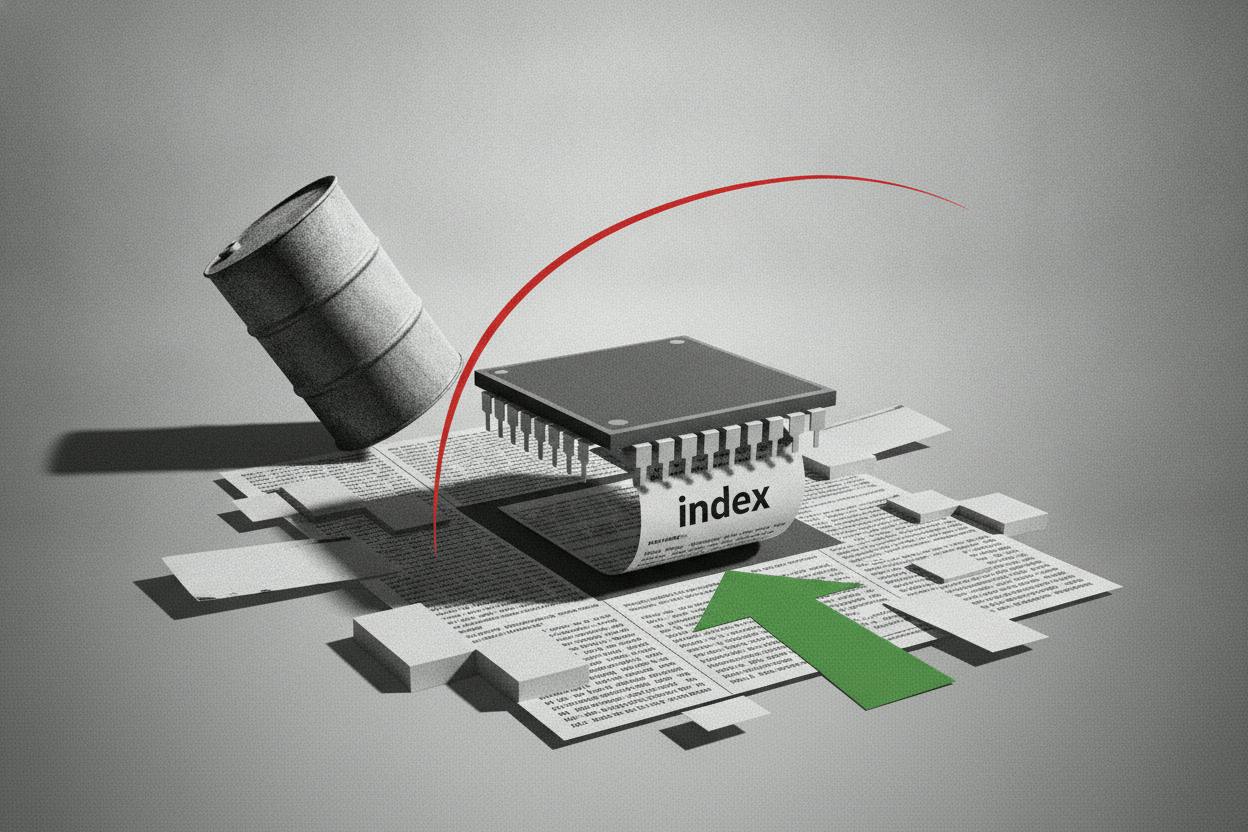
Asian markets mostly rose on Wednesday, with a powerful rally in semiconductor stocks leading the way. South Korea's KOSPI index surged 6.6%, its biggest jump in months, after the country's major chipmakers reported strong third-quarter profits. The optimism spread to Japan, where the Nikkei 225 added 1.1% to close at 63,954.19, and to Hong Kong, where the Hang Seng edged up 0.2%.
But the day wasn't without its cautionary notes. Brent crude oil climbed 1.5% to $110.80 a barrel, a reminder that energy costs remain a wildcard for the global economy and corporate profits.
What's driving the rally?
The core of the move was the semiconductor sector, which has become the centerpiece of investor enthusiasm around artificial intelligence and advanced computing. In Seoul, SK Hynix rose 7.7% after its results, while Samsung Electronics gained 9% on strong profits at key subsidiaries. Together, those two heavyweights account for a large chunk of the KOSPI's market value, so their gains alone were enough to lift the entire index.
Japan saw a similar pattern. Memory-chip maker Kioxia jumped 13.8%, helping push the Nikkei higher. But the breadth of the rally was narrow: decliners actually outnumbered advancers 139 to 84. That means a handful of big tech names did most of the heavy lifting, while many other stocks fell.
Hong Kong's Hang Seng TECH Index rose 1.4%, but the Mainland Properties Index slipped 0.3%, showing that the region's gains weren't uniform. Real estate, a sector that has struggled with debt and weak demand, remained under pressure even as tech stocks soared.
Why oil matters
The rise in Brent crude to $110.80 a barrel is a key counterpoint to the tech rally. Higher energy prices can squeeze profit margins for companies across the economy, from airlines to manufacturers. They also feed into inflation expectations, which can push central banks to keep interest rates higher for longer.
That's a particular concern for growth-oriented tech stocks, which are valued on the expectation of strong future earnings. When interest rates rise, the present value of those future earnings falls, which can hit tech valuations hard. So while chipmakers are enjoying a moment of strong demand, the broader market is still watching the oil market and its implications for monetary policy.
For everyday investors, the key takeaway is that the rally may be more fragile than it looks. When an index rises even though more stocks fall than climb, it usually means a small set of mega-cap companies is doing most of the work. That can make the headline move look stronger than what the average stock is experiencing, because returns aren't being shared across sectors.
What it means for investors
The narrowness of the rally is a risk. If the semiconductor leaders wobble, there's less broad support underneath. With the KOSPI's jump tied closely to SK Hynix and Samsung Electronics, and Japan's gains helped by Kioxia's 13.8% pop, both benchmarks could be more prone to sharp pullbacks if the chip group cools.
Investors should also keep an eye on oil. If crude continues to climb, it could dampen consumer spending and corporate profits, and it could force central banks to reconsider their rate paths. That's a dynamic that could complicate a tech-driven rebound.
In the meantime, the strength in chipmakers is a reminder of how central the semiconductor industry has become to global markets. Companies like SK Hynix and Samsung are not just bellwethers for South Korea; they're also key suppliers to the world's tech giants, so their earnings are watched closely as a gauge of demand for everything from smartphones to data centers.
For those looking to understand the broader picture, the rally in chip stocks has also been visible in US futures, suggesting the theme is global. And the jump in oil is a factor that European markets are also grappling with, as the ECB prepares for its next policy meeting.
Ultimately, Wednesday's moves show that investor sentiment can be lifted by strong earnings, but the rally's narrow base and the pressure from energy prices mean the path ahead is unlikely to be smooth. As always, diversification and a long-term perspective remain the best tools for navigating such volatility.