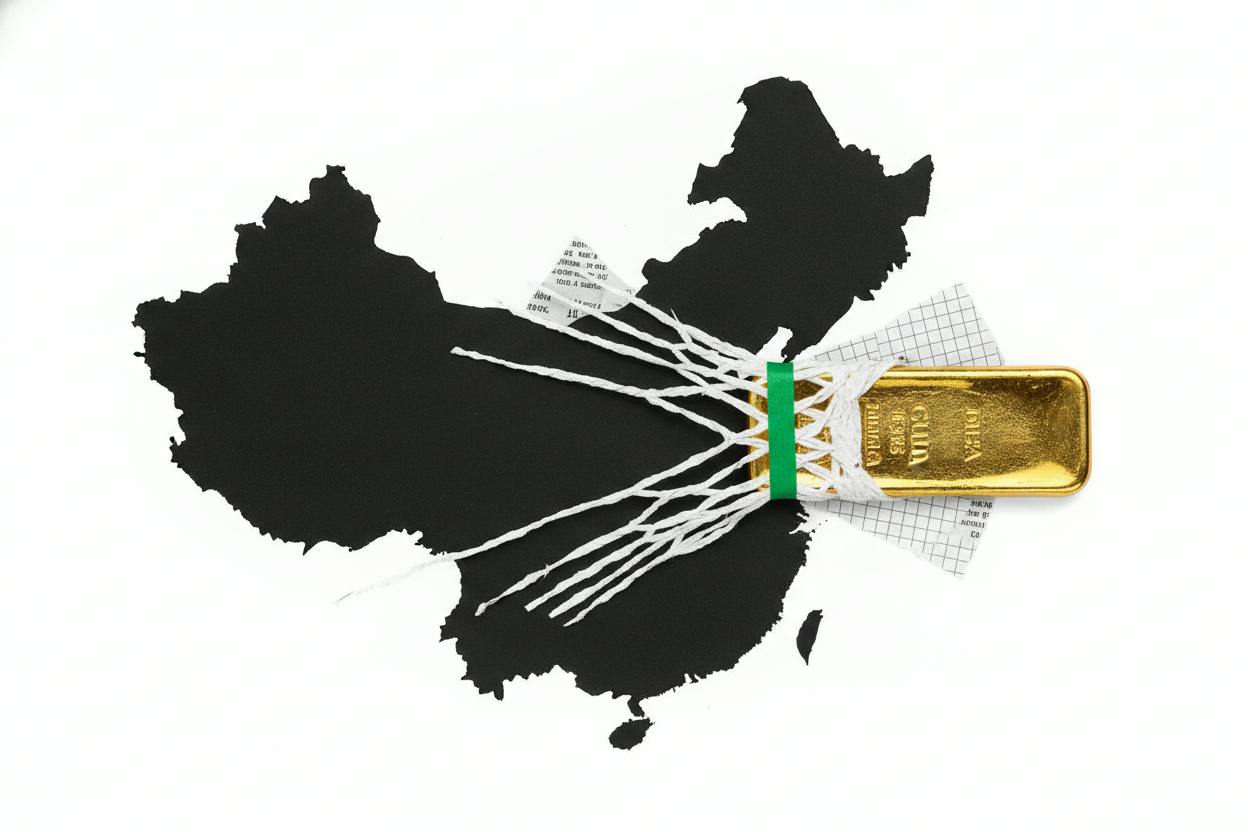
China's appetite for gold showed renewed strength in September, with net imports via Hong Kong jumping more than 28% from the previous month to a five-month high. The increase came despite a sharp drop in global gold prices, as buyers took advantage of lower costs ahead of a key holiday shopping period.
Official data from Hong Kong showed mainland China imported a net 74.987 metric tons of gold in September, up from 58.491 tons in August. Total shipments, which include re-exports, rose to 94.096 tons from 77.137 tons in the prior month.
The pickup in buying is a notable signal for the world's largest gold consumer, and it comes at a time when the metal's price has been under pressure. Spot gold fell 6.6% in September as investors grew more confident that the U.S. Federal Reserve would deliver another interest rate hike in December.
Why the jump in imports?
According to Rhona O'Connell, an analyst at commodities brokerage StoneX, the increase likely reflects restocking ahead of China's Golden Week holiday, which began in early October. During Golden Week, jewelry and gift purchases typically surge, prompting retailers and wholesalers to build up inventories in advance.
This seasonal pattern is well established. Chinese consumers often buy gold for weddings, festivals, and as a store of value, and the holiday period is one of the busiest times for gold sales. The fact that imports rose even as prices fell suggests that buyers saw the dip as an opportunity to stock up at more attractive levels.
Gold also holds a special place in Chinese culture, where it is seen as a safe haven and a symbol of wealth. In times of economic uncertainty, demand for the metal often increases as households look to protect their savings.
What the price drop means
The 6.6% decline in spot gold in September was driven by shifting expectations for U.S. monetary policy. When the Fed raises interest rates, it typically strengthens the U.S. dollar and makes holding non-yielding assets like gold less attractive, since investors can earn higher returns elsewhere.
For everyday investors, this dynamic is important to understand. Gold is often seen as a hedge against inflation and economic turmoil, but its price is heavily influenced by real interest rates and the dollar's strength. When the Fed signals tighter policy, gold tends to struggle.
Despite the recent pullback, gold remains a popular investment for those seeking diversification. Many financial advisors suggest holding a small portion of a portfolio in gold or gold-related assets as a way to reduce overall risk.
What it means for investors
For investors watching the gold market, the rise in Chinese imports is a sign that physical demand remains robust, even as financial investors pull back. This divergence can sometimes create buying opportunities, but it also highlights the complexity of the gold market.
China's role as a major buyer is crucial. When Chinese demand is strong, it can help support gold prices, offsetting selling from Western investors. The fact that imports hit a five-month high suggests that Chinese buyers are not deterred by the recent price weakness.
Looking ahead, investors will be watching several factors. The Fed's December meeting will be key, as another rate hike could put further pressure on gold. At the same time, any signs of economic slowdown in China or elsewhere could boost gold's appeal as a safe haven.
For those considering gold as an investment, it's worth remembering that the metal can be volatile and doesn't generate income. It's often best used as a small part of a diversified portfolio rather than a core holding.
The broader picture is also relevant. China's economy has been showing mixed signals, with some sectors strong and others weak. The country's manufacturing and export data have been uneven, and its property market remains under pressure. In such an environment, gold demand can be a useful indicator of consumer confidence and spending power.
As always, investors should focus on their own financial goals and risk tolerance rather than trying to time the market. The gold market, like all markets, is subject to many forces, and what happens in China is just one piece of the puzzle.