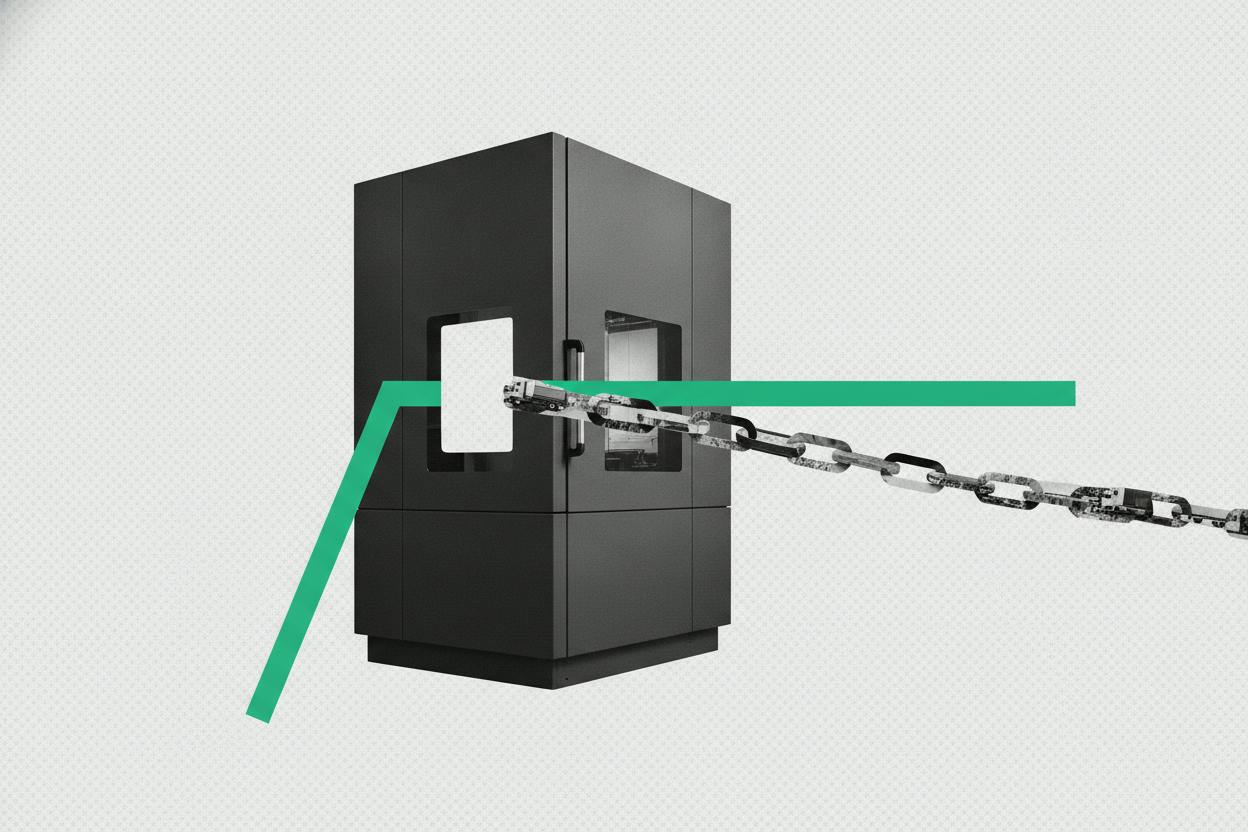
Dutch chip-equipment maker ASM International says the artificial-intelligence boom is set to push its 2027 revenue above the €5.7 billion target it recently reaffirmed — as long as its suppliers can keep up with demand.
CEO Hichem M’Saad told Reuters that AI-driven demand is “huge” and that the company now expects 2027 revenue to come in above its €5.7 billion forecast, with “very good visibility” on orders stretching into 2027 and sometimes 2028. The potential limiter, he said, is supply-chain bottlenecks that could cap how much the company can actually ship.
What ASM International does
ASM International is a key player in the semiconductor supply chain. It makes wafer-processing tools used to build advanced chips — most notably atomic layer deposition (ALD) machines, which lay down ultra-thin layers of material inside transistors. These tools are essential for producing the most cutting-edge processors that power AI data centers, smartphones, and other high-performance devices.
The company is based in the Netherlands and competes with other equipment makers like Applied Materials and Lam Research. Its customers are the world’s largest chip manufacturers, including TSMC, Samsung, and Intel.
Because ASM sits upstream in the chip supply chain, its order books are often seen as a leading indicator for the broader semiconductor industry. When ASM says demand is strong, it suggests chipmakers are confident enough in future sales to invest in new production capacity.
Why AI is the driver
The explosion of generative AI tools has triggered a massive buildout of data centers and specialized chips. AI models require enormous computing power, which in turn requires more advanced semiconductors — and more of the precise manufacturing equipment ASM provides.
That demand has been a bright spot for the chip sector even as other parts of the economy slow. Companies across the tech industry are racing to secure chip supply, and equipment makers are among the clearest beneficiaries.
ASM’s CEO said the company has “very good visibility” on orders, meaning customers are placing orders well in advance. That kind of forward visibility is rare in cyclical industries like semiconductors, where demand can swing sharply.
The supply-chain catch
Still, the company isn’t popping the champagne just yet. M’Saad warned that supply-chain bottlenecks could limit the upside. Like many manufacturers, ASM depends on a network of suppliers for components, materials, and precision parts. If those suppliers can’t ramp up fast enough, ASM may not be able to convert all its orders into revenue.
This is a common challenge for chip-equipment makers during boom times. Demand can outpace the industry’s ability to build and deliver machines, especially when the underlying components are themselves in short supply.
The warning is a reminder that even strong demand doesn’t guarantee smooth sailing. Investors should watch not just how many orders ASM books, but how quickly it can turn those orders into shipped machines and recognized revenue.
What it means for investors
For everyday investors, ASM’s comments are a signal that the AI-driven semiconductor boom is still going strong — at least through the end of the decade. That’s positive for the broader chip sector, including companies like those benefiting from new technology adoption.
But the supply-chain caveat is worth noting. It suggests that even the best-positioned companies may face headwinds in delivering on their growth promises. Investors should consider whether a company’s guidance assumes a smooth supply chain, and what happens if that assumption breaks.
ASM’s stock has been a strong performer in recent years, reflecting the market’s enthusiasm for AI-related chip names. But with that enthusiasm comes high expectations. If the company later misses its upgraded target — or if supply-chain issues force it to walk back its optimism — the share price could be vulnerable.
For now, the message from ASM is clear: AI demand is real, it’s big, and it’s likely to keep driving growth for chip-equipment makers. The question is whether the industry can build fast enough to keep up.
Investors will be watching ASM’s next earnings report for more details on order trends and supply-chain progress. Any signs that bottlenecks are easing — or worsening — could move the stock.
In the meantime, the company’s confidence is a positive sign for the semiconductor sector as a whole, even if it comes with a note of caution.