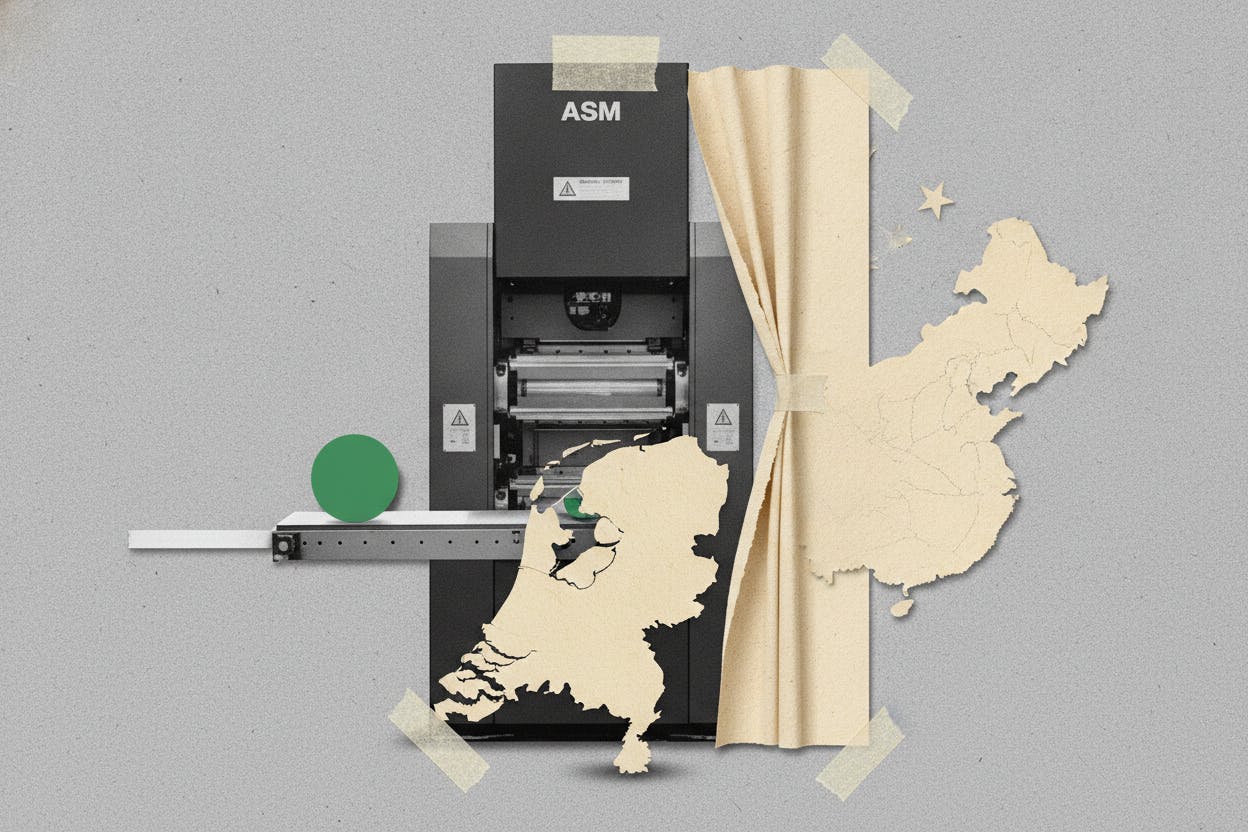
ASML, the Dutch company that dominates the market for advanced chipmaking equipment, reported second-quarter results that topped analyst expectations. Revenue came in at €9.33 billion, above the €8.80 billion consensus, while net income reached €2.92 billion versus the €2.62 billion forecast. The beat was driven by strong demand from customers building factories to produce chips for artificial intelligence applications, helping to offset uncertainty around sales to China.
Why ASML's Results Matter for the Chip Industry
ASML is the world's largest supplier of lithography machines, the tools that print circuit patterns onto silicon wafers. It is the only company that makes extreme ultraviolet (EUV) lithography systems, which are required for the most advanced chips used in AI data centers, smartphones, and high-performance computing. Because ASML's equipment is essential for building new chip factories and upgrading existing ones, its quarterly numbers are a reliable indicator of how aggressively the semiconductor industry is investing in capacity.
CEO Christophe Fouquet said customers are "accelerating their capacity expansion plans," pointing to AI-driven spending by major chipmakers including TSMC, Samsung Electronics, SK hynix, and Micron. These companies are racing to build new fabrication plants, or fabs, to meet surging demand for AI processors and memory chips. The strong order flow suggests that the AI boom is translating into real capital expenditure, not just hype.
High-NA Tool Marks a Potential Upgrade Cycle
Another notable signal from the quarter was at the cutting edge of technology. Fouquet revealed that Intel plans to use ASML's new High-NA EUV tool for some of its upcoming "Panther Lake" chips. High-NA (high numerical aperture) is a next-generation version of EUV that can print even smaller features on chips, enabling higher performance and energy efficiency. Reuters called this a first for the technology.
New lithography generations historically kick off multi-year waves of heavier spending. When chipmakers adopt a new tool, they typically place larger orders and pay higher prices per machine. For ASML, that means clearer revenue visibility over several quarters, as these complex systems take months to build, ship, and qualify for production. If Intel's initial use of High-NA expands into broader production, it could mark the start of the next upgrade cycle across the industry.
What It Means for Investors
For everyday investors, ASML's beat is a positive signal for the broader semiconductor supply chain. When the company tops estimates and talks about faster capacity expansion, it usually means customers are placing tool orders earlier and mapping out longer installation schedules. Because ASML's machines take time to build and install, earlier commitments translate into clearer multi-quarter revenue visibility than you'd get from many chip designers, whose sales can swing quickly with consumer demand.
The High-NA development adds another layer. If Intel's deployment expands, it could improve ASML's pricing power and margins. However, there is a flip side: ASML's outlook becomes even more tied to the durability of AI-driven capital spending at big foundry and memory customers. If that spending slows due to tighter export restrictions on China or a broader economic downturn, ASML could face headwinds.
Investors should also watch for any updates on China-related restrictions. The brief noted uncertainty about sales to China, and any escalation in trade tensions could weigh on ASML's future orders. For now, the AI boom is providing a strong buffer, but the concentration of revenue among a handful of giant customers means the company's fortunes are closely linked to their investment cycles.
In the broader market context, ASML's results come amid a mixed earnings season. Other companies like Citi posted its best quarterly revenue in a decade thanks to volatile markets, while HCA beat Q2 estimates but cut its 2026 forecast on a shift in payer mix. ASML's strong showing reinforces the narrative that AI-related capital spending remains a bright spot, even as other sectors face uncertainty.
The Bottom Line
ASML's second-quarter results show that AI demand is driving real investment in chipmaking capacity, offsetting headwinds from China. The company's revenue beat and the early adoption of High-NA technology suggest a multi-year upgrade cycle may be underway. For investors, ASML's performance is a key barometer for the health of the semiconductor industry and the sustainability of AI-driven spending.