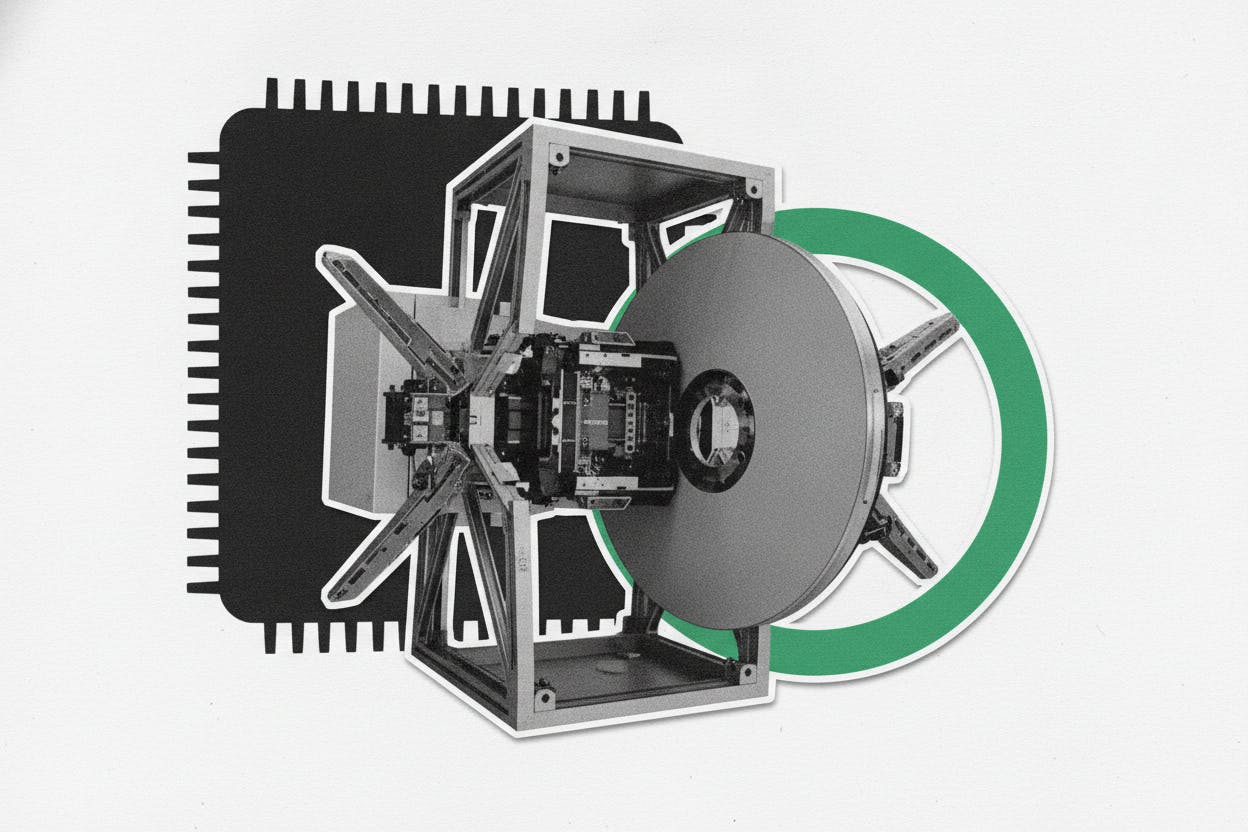
ASML, the Dutch company that dominates the market for advanced chipmaking equipment, is proposing a significant change to how its next-generation lithography machines are used. The company wants to team up with its biggest customers to shift High NA EUV — its most advanced system — onto larger 12-inch masks, a move aimed at enabling the production of the massive AI data-center chips that are already pushing the limits of current technology.
Lithography is essentially chipmaking's "printing press." ASML machines shine light through a patterned mask to copy circuits onto silicon wafers. Today's extreme ultraviolet (EUV) tools can handle very large designs, but High NA EUV — the sharper, next step in the technology — uses a smaller mask that can limit how big a single chip design can be printed in one go. By moving to 12-inch masks, ASML hopes to remove that constraint, allowing chipmakers to pattern larger, more powerful chips for AI workloads.
Why bigger masks matter for AI chips
The demand for AI data-center chips has exploded as companies race to build out the computing power needed for machine learning and large language models. These chips are physically larger than traditional processors because they pack more transistors and memory onto a single piece of silicon. But there's a practical limit: if a chip design is too big, it may not fit within the printable area of the lithography system's mask.
High NA EUV is designed to print finer features, which is critical for making chips more powerful and energy-efficient. However, its current mask size is smaller than that of standard EUV tools, which creates a trade-off. Chipmakers can either use High NA EUV for smaller designs or stick with older tools for larger ones. ASML's proposal to adopt 12-inch masks would let manufacturers have both: the sharpness of High NA EUV and the ability to print very large chips.
The company says a consortium of customers is interested in this shift, with high-volume use targeted for 2033. That timeline reflects the long development cycles in the semiconductor industry, where new equipment and processes take years to perfect and integrate into mass production.
What this means for investors
For everyday investors, this news is a reminder of how central ASML is to the global chip supply chain. The company holds a near-monopoly on EUV lithography, and its machines are essential for producing the most advanced semiconductors used in AI, smartphones, and data centers. Any move that extends the usefulness of its technology — or opens up new applications — could support its long-term revenue growth.
The shift to 12-inch masks is also a signal about the direction of the AI hardware boom. As AI data center spending is projected to reach $31.6 trillion by 2050, according to PwC, chipmakers are under pressure to deliver ever more powerful processors. That demand is already showing up in the earnings of companies across the supply chain, from chip materials firms like IQE to power management specialists like Belimo.
But investors should also note the long timeline. ASML's plan is not a near-term catalyst; high-volume production isn't expected until 2033. That means the financial impact, if any, will take years to materialize. In the meantime, the company's current EUV systems remain the workhorse for chipmakers, and any delays or technical hurdles in the High NA EUV transition could affect adoption rates.
The bigger picture
The move is part of a broader trend in the semiconductor industry: as AI drives demand for larger and more complex chips, the tools used to make them are being pushed to their limits. Companies are investing heavily in new manufacturing capacity, and governments are pouring money into domestic chip production. ASML's proposal is one more example of how the industry is adapting to the needs of the AI era.
For investors, the key takeaway is that ASML remains at the center of the chipmaking world, and its technology decisions have ripple effects across the entire sector. Whether the 12-inch mask plan succeeds or not, it underscores the ongoing race to build the next generation of AI hardware — a race that is likely to drive investment and innovation for years to come.